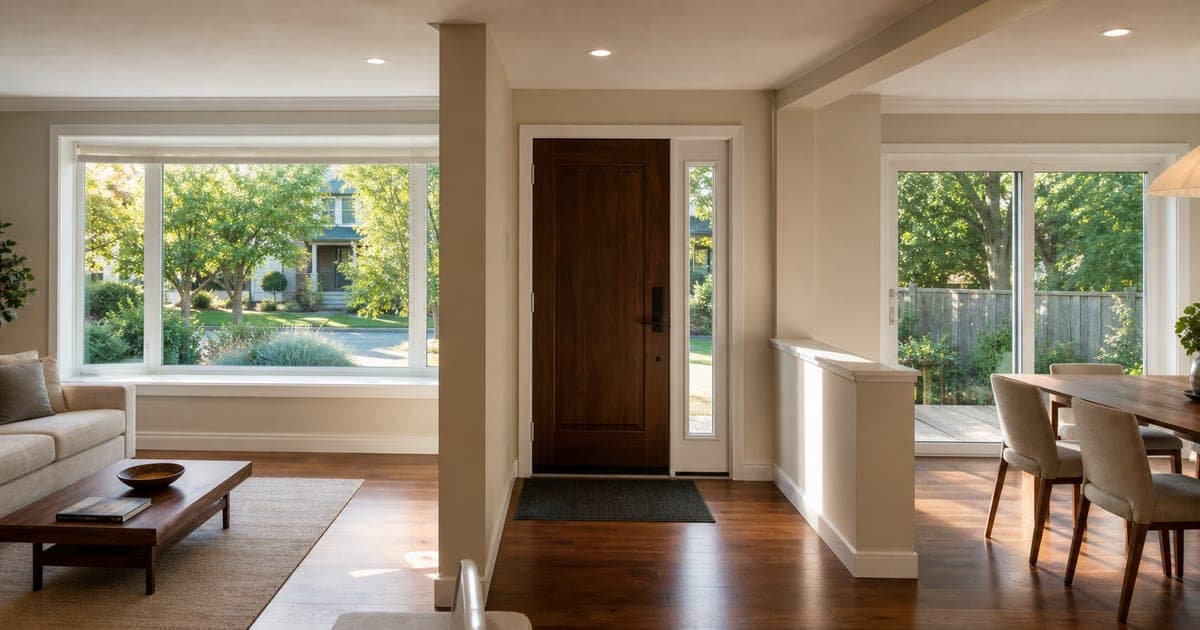
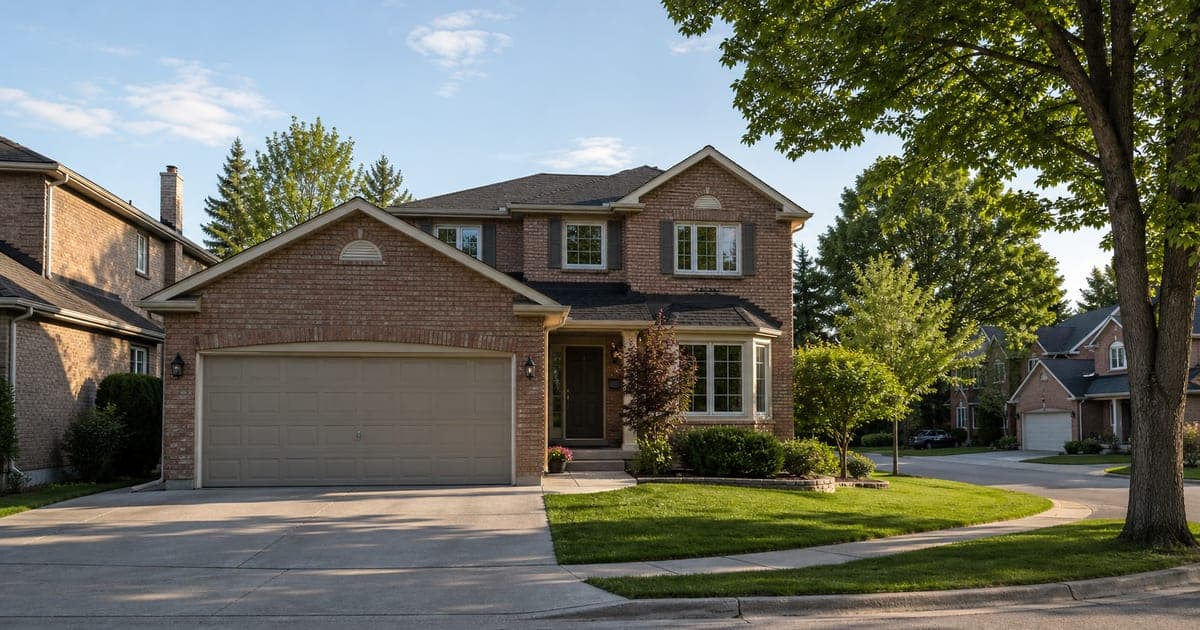
Thornhill home security advice often starts with the age of the subdivision. That can be a useful clue, but it is not a diagnosis.
Two homes built in the same decade may have different doors, glass, renovations, landscaping, and access paths. A useful review checks what is present now.
This guide covers four places worth inspecting: the garage-to-house door, glass beside locks, patio doors, and reachable lower windows.
Thornhill home security starts with the individual property
Thornhill crosses the Vaughan-Markham boundary. That matters for municipal services, but it does not tell you how a particular door or window was built.
On either side, start with the same question: which entry points are easy to reach? Then note where visibility from nearby homes is limited.
The answer may change from one lot to the next. Fences, hedges, additions, replacement windows, and decks can matter more than the construction year printed on a listing.
This guide focuses on the Vaughan side of Thornhill. Our Vaughan service-area guide explains where Clear Guard works locally.
The same method applies across the community. Use the property itself, rather than a neighbourhood label, to set priorities.
Check the garage-to-house door as a complete assembly
If the home has an attached garage, include the door into the house in the review. Do not assume its slab, frame, lock, or fasteners from the home's age.
Check whether the door closes on its own, latches fully, fits tightly, and has intact weatherstripping. Keep the overhead garage door and the house door closed and locked when they are not in use.
The Ontario Building Code addresses gases and exhaust fumes at this door. Preserve its self-closing action, tight fit and weatherstripping.
Review the slab, hinges, lock, strike, jamb, fasteners, closer, and weatherstripping together. Sound alone cannot confirm what is inside a door.
Door fortification may add resistance when the assembly is suitable. Any recommendation must still protect the door's required functions.
A Clear Guard technician can review this assembly without destructive testing. The assessment can show whether reinforcement belongs in the plan or not.
Review glass by reach, sightline, and nearby hardware
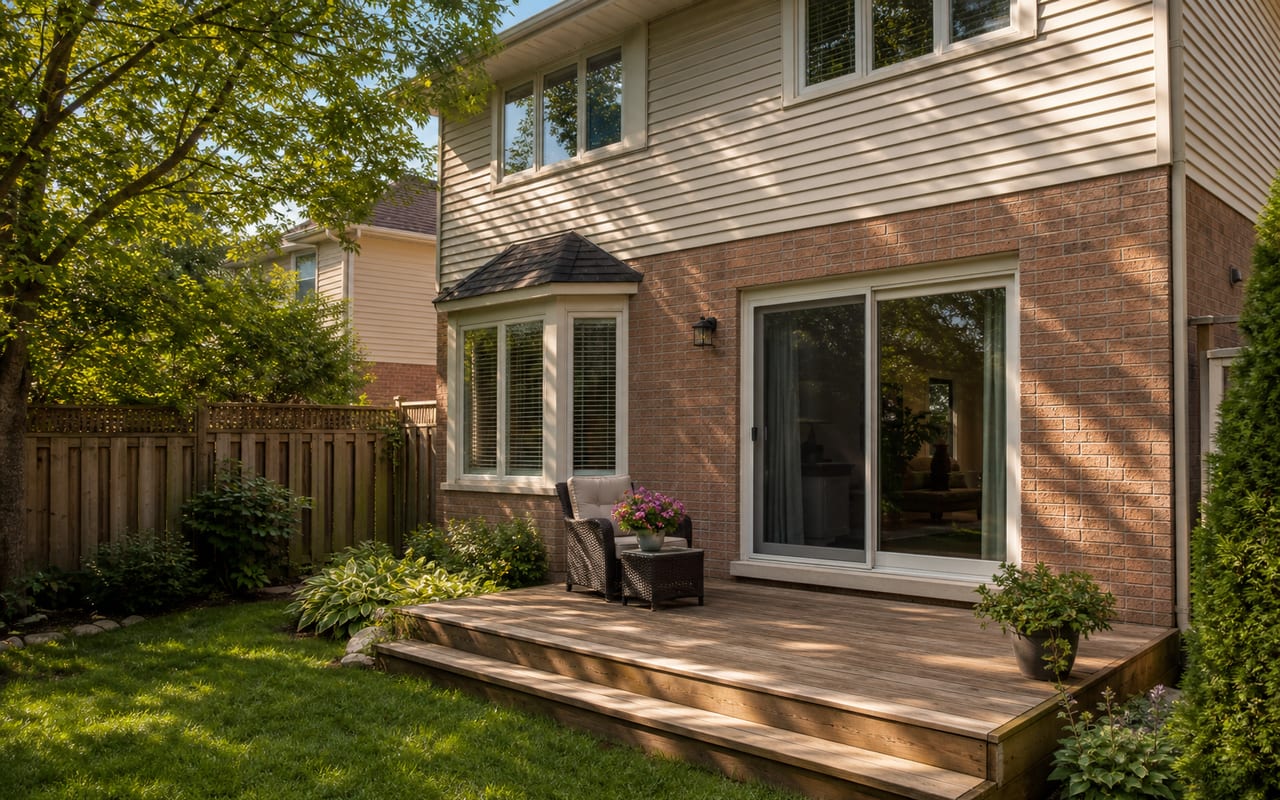
Rear patio doors, door sidelights, and lower windows deserve attention because their exposure can be read from the property.
A window may move up the list when it is reachable from grade or screened by landscaping. Nearby door hardware can also raise its priority.
A patio slider may also combine a large glass area with a latch that needs its own review. Film and door hardware address different parts.
The patio door security guide explains how to inspect the glass, latch, track, and frame as one system.
Security window film holds broken glass together and adds resistance to clearing the pane. Glass, frame, attachment and installation affect the result. No film guarantees against entry.
Clear Guard recommends 14 mil interior security film where the glazing assessment supports it. Perimeter attachment helps retain the filmed pane at its frame after the glass breaks.
Choose the film, attachment and installation surface together. If a pane already has film, identify it before proposing another treatment.
Our film thickness and installation guide explains the options. A privacy finish needs its own product and glass-compatibility check.
Our basement-window guide gives extra context for panes near grade. The window-film product page explains the product category.
Use a simple Thornhill walk-around
Start at the front entry and move around the home without forcing, striking, or removing anything.
| Check | What to observe | Why it matters |
|---|---|---|
| Front entry | Glass beside the lock, door fit, strike area | The door and nearby glass work as one entry system |
| Side path | Reachable windows, gates, hedges, lighting | Access and sightlines vary by lot |
| Rear wall | Patio door, picture windows, deck access | Glass and latches need separate review |
| Lower level | Windows near grade or inside wells | Reachability can move them up the plan |
| Attached garage | Overhead door plus the door into the house | Both doors should close and lock normally |
Do not kick a door, pry a frame, strike glass, or defeat a garage release to test it. The goal is to map the property, not simulate a break-in.
Record what you can see without guessing. Note whether each door closes, latches, and locks during normal use.
For windows, note the glass location, frame condition, nearby hardware, and practical access path. Photos can help the assessor prepare for the visit.
Avoid three common shortcuts
First, do not identify a door's internal construction from a tap test. Check a manufacturer label or ask a qualified person to identify the assembly.
Second, do not assume every lower window needs the same product. Glass type, frame condition, access, and intended outcome all affect the recommendation.
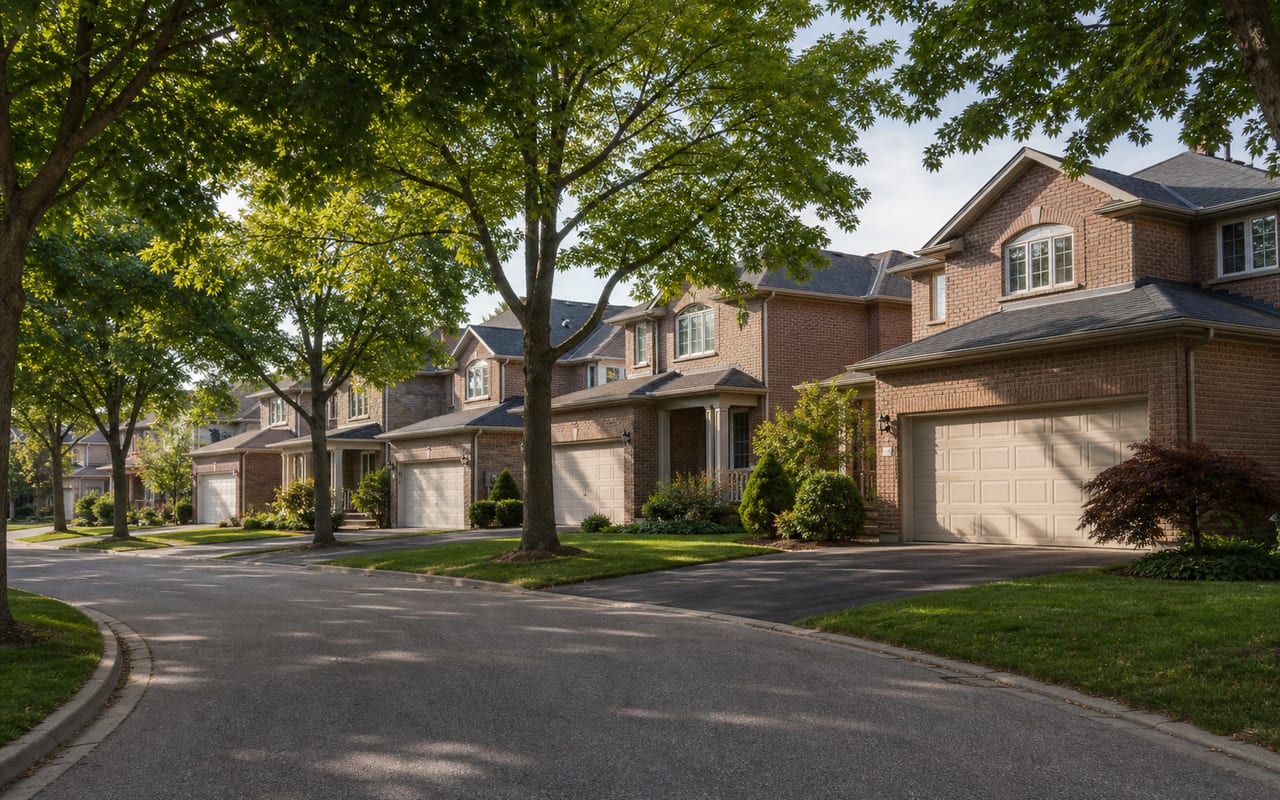
Third, do not use a police count to predict what will happen at one address. A property review should stand on observable conditions, not a neighbourhood label.
Use our GTA break-in statistics hub for the available regional context. A police count does not diagnose an individual property's weak points.
The same caution applies to comparisons with newer communities. Our Brampton door-security guide addresses a different housing pattern and inspection question.
Include everyday garage habits in the review
Physical upgrades work best when normal routines support them. Check that the overhead garage door closes fully after each use.
Store vehicle keys where they are not visible from exterior glass. Do not leave a garage remote in an unlocked vehicle outside.
Our vehicle-key and garage-entry guide covers those habits. These steps do not replace a sound door, frame, lock, and closer.
They simply reduce avoidable access while the physical parts do their jobs. The assessment should distinguish a hardware issue from a routine issue.
What a Clear Guard assessment covers
A technician walks the accessible exterior and interior with you. The review looks at glass, frames, door assemblies, nearby locks, sightlines, and how each area is used.
The result is a written quote tied to the actual property. It can separate immediate priorities from items that can wait.
The assessment may recommend film, door fortification, both, or no change at a particular location. It should not force a stock answer onto every Thornhill home.
Ask the quote to identify each pane and door assembly. It should state the proposed work, the reason for it, and any excluded area.
For film, ask how the glass, frame, and attachment method shaped the recommendation. For doors, ask how normal closing and latching will be preserved.
Frequently asked questions
Is every 1990s Thornhill home built the same way?
No. Similar streets can contain different builders, renovations, replacement windows, and door assemblies. Inspect the individual home instead of treating its decade as proof.
Can I reinforce the door between my garage and house?
Possibly, after the complete assembly is checked. Any change should preserve the required self-closing action, tight fit, weatherstripping, and barrier against gases and exhaust fumes.
Should I start with doors or security film?
Start with the entry points that combine easy access, limited sightlines, and nearby hardware. Many homes need a mixed plan because doors and glass present different problems.
Book a free on-site assessment
Clear Guard will review the doors and glass at your property and provide a written quote. Request your free assessment.