Central Brampton and Sandalwood: The Builder-Grade Door Security Gap
If you bought a home in Central Brampton or Sandalwood between 2005 and 2018, there's a good chance your front door looks solid. It's a few years old, the deadbolt is engaged every night, and from the outside the entry looks secure. The problem isn't the lock. It's the frame the lock is sitting in.
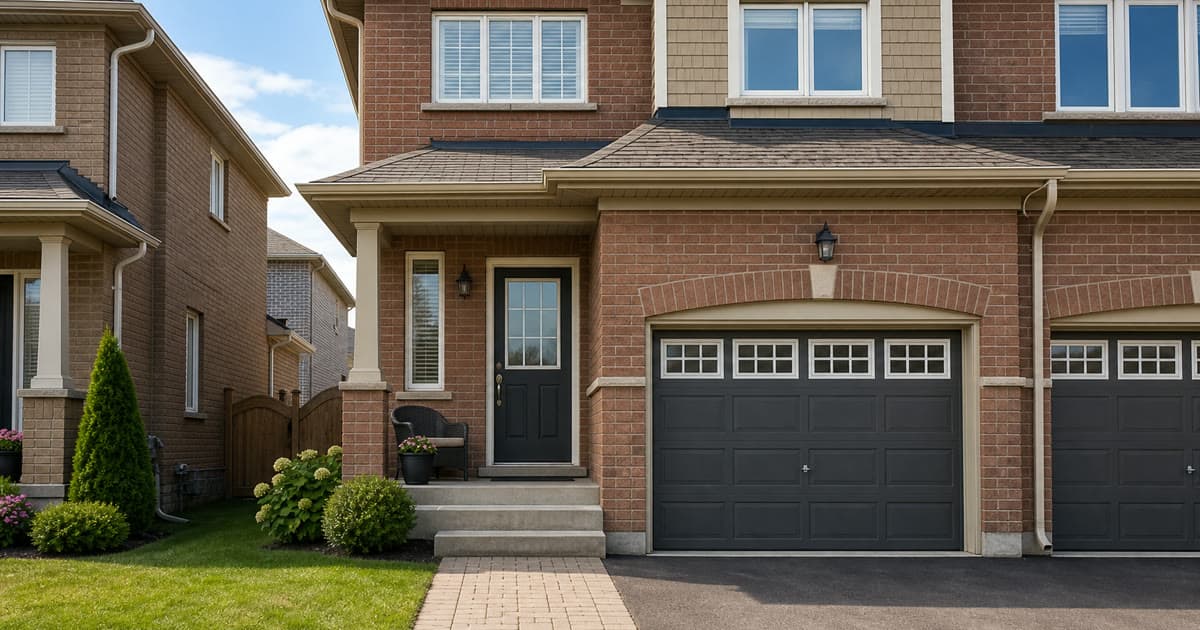
This post is specifically for homeowners in Brampton's attached, semi-detached, and detached subdivision builds. The door hardware in these homes was specified for cost and speed of installation, not for forced-entry resistance. Understanding the gap — and what fills it — is the useful starting point.
Builder-Grade Doors in GTA Subdivision Construction
When a home is built in volume across a Brampton subdivision, the front door assembly comes as a pre-hung unit: door slab, hinges, frame, and rough-opening casings installed as a package. The door hardware — deadbolt, handle set, strike plate — is then added as a separate specification, usually from a builder-selected package at the mid-range of the cost range.
Nothing about this is unique to Brampton. The same approach applies to volume construction across the GTA, from Scarborough to Oakville to Newmarket. What varies is the housing stock and the era of build, not the underlying approach to door hardware specification.
In Sandalwood and Central Brampton, the majority of the subdivision housing was built in a concentrated wave between the late 1990s and the mid-2010s. These homes are relatively new — not the aging bungalows of Mississauga's 1960s subdivisions. But newer doesn't mean more secure, at least not when it comes to doors. A 2010 build in Brampton has essentially the same door frame specification as a 1980 build in Scarborough: a softwood jamb, a standard strike plate, and short fasteners into the rough opening.
Why Newer Doesn't Mean More Secure
The assumption that a relatively new home has more secure doors than an older one is understandable but incorrect for a specific reason: building code requirements for door hardware have not historically mandated forced-entry resistance standards in residential construction. A deadbolt is specified for its locking function — it keeps the bolt in the engaged position — not for the strength of the assembly around it.
The softwood jamb on a standard pre-hung door uses workable, stable materials. They were not chosen for their resistance to concentrated lateral force at the strike zone.
When a door is kicked with serious force, the energy goes to the weakest point in the assembly. On a standard pre-hung door with a conventional strike plate and short fasteners, the weakest point is the jamb at the strike zone. The short screws — typically 25mm to 50mm long — pull out of the softwood before the lock cylinder fails. The deadbolt doesn't break. The frame splits.
This is the gap. Not the lock. The frame.
The Interior Garage Door: The Least-Noticed Entry Point
In Sandalwood and Central Brampton, the majority of homes are built with an attached garage. This is one of the defining features of Brampton's family-oriented subdivision stock — the garage is integral to the home, not a detached outbuilding.
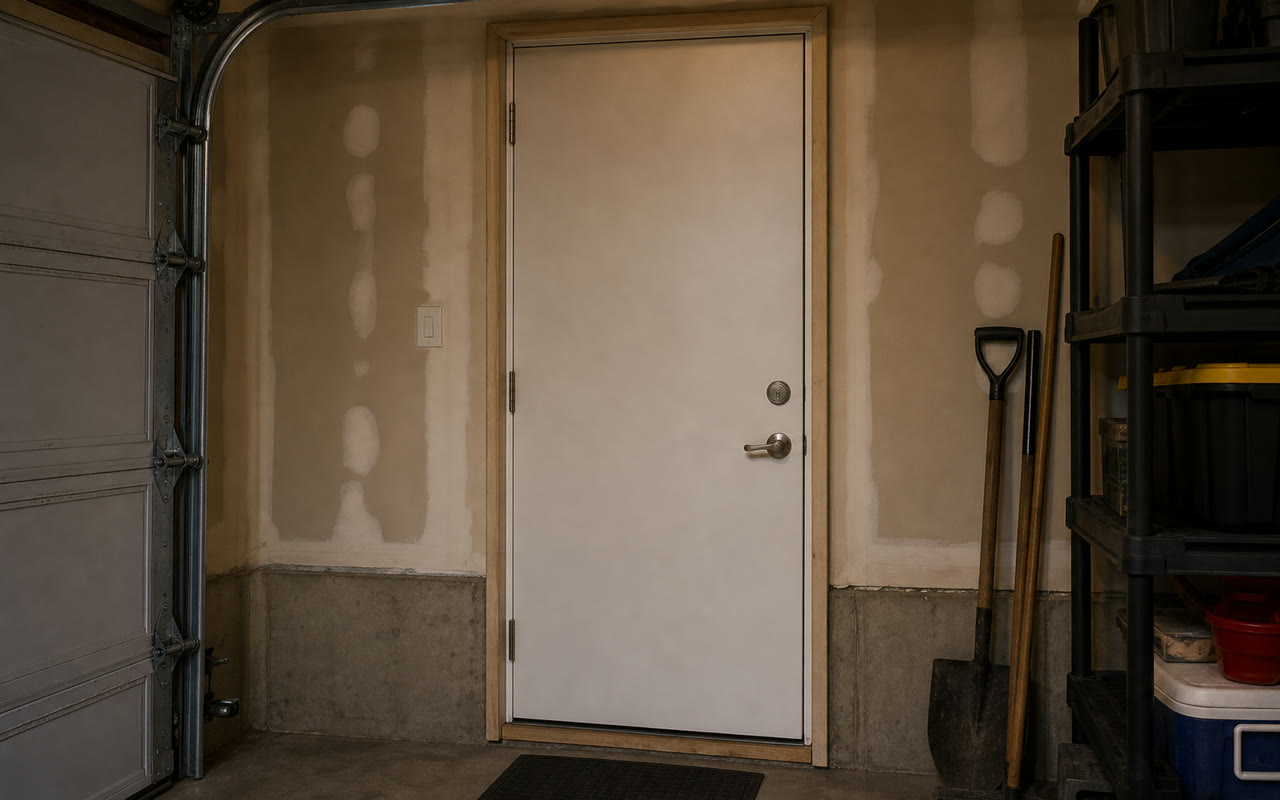
The door between the garage and the living space is, in almost every attached-garage subdivision build, a hollow-core pre-hung interior door with a basic knob lock. In some homes it has a deadbolt. In many it has only the handle.
This door sits in a position that receives almost no natural surveillance. From the street, the garage appears to be the boundary of the property. Neighbours can't see the interior garage door. From inside the home, it's just the door to the garage — the one that everyone walks through multiple times a day without thinking about it.
The practical exposure is real. The garage is accessible in ways the front door isn't. An open garage door — left up for an afternoon while someone works in the yard, or briefly during a delivery — creates a brief window that reveals the interior garage door. A hollow-core door with a basic handle lock is not a meaningful barrier.
This is the entry point that a systematic home assessment will flag before the front door in some Brampton homes. If the front door has an ARX Guard installation and the garage-to-interior door remains hollow-core, the weakest link has simply moved.
How Door Frame Failure Actually Works
Understanding the mechanics helps homeowners focus attention on the right part of the door assembly.
A deadbolt cylinder is a manufactured component engineered to resist manipulation. Lock picks, bump keys, and similar techniques target the cylinder. Those attacks are relatively slow and require skill. Kick attacks target the frame, not the cylinder.
Under kick force applied near the strike zone, the door flexes inward, and the bolt — which is only as well-anchored as the strike plate it's seated in — either pulls the plate through the jamb or splits the jamb alongside the plate. The bolt stays in the lock. The jamb gives way around it.
Standard strike plates are typically fastened with short screws that reach only into the door casing, not into the structural rough opening behind it. Extended fasteners that reach the stud — or reinforced hardware that distributes the load across a longer section of the jamb — fundamentally change the performance of the assembly at this point.
ARX Guard door fortification addresses this through frame and hinge reinforcement without replacing the door. The installation works on a standard pre-hung door. It doesn't require a new door slab, doesn't change the appearance of the entry, and doesn't involve any structural alteration to the home.
A Clear Guard technician will assess your specific door assembly — jamb condition, hinge placement, frame depth, and the strike zone geometry — and give you a written quote for what an installation covers on your home.
The Sandalwood and Central Brampton Context
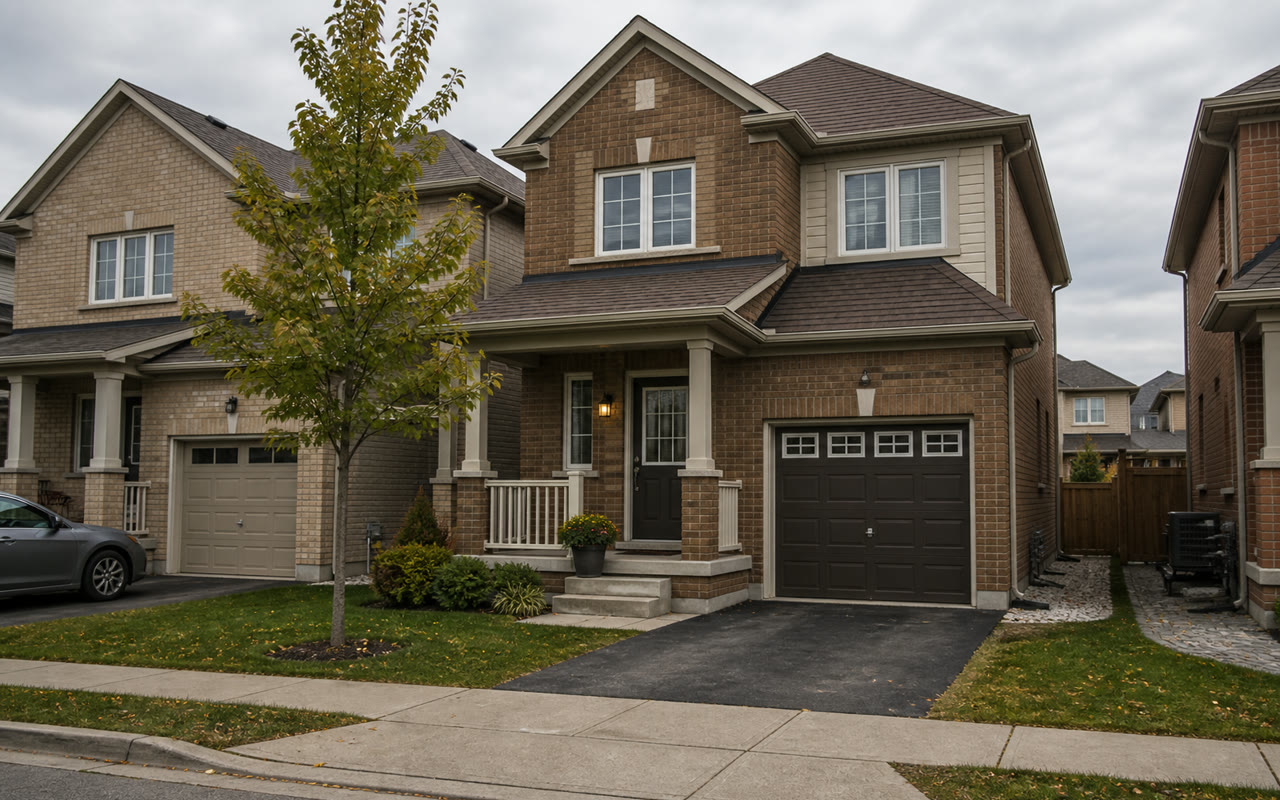
Homes in Sandalwood and Central Brampton represent a specific type of family housing: attached-garage semi-detached and detached homes, often with narrow side yards, rear-lane access in some areas, and neighbouring properties in close proximity. The density of housing in these areas means the side elevations of many homes have reduced sightlines.
The housing stock by era means almost every home in the area has the same builder-grade door assembly. The deadbolt is there, the frame is standard, and the interior garage door is hollow-core. This isn't a Brampton problem specifically — it's a volume construction problem that shows up across every GTA suburb that built quickly and at scale during the same period. But it's worth naming Sandalwood and Central Brampton directly because the concentration of similar homes creates a concentrated version of this specific gap.
Frequently Asked Questions
My deadbolt is a well-known brand. Doesn't that make the door more secure? A quality lock cylinder resists manipulation attacks. What it can't do is reinforce the frame it sits in. The cylinder may be excellent, but under kick force, the assembly fails at the jamb before the cylinder is tested. The brand of deadbolt doesn't change the behaviour of the softwood frame behind the strike plate.
What about the door between my garage and the house? Is that something Clear Guard addresses? Yes. The interior garage-to-house door is part of a full home assessment, and it's often the first door we recommend addressing in attached-garage builds. Depending on what's there — hollow-core slab, basic handle, no deadbolt — the recommendations vary. The assessment covers the full picture, not just the front door.
Will ARX Guard installation change the appearance of my front door? The visible difference after installation is minimal. The hardware sits in the door jamb and frame, not on the face of the door. From the outside, the entry looks the same. From the inside, there is hardware in the jamb area that wasn't there before. Your Clear Guard technician will show you exactly what the installation looks like on your door type during the assessment.
Related reading: