Why we choose XPEL 14 mil for your home
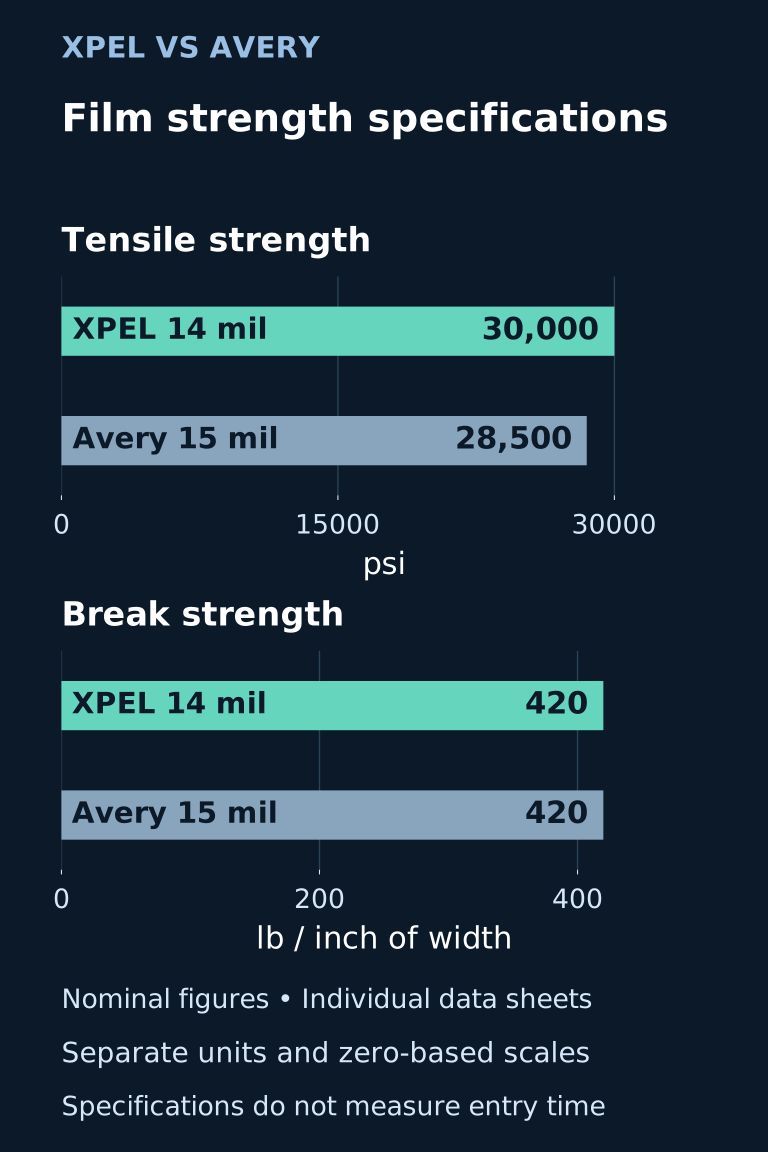
We recommend XPEL Security Clear 14 mil with suitable perimeter attachment after assessing your glass and frame. Avery Dennison SF Clear 15 Mil i is thicker by its stated gauge, but that does not give it a higher listed break-load figure. Both list 420 lb/in. XPEL's listed tensile strength is 30,000 psi, compared with Avery's 28,500 psi. XPEL specification, p2; Avery technical sheet.
Clear Guard installs XPEL. Our recommendation combines its material properties with an installation intended to keep fractured glass connected to the frame. If a patio-door pane breaks while your family is inside, the purpose is added resistance while you move away and call for help. IWFA guidance.
XPEL matches the break figure with a thinner nominal gauge
These are the exact interior products: XPEL Security Clear 14 mil and Avery SF Clear 15 Mil i, item R39803T.
| Listed property | XPEL Security Clear 14 mil | Avery SF Clear 15 Mil i |
|---|---|---|
| Film thickness | 14 mil, nominal | 15 mil |
| Tensile strength at break | 30,000 psi | 28,500 psi |
| Break strength | 420 lb/in | 420 lb/in |
Sources: XPEL, issued December 17, 2024, p2 and Avery, S93031 4/19. Separate manufacturer specifications; test methods, directions and conditions are not matched. Checked October 11, 2026.
A pulling test stretches a strip until it breaks. Tensile strength expresses the stress at failure relative to its cross-sectional area. Break strength per width expresses the pulling load for a given strip width. The first describes stress; the second describes how much load the strip carries. Those are related measurements, but they answer different questions. Example tensile-test setup, p4.
The extra mil on Avery's label does not give it a larger break-strength specification. XPEL matches that figure at 14 mil and has the higher tensile-strength figure. That is a concrete reason to choose XPEL without selecting a film by thickness alone. The values are separate material specifications, rather than a test of two installed windows under the same attack.
Pulling, puncturing and retaining glass are different jobs
A blow to a filmed pane can stretch the film as the damaged glass deflects, while concentrated contact can puncture it. Pulling resistance and puncture resistance address different parts of that behaviour. Neither a strip-pulling test nor a laboratory puncture probe reproduces a complete attack on a window. Film behaviour explained.
XPEL Security Clear 14 mil has a nominal 230 lb puncture-strength figure. That is another useful part of its material profile, alongside pulling resistance. It is a laboratory force, not a number of blows or seconds at your patio door. XPEL specification, p2.
Film helps hold fractured glass together. Perimeter attachment addresses another part of the problem: keeping that filmed glass connected to a suitable frame. For a homeowner, that connection deserves attention alongside the film's thickness. IWFA safety and security guidance.
What the impact and burglary-related results mean
XPEL's specification records UL 972 PASS, a burglary-related glazing result. UL 972 addresses glazing material; its scope excludes the mounting method. Your frame connection therefore remains part of the installation assessment. XPEL result; UL 972 scope.
Avery's technical sheet marks EN 356 P4A. This class uses hard-body impact rather than the hammer-and-axe testing associated with higher B classes. A P4A test involves three drops of a 4.11 kg body from 9 metres. It assesses penetration resistance under that defined impact. Avery sheet; Pyroguard's EN 356 configuration table.
Avery's testing matrix also lists UL 972 testing for SF Clear 15 Mil i. These entries describe different tests and do not establish matching glass, frames and attachment between the two films. Neither supplies a guaranteed number of seconds at your patio door.
Specify the connection to your frame
For suitable assessed installations, we recommend XPEL paired with DOWSIL 995 structural perimeter attachment. Film helps retain the fragments; the attachment helps retain the filmed pane at the frame. XPEL's specification includes wet glazing, and Dow describes retrofit film-to-frame anchoring. XPEL, p3; Dow protective-glazing guidance, printed p6.
The glass, available bonding surface, frame condition, joint design, preparation and curing determine the suitable connection. We include those details in the installation assessment.
A Clear Guard assessment can identify whether your existing glass and frame support the proposed security-film installation.
Plan for your patio door or ground-floor window
At a patio door, review the glass and its perimeter along with the slider's latch and frame. Film addresses the glass; it does not strengthen the latch. At a ground-floor window, consider access, glass near locks and the frame's condition. Prioritize the entry points that matter to your home's layout.
Ask competing installers to identify the exact film, application side, attachment and glazing checks in writing. A quote for film alone and a quote including suitable perimeter attachment describe different work, even when their film gauges look similar.
For a condo or rented property, clarify permission and appearance expectations before scheduling. Arrange access to the glass edges and request available glazing records from the owner or building manager. This helps the installer assess the actual window rather than selecting a system from a thickness label.
XPEL's residential film coverage
XPEL Security Clear 14 mil carries limited lifetime residential film coverage for the original purchaser, including replacement film and labour for covered defects. Coverage is subject to XPEL's Limited Warranty terms and film-to-glass compatibility requirements; it does not cover attack damage. Review the current manufacturer schedule and full XPEL warranty.
Choose the film and installation together
XPEL's higher listed tensile stress, equal listed break load and puncture profile support our choice of its 14 mil film. We pair that choice with assessed frame retention because the homeowner's concern continues after the glass fractures. For your home, the aim is a barrier that remains connected after glass breaks, with more opportunity for your family to move away and call for help.
Book a free on-site assessment for your Toronto or GTA home. We will review your accessible glass, frame suitability and attachment options, then provide a written quote for your home.
Source dates and scope
Reviewed October 11, 2026. XPEL's specification was issued December 17, 2024; Avery's SF Clear 15 Mil i sheet is S93031 April 2019, its North America installation guide is IB 7.00 Revision 3, February 17, 2026, and its current-listed testing matrix has no printed date. The material figures are separate specifications. Test marks do not establish matching installed assemblies or an entry duration. The actual glass, frame and attachment belong in the written proposal.