Why we recommend XPEL 14 mil for your home
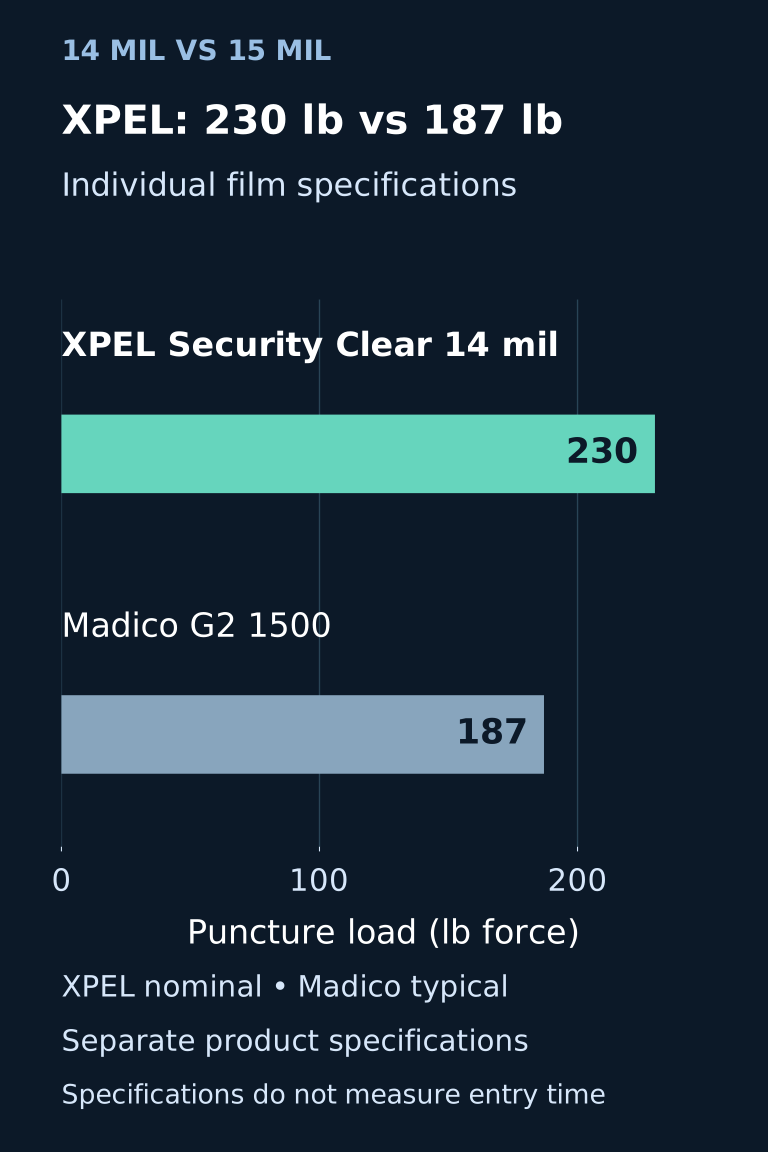
XPEL Security Clear 14 mil has a nominal puncture-resistance figure of 230 lb, compared with 187 lb for Madico SafetyShield G2 1500. That is a useful reason to look beyond a “15 mil” label. XPEL specification; Madico data sheet.
If your patio-door or ground-floor glass breaks, your concern is what happens next. You want more resistance between the broken pane and someone getting into your home.
Properly installed security film and frame attachment can slow forced entry. Holding broken glass together makes it harder to clear a path through the pane, giving you more opportunity to react or move your family away. Safety and security film explained.
Clear Guard installs and recommends XPEL Security Clear 14 mil for suitable interior glass. We pair it with DOWSIL 995 attachment where the assessed glass and frame support that installation.
The film's material profile and its connection to your frame matter together. A higher puncture figure supports the material choice; it does not, by itself, tell you how long a window will resist entry.
XPEL 14 mil and Madico G2 1500 side by side
| Characteristic | XPEL Security Clear 14 mil | Madico SafetyShield G2 1500 |
|---|---|---|
| Exact product | Security Clear 14mil PS; XVSC14M | SafetyShield G2 1500 |
| Thickness designation | 14 mil nominal | 15 mil structural component; 17 mil complete film |
| Puncture resistance | 230 lb | 187 lb |
| Break strength | 420 lb/in width | 473 lb/in width |
| Tensile strength | 30,000 psi | 29,000 psi longitudinal; 34,000 psi transverse |
Sources: XPEL's December 2024 specification, XPEL VISION product sheet, R0326V3 and Madico M956474, September 2025. See the measurement note.
Madico has the higher break-strength figure: 473 lb/in against XPEL's 420 lb/in. XPEL has the higher puncture-resistance figure. Those are different characteristics, which is why thickness alone should not choose your film.
Why Madico is called 15 mil when the sheet says 17 mil
Madico lists two measurements for the same G2 1500 film: 0.015 inch for the structural component and 0.017 inch for the complete film thickness. These convert to 15 mil and 17 mil. Madico data sheet.
The 15 mil figure describes the structural gauge. The 17 mil figure counts the complete measured film stack. The difference is 2 mil outside the stated structural component; it is not another 2 mil of that structural film.
A mil means one thousandth of an inch. It measures thickness, rather than a security rating. NIST thickness definition.
The puncture and break figures describe material characteristics that a bare “14 versus 15” comparison leaves out. That is why a thickness label alone should not decide the installation you choose for your home.
What the strength figures mean for your choice
Puncture resistance describes the load needed to penetrate a film specimen under the test conditions. We consider puncture resistance alongside tensile and break strength when choosing the material for the barrier left after glass breaks. XPEL's higher listed puncture load is a central reason for our 14 mil versus 15 mil recommendation.
Break strength is measured by gripping a film strip at both ends and pulling until it fails. The result here is the load per inch of strip width. It is a tensile test, separate from a tear test. Madico's 473 lb/in figure is higher than XPEL's 420 lb/in for this pulling characteristic. How the strip test works.
Would a bat or hammer put the film under that kind of force? A blow can stretch the film as the broken pane deflects; concentrated contact can also puncture it, and damage can develop into a tear. Someone does not need to grab the film's ends for it to experience tension. Pulling resistance therefore remains relevant, alongside puncture resistance and attachment. IWFA film-behaviour guide, pages 6–9.
The distinction is what the number proves. A controlled strip-pulling test does not reproduce repeated blows against glass. Madico's higher break-strength figure does not establish that it survives more hammer strikes; equally, XPEL's higher puncture figure is not a count of blows or a guaranteed entry delay.
Tensile strength describes force relative to the specimen's cross-sectional area. Madico reports both lengthwise and crosswise values, so both appear in the table.
For your home, these characteristics sit alongside glass retention and frame attachment. You are choosing a film installation to resist entry after glass breaks, rather than choosing the largest number in one column.
XPEL film and frame attachment for a patio door
When you compare films for a Toronto patio door, start with the same glass and frame. Clear Guard assesses the glazing and available frame surface before specifying the XPEL installation.
XPEL film helps keep glass fragments together. DOWSIL 995 perimeter attachment connects the filmed pane to the frame, so the retained glass has more than the film alone holding it in place. Dow film attachment guidance.
XPEL's specification describes wet-glaze attachment such as DOWSIL 995. We assess the frame condition and follow the appropriate preparation, attachment and curing requirements.
If you live in a condominium, confirm the property's approval contact before work on the glass or frame. We also plan access around the slider and explain door use and curing during installation.
Those details turn a film selection into a plan for your actual patio door. Our thickness guide explains the interior and exterior options assessed for different windows.
XPEL's residential film warranty
XPEL Security Clear 14 mil carries a limited lifetime residential film warranty for the original purchaser, including replacement film and labour for covered defects. Coverage is subject to the Limited Warranty and film-to-glass compatibility requirements; film-defect coverage does not cover burglary damage. XPEL film warranty.
XPEL also has a separate extended glass-and-seal programme for qualifying installations. Any included extension will be identified in your written proposal, along with the coverage and conditions that apply to your windows.
Our recommendation
For suitable interior glass, we recommend XPEL Security Clear 14 mil with DOWSIL 995 frame attachment selected through an assessment of your home.
XPEL brings a nominal 230 lb puncture-resistance figure, 420 lb/in break strength and 30,000 psi tensile strength. That is a substantial material profile without needing a 15 mil label.
The purpose is practical: keep broken glass connected and make it harder to create a path into your home. Proper attachment and a sound frame help the installed system serve that purpose.
Book a free assessment for your Toronto or GTA home. We will review the glass and frame and provide a written XPEL security window film quote.
Sources and measurement note
Reviewed October 11, 2026. This article compares XPEL Security Clear 14mil PS (XVSC14M) with Madico SafetyShield G2 1500, rather than older SafetyShield products.
Measurement basis
XPEL's figures are nominal; Madico's are typical. XPEL's nominal 14 mil designation does not provide the same structural/complete-film breakdown. The specifications come from separate tests. Madico identifies ASTM D4833 for puncture; a common method and specimen-condition basis for these two products has not been established. These figures do not establish a shared forced-entry time.
The linked XPEL specification and Madico M956474 sheet support the product figures. ASTM D882 explains why specimen and test conditions matter when comparing tensile measurements.