What you want the glass to do after it breaks
If someone strikes a window while your family is home, you want more than a pane that breaks and falls away. You want the remaining barrier to resist being punctured, pulled apart or pushed out, giving you more opportunity to move away and call for help.
XPEL Security Clear 14 mil combines a nominal 230 lb puncture-resistance figure, 30,000 psi tensile strength and 420 lb/in break strength. These describe different ways the film resists force. XPEL specification, section 2.2.
Clear Guard installs XPEL. We recommend its 14 mil interior film with DOWSIL 995 structural perimeter attachment on suitable assessed glass and frames. Properly specified, installed and attached security film can slow an intruder. The purpose is more opportunity to react; no material figure supplies a guaranteed delay at your window. International Window Film Association.
Below, compare the material figures for XPEL, Avery Dennison, 3M, Madico, Solar Gard and LLumar, then see how SunTek and Hüper Optik fit into the wider choice. The test explanations show what each number means for your window.
Puncture: resistance to concentrated force
A puncture test drives a defined probe into a film specimen and measures the force needed to penetrate it. It concentrates force in one area, unlike pulling a strip from both ends. That makes it a useful material property when considering how film resists being penetrated after glass breaks. Laboratory report, puncture-test section.
XPEL and Solar Gard Armorcoat have the highest listed puncture figure in this group, at 230 lb. LLumar PS13 is 212.3 lb and Madico G2 1500 is 187 lb. XPEL has a higher listed puncture load than LLumar PS13 and Madico G2 1500, despite their substantial film gauges.
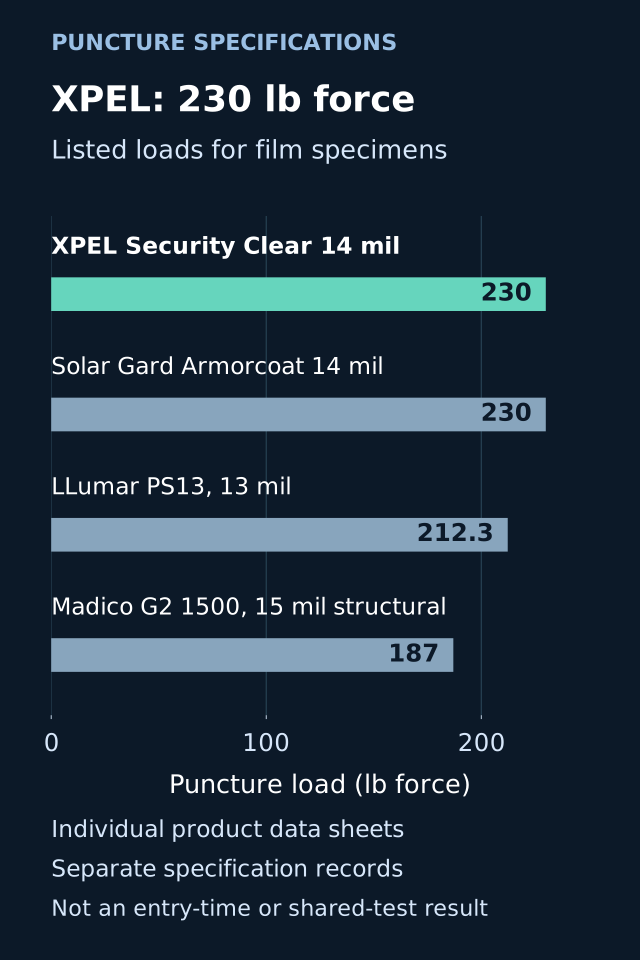
Puncture resistance is important when considering concentrated force through the film. A blow can also stretch the film as the damaged pane deflects, and repeated damage can lead to tearing. A laboratory puncture result does not reproduce a bat or hammer attack. Pulling resistance and frame retention belong alongside it. IWFA film-behaviour guide.
The actual film figures, side by side
| Exact product | Puncture, lb force | Tensile strength, psi | Break strength |
|---|---|---|---|
| XPEL Security Clear 14 mil | 230 | 30,000 | 420 lb/in width |
| Avery Dennison SF Clear 15 Mil i, R39803T | — | 28,500 | 420 lb/in width |
| 3M Safety S140, 14 mil | — | 25,000 | 350 lb/in width |
| Madico SafetyShield G2 1500, 15 mil structural | 187 | 29,000 longitudinal; 34,000 transverse | 473 lb/in width |
| Solar Gard Armorcoat 14 Clear | 230 | 30,000 | 420, printed as “lbs in”¹ |
| LLumar SCL SR PS13, 13 mil | 212.3 | 19,180 machine direction; 21,643 transverse | 268/297 lb force, by direction² |
Sources: XPEL, Avery Dennison SF Clear 15 Mil i, 3M S140, Madico G2 1500, Armorcoat and LLumar PS13.
The dash means this sheet does not give a puncture figure; it is not zero or a failed test. ¹ Armorcoat's December 2013 English unit label is ambiguous. ² LLumar reports break load as raw force rather than force per inch. Neither entry is ranked in the per-width comparison below. These are separate manufacturer specifications, with differing methods and directional detail, rather than a shared test.
SunTek Clear13M and Hüper Optik Clear Shield 14 mil are other named security-film options. Their cited optical sheet and product page do not provide comparable strength figures, so they have no numerical ranking here.
Pulling strength: what it tells you about the film
Tensile testing grips a strip at both ends and pulls until it fails. Break strength is a pulling result, not a tear test or a hammer test. Test setup. Tensile strength in psi describes force relative to the strip's cross-sectional area. Break strength describes the load when the strip fails; a value in lb/in also accounts for its width. ASTM D882.
XPEL 14 mil has a higher listed tensile figure than Avery's 15 mil film: 30,000 versus 28,500 psi. Both have a 420 lb/in break figure. The extra mil on Avery's label does not produce a larger break-strength specification. XPEL also exceeds S140's 25,000 psi and 350 lb/in figures.
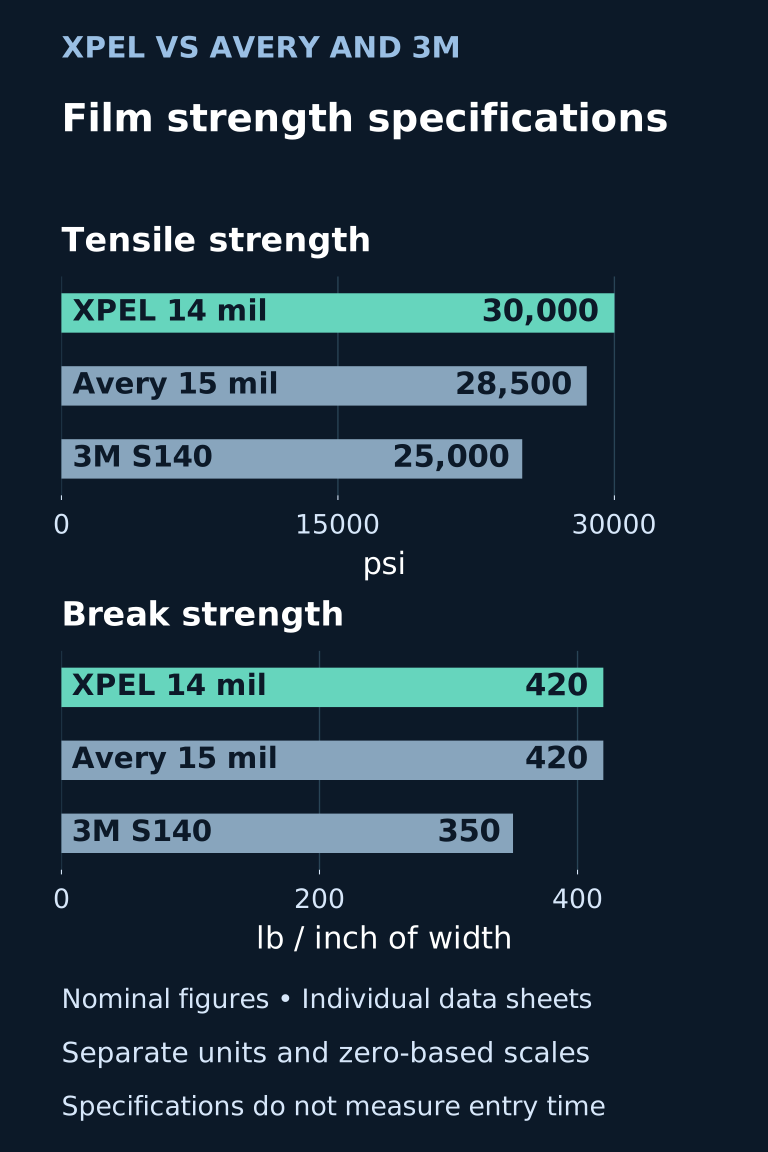
Among the unambiguous per-width entries in the table, Madico's 473 lb/in is highest, followed by XPEL and Avery at 420, then S140 at 350. Madico also gives directional tensile values: 29,000 psi along the film and 34,000 across it. Those directions matter; choosing only one would distort the comparison.
For a homeowner comparing XPEL with Madico, the material tradeoff is XPEL's higher listed puncture force versus Madico's higher break load. Madico's G2 designation refers to a 15 mil structural component and 17 mil complete film. A higher strip-pulling load does not establish that a pane will withstand more hammer blows. That would require an installed-glazing test representing the attack. Madico technical sheet.
Stretch and tear describe different behaviour
Elongation measures how far a strip stretches before breaking. A high percentage describes flexibility under that particular test; it does not automatically mean a better barrier at your patio door.
Initial-tear testing measures the force needed to start a tear in a defined specimen, commonly one with a notch. It does not measure the same event as puncture, or automatically describe how an existing tear keeps growing. ASTM D1004 scope.
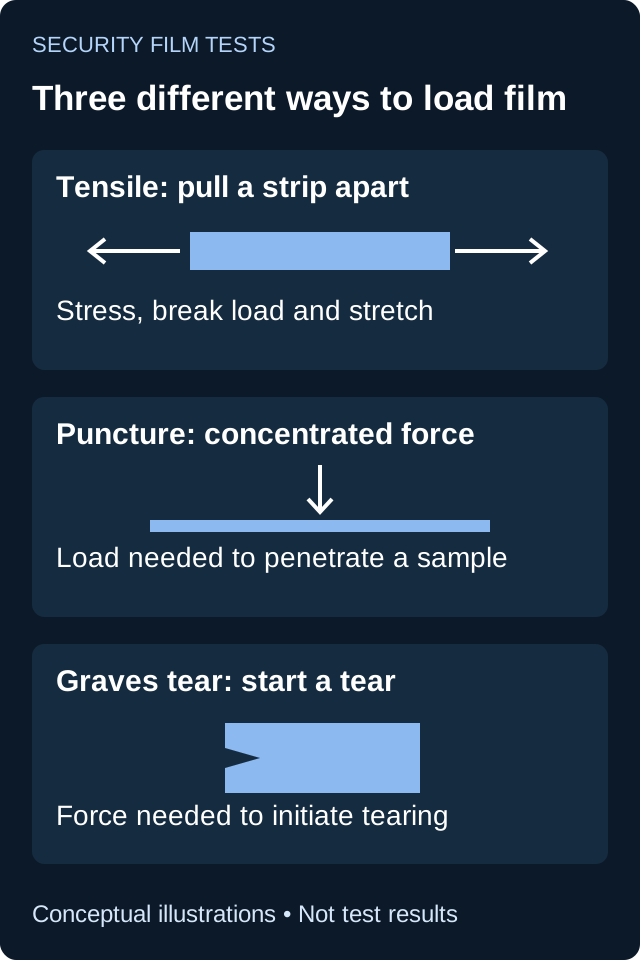
The distinction matters after glass breaks: stretching, tearing and puncturing are different ways a filmed pane can respond to force. A useful installation also needs to retain the pane at the edges, rather than rely on film strength alone.
Impact and burglary-related tests include the glass
Material tests pull or puncture film. Glazing tests apply an impact or attack to a specimen that includes glass. A pass answers the test's particular question; it does not place every brand on one ladder.
Safety-glazing tests address injury from accidental human contact. ANSI Z97.1 and CPSC 16 CFR 1201 appear in security-film documents, but their safety purpose should not be mistaken for a burglar trying to gain entry. CPSC safety-glazing rulemaking.
EN 356 P-class results describe resistance to specified steel-ball impacts, as the Armorcoat report below illustrates. Avery SF Clear 15 Mil i has a P4A mark on its product sheet. The mark is useful evidence of that stated classification; the one-page sheet does not identify the tested glass assembly. It should not be converted into minutes of resistance or a rank above a film tested on another assembly. Avery SF Clear 15 Mil i sheet.
Armorcoat 14 Clear has a P2A report for a specific double-pane assembly: 6 mm annealed glass, a 16 mm air space and another 6 mm pane, with film on the final surface. Each of three specimens received three steel-ball impacts from 3 m. That describes the tested glazing, rather than a timed attack at a home. Report 09G327B01#, September 2009.
UL 972 concerns burglary-resisting glazing material. XPEL 14 mil's specification records a pass. Avery's North American testing matrix also marks SF Clear 15 Mil i for UL 972, alongside safety-glazing standards. These are separate manufacturer-stated results. UL 972's scope excludes the mounting method, so the connection to your existing frame still needs assessment. XPEL specification, Avery testing matrix and UL 972 scope.
For a direct comparison of resistance to an intruder, the test needs the same glass, frame, attachment and attack conditions. A material-strength table or a list of different standards cannot supply that result.
XPEL with DOWSIL 995: retaining the filmed pane
Film helps hold glass fragments together. DOWSIL 995 structural perimeter attachment connects the filmed pane to a suitable frame, helping retain that barrier after breakage. XPEL's specification describes this wet-glaze method, and Dow documents protective-film anchoring. XPEL section 3.5 and Dow protective-glazing brochure, printed page 6.
Clear Guard assesses the glass, frame and bonding surfaces before specifying that detail. Joint design, preparation and curing determine whether the connection is suitable. Structural attachment is part of the installation, not ordinary household caulking. DOWSIL 995 product information.
What this means at a Toronto or GTA home
If your children play near a ground-floor window, or your living room faces the patio, start with the reachable glass and the room behind it. Compare what each proposal will install on those exact panes, including the frame attachment, rather than treating a brochure number as a complete plan.
At a patio slider, we assess the moving panel, frame condition and access for installation. In a condominium or rental, confirm the appropriate property contact and approval before work. Arrange access around occupied rooms and the installation's preparation and cure requirements.
If an attack happens, move away from the glass and call for help. The purpose of added resistance is more opportunity to do that, without assuming any particular window will provide a fixed number of seconds.
Why we recommend XPEL
XPEL 14 mil combines a strong puncture figure with pulling strength and a documented structural-attachment approach. That is our supported reason for recommending it on suitable home installations. It has a higher puncture specification than Madico G2 1500, higher tensile and break figures than S140, and the same break figure as Avery's thicker nominal film.
Your quote should turn that material choice into an assessed installation: the exact film, suitable panes, perimeter attachment, preparation and curing. The goal is a connected barrier after glass breaks, giving your household more opportunity to react.
XPEL's residential film warranty
XPEL Security Clear 14 mil carries a limited lifetime residential film warranty for the original purchaser, including replacement film and labour for covered defects. Coverage is subject to XPEL's Limited Warranty terms and film-to-glass compatibility requirements; film-defect coverage is not a promise to replace attack-damaged glass. Current warranty and compatibility package.
Any qualifying extended glass-and-seal programme must be separately included in your written proposal with its applicable conditions.
Read the focused XPEL vs 3M comparison or our interior and exterior film guide for those decisions.
Book a free assessment for your Toronto or GTA home. We'll assess the glass and frame and prepare a written security window film quote.
Source dates and measurement notes
Reviewed October 11, 2026. Source revisions: XPEL specification issued December 17, 2024; Avery S93031 April 2019 and an undated current-listed testing matrix; 3M Rev D January 2025; Madico M956474 September 2025; Armorcoat physical data December 2013; LLumar physical data December 2019; SunTek optical sheet March 2025. A document remaining in a current manufacturer index does not change its original revision date.
The numerical charts show specifications from individual sheets. They do not normalize differing specimen directions or methods, claim independent comparative testing, or predict an entry delay. The exact film, suitable glass and frame connection belong in the written proposal.