A multi-site commercial window film specification starts with a consistent way to collect information. It should not start by assuming every property can receive the same film.
Two locations can share a brand, room layout or complaint while having different glass, sun exposure and property requirements. A repeatable survey makes those differences visible. An exception register records how the project team will resolve them before a proposal becomes an installation instruction.
Standardise the survey before the product
Choose a short site reference and use it on photographs, room inventories and quote documents. Record the business contact and the person responsible for property decisions at each location. The same role may belong to different people across the portfolio.
Describe the objective in terms people can observe. “Reduce glare at the reception screen while retaining the outside view” is more useful than “apply the standard tint.”
Keep separate requirements for solar control, decorative privacy and security.
For commercial solar film, identify affected windows, occupied periods and daylight priorities. For privacy film, record who can see the relevant view, from where, and whether screening is needed after dark.
Use the same survey fields everywhere, with room for “unknown” and a named follow-up. A missing glazing record is a question to resolve, not a reason to copy another site's answer.
Collect a comparable record at every location
The table below is a starting template. Adapt it to the actual property uses rather than collecting information simply because another site did.
| Survey field | Collect at each site | Why the difference matters |
|---|---|---|
| Project objective | Affected room, task, view and occupied hours | Similar complaints can involve different requirements |
| Glazing information | Available records, known coatings, replacements and existing film | Appearance alone does not establish the same construction |
| Exposure and controls | Observed sun periods, nearby shading and current blinds | Conditions can change the useful comparison |
| Appearance decision | Relevant inside/outside views and responsible reviewer | A preferred finish may need separate property approval |
| Privacy requirement | Viewing direction, coverage and evening use | Daytime screening does not establish evening privacy |
| Access and timing | Local contact, business restrictions and proposed work periods | One schedule may not fit every location |
Keep the original observations with their dates. If a location could not be reviewed during the affected period, record that gap. A field completed from assumption should not look identical to a field verified during the site review.
The room-by-room project checklist can help collect one site's starting inventory. Copy or download it before leaving the page. It does not automatically submit notes or combine several properties into one saved account.
Use product data to compare candidates
The solar product-family comparison explains how offered films differ. Compare exact names and product codes on the same measurement basis, then relate the suitable candidates to each site's objective.
XPEL publishes performance sheets and separate film-to-glass resources. A film's performance figures do not approve its use on every location's glass. XPEL product specifications.
A successful sample at one site is useful experience, but it does not establish appearance or compatibility at the others. Review each difference directly. Do not call one accepted product a portfolio standard until the scope and its exceptions have been resolved.
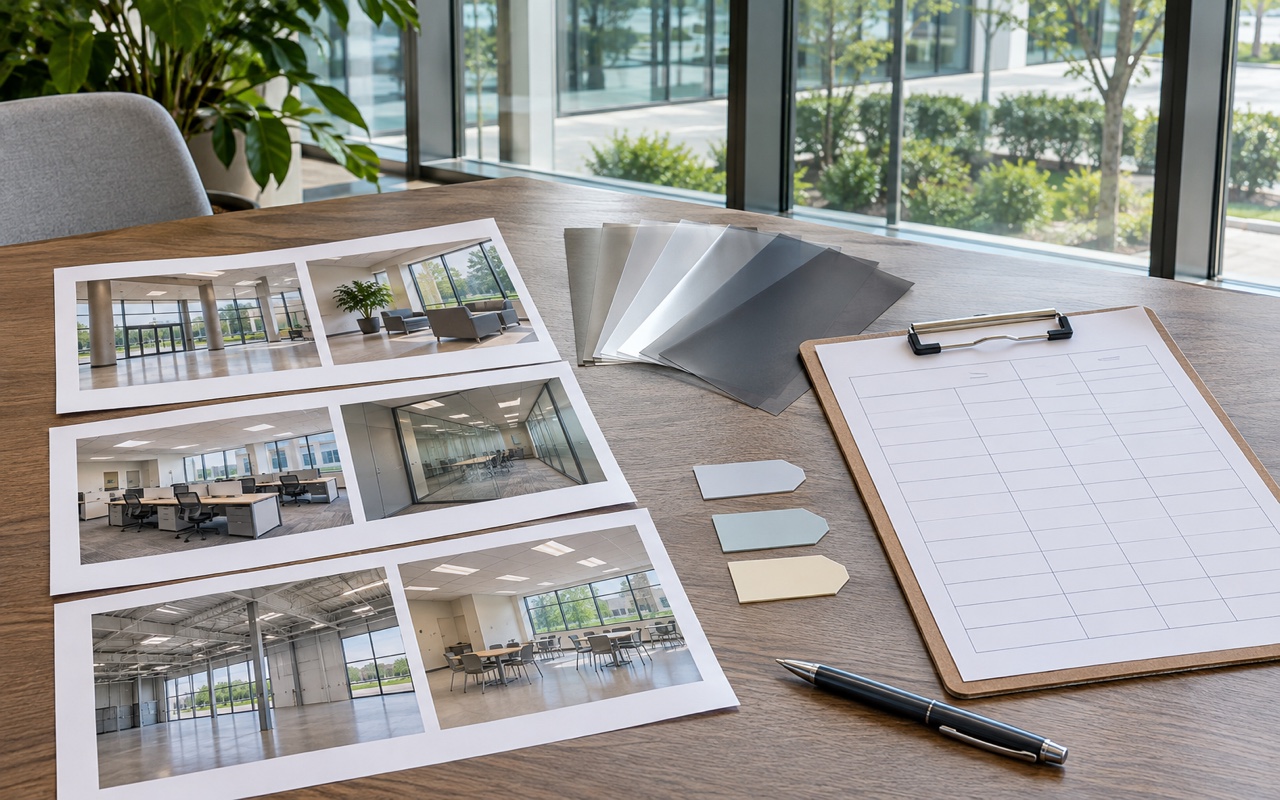
Illustrative editorial image; not a Clear Guard customer property or performance test.
Request a multi-site commercial film review. Share the locations, approximate glazing scope and the decisions you want to standardise. Clear Guard reviews the requirements before arranging site assessments.
Keep an exception register
An exception is a difference that needs a decision, not a failed site. It may concern glass information, finish preference, room use or access. Naming it helps the team decide what can proceed and what still needs evidence.
The examples below are fictional. They illustrate the record format and do not describe completed Clear Guard work.
| Site and difference | Evidence still needed | Decision to resolve | Record the outcome |
|---|---|---|---|
| Site A: glazing records differ from the initial assumption | Confirmed information for the affected panes | Whether the proposed film remains suitable | Product-specific review and revised scope |
| Site B: room used for evening meetings | Sample observations with normal lights on | Required finish and coverage for visual privacy | Accepted conditions and unresolved sightlines |
| Site C: property contact requests an exterior sample | Review from agreed outside viewpoints | Whether the proposed appearance is acceptable | Reviewer, decision and any revised proposal |
| Your location and exception | Missing document or observation | Named question | Decision date and current scope reference |
Avoid a single “approved” column that combines every decision. An appearance acceptance, compatibility review and access arrangement are different records. Show which one the exception concerns.
If a proposed product changes, revisit the observations and documents affected by that change. Do not assume that a similar name or shade preserves the original specification.
Separate a repeatable process from a fixed result
A useful portfolio process can standardise product identification, required records and review steps. It can still produce different finishes or coverage at different sites.
Carry each location's agreed decisions into its quote scope. The commercial quote checklist helps compare proposals without hiding differences in removal, access or preparation.
Confirm the proposed rollout sequence with the installer and local contacts. A discussion of several sites is not a promise of a particular crew arrangement, installation rate or completion period. Resolve access and readiness before treating a target sequence as booked work.
Clear Guard's commercial film services cover Southern Ontario projects subject to scope review. Include the actual locations in the enquiry rather than assuming the same service arrangements apply outside that area.
Frequently asked questions
Can we specify the same window film at every location?
Possibly, but do not decide from matching appearance or building use alone. Review each location's glass, objectives and applicable project conditions. A common product is an outcome of that review, not a substitute for it.
Does an accepted sample at one site approve the other sites?
No. Keep the sample as a reference and identify which conditions differ elsewhere. Glass construction, lighting, sightlines and appearance requirements may need their own review. Record the evidence and outstanding decisions for each location.
What should we provide for a multi-site film enquiry?
Send the property locations, approximate glazing scope, local contacts and the solar or privacy objectives. Include known exceptions and any target timing. Clear Guard reviews the requirements before arranging assessments and confirming the proposal for the agreed work.
Prepare the site list for review
Start with a consistent survey and an honest list of differences. Request a multi-site commercial film review for your Southern Ontario locations, and include the information already available alongside the questions that still need resolving.