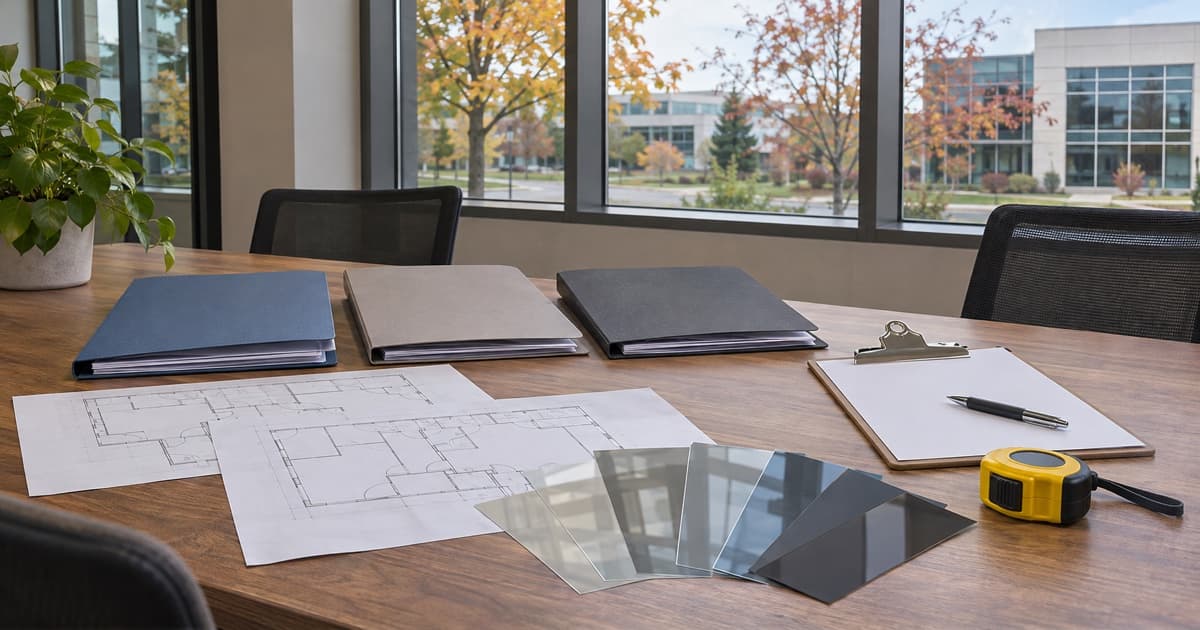
A commercial window film project can involve the business occupying the space, a property manager, an owner representative and an installer. A useful starting point is a short requirements note that gives each person the same description of the proposed change.
That note should identify the affected glass, the problem to address and the decisions still needed. It organises the project conversation; it does not determine lease rights, window ownership or who has authority to approve work.
For example, a tenant may report afternoon glare at reception while the property team wants the exterior appearance preserved. That creates two related decisions, not an automatic product choice. This fictional example shows the distinction; it is not a Clear Guard customer project.
Describe the change you are requesting
Start with what happens in the space. Record the room, affected hours and the task or view involved. Examples might include glare on a reception screen or views into an evening meeting. Treat those as observations to discuss, not a final specification.
Explain what you want to retain as well. The street view, daylight or exterior appearance may be important to the occupier or the property team. Naming those requirements early gives the installer a clearer selection question.
Use commercial solar film for heat, glare and daylight selection questions, and privacy film options for screening and coverage. If more than one need is involved, record each separately. Do not assume a solar tint establishes night privacy or that decorative frosting provides security performance.
Include available photographs, existing treatments and preferred work periods. Keep private documents and screen content out of photographs. A concise, labelled record is more useful than an unstructured folder of images.
Identify the property questions before choosing a product
Ask the property contact which process applies to the proposed work and who needs to be involved. Different people may hold glazing information, review appearance, coordinate access or receive the final proposal.
Do not presume that the person who prefers a sample also confirms every other aspect of the project. A design preference, a technical review and the parties' arrangements are separate decisions.
Use the worksheet below to record questions and the next handoff. Blank fields are intentional: the project team supplies the actual contacts and status.
| Decision or question | Information needed | Contact to confirm | Current status | Next handoff |
|---|---|---|---|---|
| Requested outcome | Rooms, hours, views and priorities | |||
| Glazing information | Available records and known changes | |||
| Appearance review | Proposed sample and relevant viewpoints | |||
| Property process | Requirements identified by the responsible parties | |||
| Access | Room entry and business restrictions | |||
| Care information | Who receives instructions for the installed film | |||
| Future work | Any removal, maintenance or later-change question |
The table is a discussion record, not an approval letter or contract. It should make unresolved items easier to see without implying that completing every cell is legally sufficient authorization.

Illustrative editorial image; not a Clear Guard customer property or performance test.
Request a commercial project review. Share the location, proposed treatment and the property contact coordinating the discussion. Clear Guard reviews the scope by phone before arranging a site assessment.
Keep the technical questions with the installer
Share available glass information and identify anything that remains unknown. Existing film, replacement panes or uncertain coatings belong in the project review. A similar-looking window elsewhere in the property does not establish the same construction.
XPEL publishes architectural performance sheets and separate film-to-glass resources. Those resources help distinguish product comparison from compatibility review. A preferred sample appearance alone does not approve the film for the actual glazing. XPEL product specifications.
Ask how the proposed finish and coverage will be documented in the quote. If the product changes during the discussion, check which sample observations and compatibility questions need to be revisited. Avoid passing on an old product name while discussing a new proposal.
Record what the next person needs to know
A handoff should include the current requirements note, relevant references and outstanding conditions. Keep it short enough that the next contact can identify the decision being requested.
Use this summary alongside the responsibility worksheet. It records the state of the conversation, not authority to begin installation.
| Scope item under discussion | Source or reference | Unresolved condition | Person following up |
|---|---|---|---|
| Rooms and glass proposed for treatment | Current inventory or labelled photographs | Areas still to be confirmed | |
| Product and appearance | Proposed product identification and sample notes | Appearance or compatibility review outstanding | |
| Access and working period | Information from the property and business contacts | Arrangements still to be agreed | |
| Future-work requirement | Question supplied by the relevant party | Technical or agreement clarification needed |
Date the summary and identify its version. If a new request changes the scope, replace the current discussion copy and mark the older one as superseded. This prevents different contacts from answering different versions of the same question.
The commercial quote checklist helps connect these decisions to a proposal that covers the intended work. It should complement the parties' own process rather than replace it.
Raise future-work requirements early
If future removal, existing-film removal or later changes matter to the project, make that requirement explicit before product selection. Ask for the relevant technical assessment and for the parties to clarify their arrangements.
Do not assume that every film can be removed without affecting the glass or that one person automatically bears the responsibility or expense. This guide does not interpret the agreement between the occupier and property team. Record the question and who will resolve it.
Also identify who should receive the installed product's care information. The responsible contact may need to share it with a cleaning contractor or later facilities staff. XPEL provides a dedicated Commercial Care & Maintenance document; use the instructions applicable to the installed film and conditions.
Frequently asked questions
Can a commercial tenant arrange window film without involving the landlord?
Identify the applicable property process and responsible contacts before confirming work. This guide does not determine the rights or requirements in an agreement. Start by describing the proposed change and asking the property contact which decisions and information are needed.
Who decides the film and pays for the project?
The relevant parties need to clarify their roles and arrangements. Keep product suitability, appearance preference and the commercial agreement separate. Do not assign all three decisions automatically to the occupier, manager, owner or installer.
Can film be removed when a tenancy ends?
Raise that requirement before selection. Request a project-specific technical assessment and clarification from the relevant parties. Do not assume a removal method, final glass condition, cost or responsibility from a general product description.
Prepare the commercial project discussion
Explore commercial film services while assembling the requirements.
Preparing a film project for leased commercial premises in Southern Ontario? Send the approximate glazing scope and the decisions still unresolved. Request a commercial project review. We review the requirements before arranging an assessment and written quote.