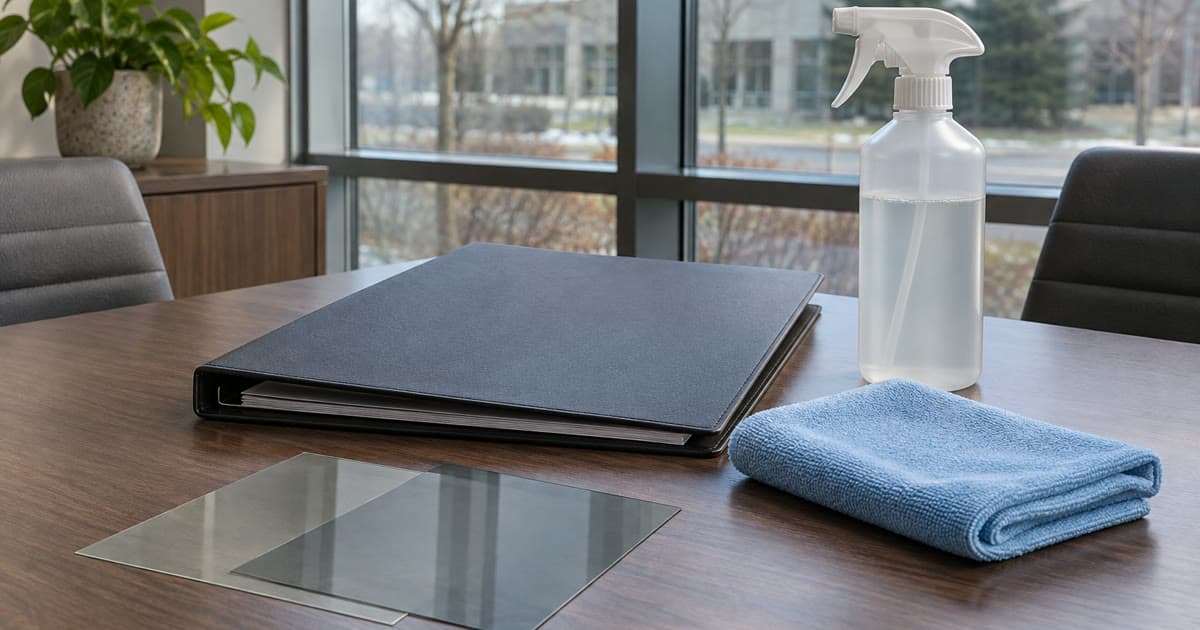

There is no universal trade sequence that puts window film first or last in every refurbishment. The useful sequence depends on the glass, room use, selected finish and work around each area.
Start with the decisions that can still change. Record who owns each answer and which film area it affects. A proposed date is not the same as confirmed readiness.
Start with the current project references
List every room or elevation where solar or privacy film is being considered. Connect each area to the current drawing, glazing reference and intended room use.
Then mark what remains preliminary. Replacement glass, partition layouts, furniture positions, lighting and finish choices can all change the question the film proposal needs to answer.
A meeting-room screen is a simple example. If the partition or table moves, an earlier sample review may no longer represent the relevant sightline.
Clear Guard reviews glazing information, drawings and finish requirements for proposed commercial work. The agreed film scope still depends on the actual project and the information supplied.
Explore commercial window film services before preparing the enquiry.

Illustrative editorial image; not a Clear Guard customer property or performance test.
Build a window film dependency register
A dependency is information, a decision or related work that affects the proposed film area. Name what is missing instead of writing only “waiting.”
The examples below are fictional planning prompts. They are not a construction schedule, installation method or assignment of contractual responsibility.
| Film area | Current change or question | Information needed | Contact to identify | Status | Recheck trigger |
|---|---|---|---|---|---|
| Perimeter office | Replacement glazing proposed | Current glass specification and affected panes | Project or glazing contact | Awaiting information | Glass specification changes |
| Meeting room | Partition layout revised | Current drawing and intended coverage | Design or project contact | Under review | Layout changes again |
| Shared room | Lighting and furniture unsettled | Conditions for the sample review | Room representative | Not confirmed | Task position changes |
| Occupied reception | Access period requested | Agreed availability and restrictions | Site contact | To discuss | Working period changes |
Keep the requested installation period in the record, even when an input remains open. That preserves the project goal without presenting an unresolved area as ready.
Request a refurbishment film review. Share the proposed glazing work, relevant drawings and decisions still outstanding. Clear Guard reviews the scope by phone before arranging a site assessment.
Recheck the affected proposal when inputs change
For solar work, identify the exact candidate using the solar film specifications. For screening, record the selected privacy film finish and coverage.
Do not carry either choice silently onto changed glass. XPEL publishes separate product data and film-to-glass resources because product comparison and project-glazing review are different tasks.
The current XPEL chart distinguishes glass configurations and review categories. It also warns that actual performance can vary with the exact glazing configuration.
Bring changed glass information back to the installer. The affected proposal may need another compatibility, appearance or scope review. That does not mean every confirmed decision must restart.
See the current XPEL product-specification directory for manufacturer documents. The directory is not project approval by itself.
Confirm readiness through named contacts
Before booking work, identify who confirms the glazing information, selected product, coverage, access and any required project approvals.
Keep open conditions visible instead of replacing them with one broad “ready” label.
| Current reference | Proposed decision | Outstanding condition | Next contact |
|---|---|---|---|
| Drawing or glazing document and revision | Film area and candidate product | Information still to confirm | Project and installer contacts |
| Sample record and viewing conditions | Appearance and coverage | Condition not represented in review | Designated reviewer |
| Current scope summary | Included areas and exclusions | Access or preparation question | Site and installer contacts |
This readiness review does not authorize work or decide contractual responsibility. It keeps the next question connected to the person able to answer it.
Ask expressly about existing film, glazing work and preparation near the proposed installation. Removal, repair, cleanup or management of other trades should not be assumed to be included.
The commercial quote checklist helps compare the written proposal with the requirements the team has recorded.
Keep revisions and handover information together
When an input changes, record the change, affected areas and people notified. Mark superseded drawings or sample records so they do not return as current references.
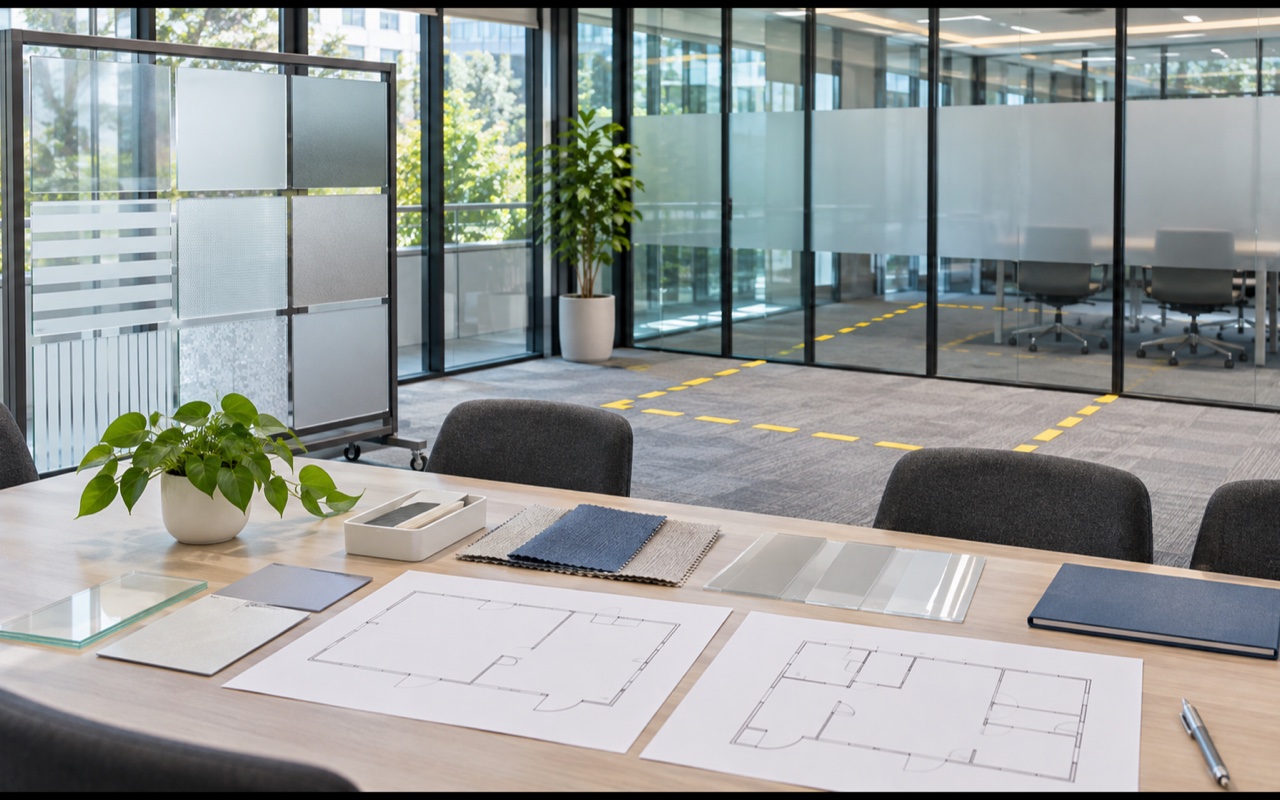
Illustrative editorial image; not a Clear Guard customer property or performance test.
The commercial project checklist can help organize room information. Copy or download its summary before leaving the page; it is not attached automatically to an enquiry.
At handover, retain the installed-product record and applicable care guidance. XPEL publishes separate interior and exterior care instructions, so keep the guidance tied to the installed product.
See XPEL Commercial Care & Maintenance. It does not establish a universal construction sequence or cleaning-start date.
Frequently asked questions
Should window film be installed before or after refurbishment?
There is no universal answer. Agree the dependencies, working conditions and sequence with the project team and installer. Consider the requested date alongside the decisions and work still affecting each film area.
Does a glazing change require the film proposal to be reviewed?
Bring the current glass information to the installer. Confirm which compatibility, appearance or scope checks need revisiting, then record the affected areas. Do not assume an earlier selection transfers automatically.
Does the film quote include preparation or contractor coordination?
Check the written scope. Ask who handles each dependency and whether removal, repair, cleanup or related coordination is included. Keep unresolved responsibilities open until the proposal addresses them.
Discuss film within the refurbishment plan
Planning a commercial refurbishment in Southern Ontario? Send the film areas, known dependencies and target work period.
Request a refurbishment film review so the requirements can be discussed before confirming an assessment and written scope.