An existing window film replacement assessment starts with what is already on the glass. A commercial operator may inherit tinted windows without product records, or want different privacy after a room changes use. Neither situation tells you how a new film should be specified.
Gather the available evidence, describe the desired change and keep unknowns visible. That gives the assessor a useful starting point without assuming the existing treatment must be removed, retained or covered by another layer.
Gather records before interpreting appearance
Ask the property contact for earlier invoices, film product information and installation records. Available glazing documents matter too. Keep a record of who supplied each item and which windows it describes.
An invoice naming a product is useful only if it can be connected to the glass under discussion. A document for a previous fit-out may describe another room, an earlier pane or work that was only proposed.
Distinguish documented information from reported history. “The former manager remembers a solar film installation” is a lead to investigate, not confirmation of the exact product. Record an approximate installation date as approximate when that is all you know.
Do not disturb the treatment to collect evidence. Share accessible photographs and records, and let the assessment identify what additional information is needed.
Create an existing window film evidence register
Give each affected window or group of panes a location reference. Use the same reference in photographs, notes and the enquiry. This helps keep evidence attached to the right glass as people contribute information.
The entries below are fictional examples of how to record uncertainty. They do not diagnose a film or describe a Clear Guard project.
| Glass location | Existing film identity | Evidence or source | Visible observation | Unknown to resolve |
|---|---|---|---|---|
| Reception glazing | Unknown | Current property records contain no product sheet | Tinted appearance | Product, installation history and glazing details |
| Meeting-room partition | Reported decorative film | Previous manager's recollection | Partial frosted coverage | Exact finish and extent of earlier work |
| Perimeter office | Document names a product | Historical invoice; pane match unconfirmed | Appearance differs from adjacent pane | Whether the document covers this location |
| Your location | Documented, reported or unknown | Record or person providing information | Describe what is visible | Question for assessment |
Keep observations neutral. A cloudy area, mark or changed appearance should not automatically be labelled adhesive failure, seal damage or lost performance.
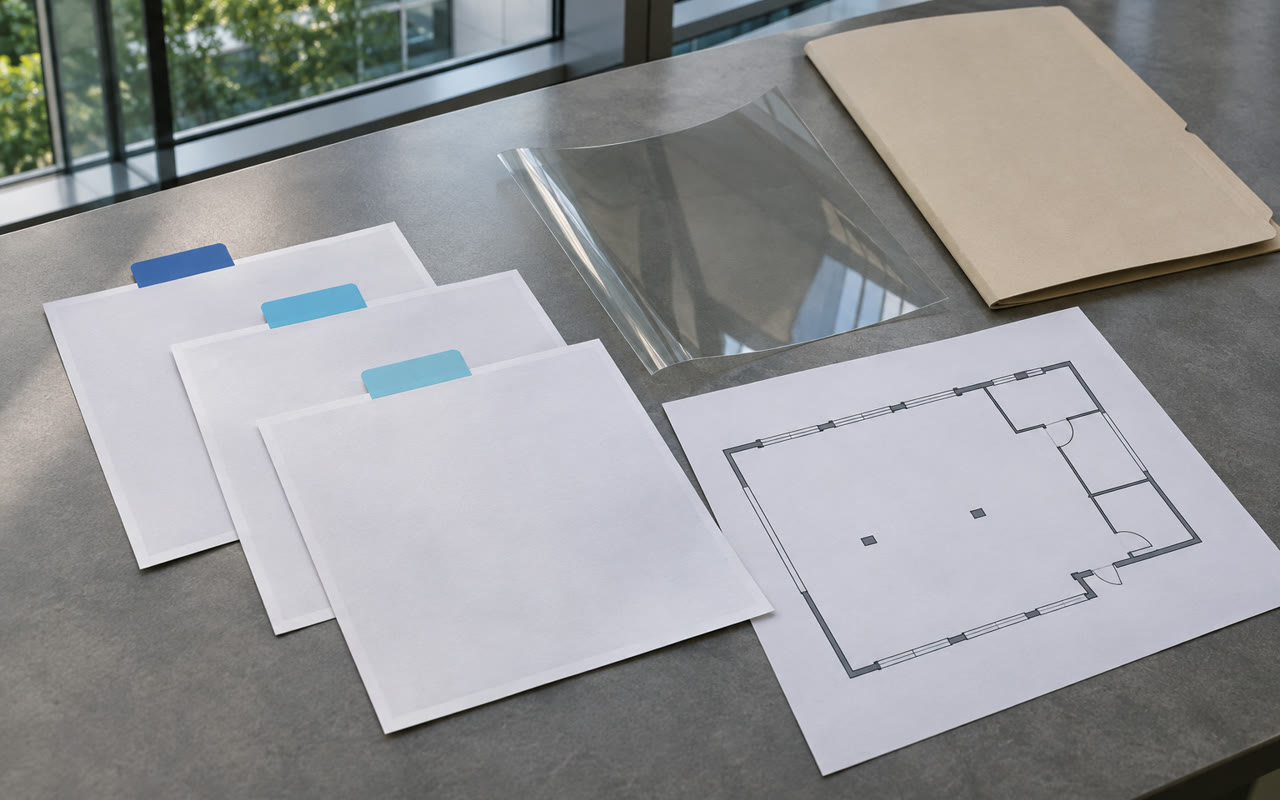
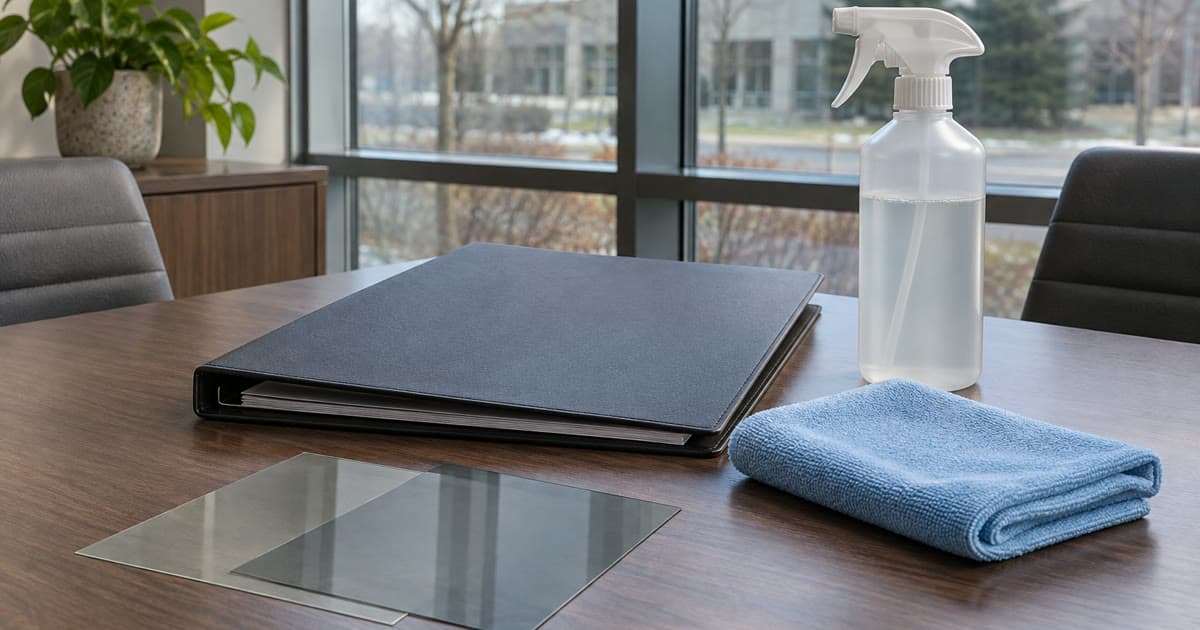
Illustrative editorial image; not a Clear Guard customer property or performance test.
Add the room's current use and the operator's reason for considering a change. That may be a different furniture layout, a new screening requirement or an appearance preference. An existing-film enquiry does not need an invented defect to justify the conversation.
Request a commercial film assessment. Describe the existing treatment, what is unknown and the change you want considered. Clear Guard reviews the scope by phone before arranging a site assessment.
Separate the desired change from the installation approach
Describe what the room needs before choosing a replacement product. Wanting more daylight, different visual screening or a consistent appearance creates different selection questions.
The solar film specifications and privacy film options can help frame those requirements. They do not determine what should happen to an unknown existing layer.
| Desired change | Existing-treatment question | New-product or glass question | Next contact |
|---|---|---|---|
| Different daylight level | What treatment is present and where? | Which suitable candidates meet the daylight requirement? | Film assessor and appearance reviewer |
| Revised visual screening | Which glass is treated and what coverage exists? | What finish and coverage should be assessed for the new use? | Room representative and film assessor |
| Updated appearance | Are differences documented across panes? | What sample conditions should the decision-maker review? | Property contact and film assessor |
| New proposal with unknown film | What must be established about the existing installation? | Which installation approach can be evaluated? | Person coordinating the assessment |
This worksheet separates questions; it does not approve a method. A product that looks appropriate for the new requirement is not evidence that it can be installed over the existing film.
XPEL publishes product specifications alongside separate architectural film-to-glass resources. Those resources support review of the identified product and glazing; they do not establish removal feasibility for an unknown installation. XPEL product specifications.
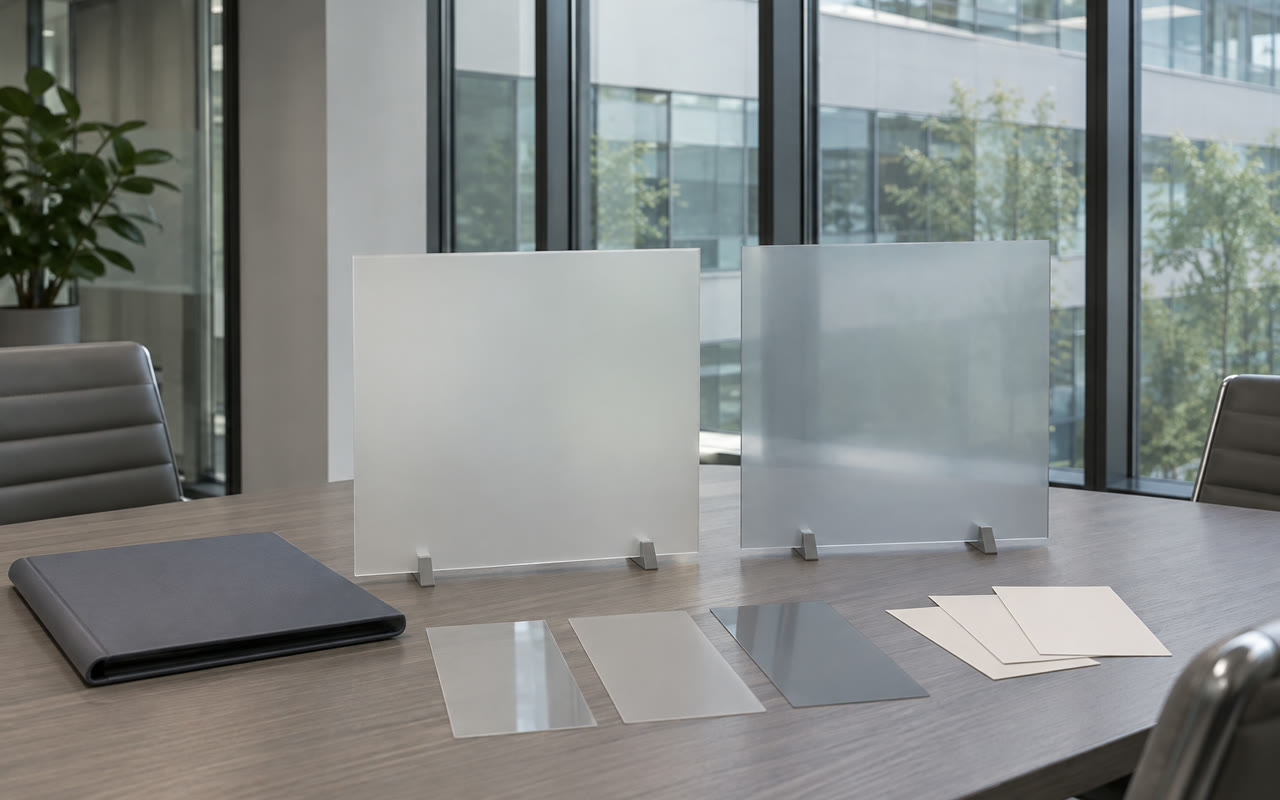
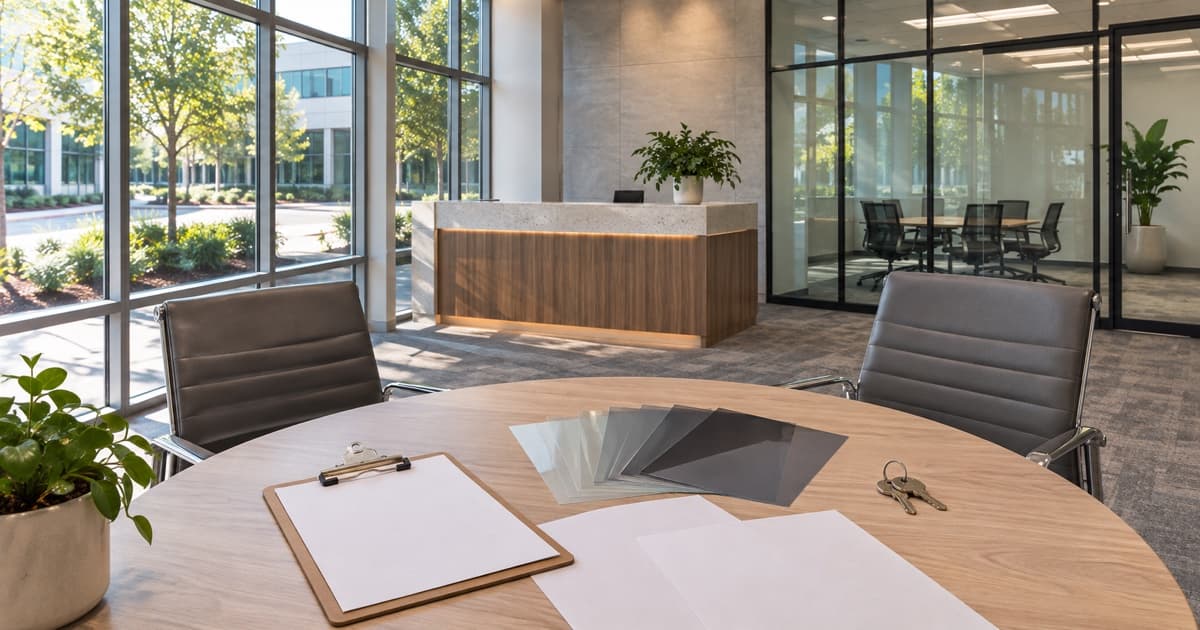
Illustrative editorial image; not a Clear Guard customer property or performance test.
Keep removal and preparation questions explicit
Ask what needs to be assessed before a proposal can proceed. The answer may involve missing product information, glass condition or questions about the existing treatment. Record who will follow up and which parts of the scope remain undecided.
Do not treat the word “replacement” as a complete description of included work. Ask the proposal to state its approach, assumptions and exclusions. If removal, preparation, repair or cleanup is discussed, clarify responsibility and availability rather than assuming those services are provided.
A photograph or sample cannot promise complete removal or the condition of the underlying surface afterward. Do not create a test patch yourself to settle that question. Leave the assessment method to the appropriate project contact.
Where the property team is considering glazing work separately, include that information. A film proposal should not silently assume the current glass will remain if replacement is already under discussion.
Retain unresolved questions in the proposal
Use the commercial quote checklist to connect the evidence register with the written scope. List affected locations, proposed products and any work still dependent on further review.
Ask for changes to be identified clearly. If the selected product or treatment approach changes, establish which earlier checks and observations need revisiting. A similar name or colour does not make two specifications equivalent.
Keep areas excluded from the proposal visible. “Not assessed” should not become “approved” when a summary is copied into a later phase. Retain the source documents so the next project contact can distinguish evidence from assumptions.
Frequently asked questions
Can new solar or privacy film be installed over existing film?
Do not assume so. The proposed product, glazing and installation approach need explicit review. Identifying a desirable new finish does not establish suitability for installation over an existing layer.
Can existing film be identified from photographs?
Photographs support an initial discussion and locate observations. They do not establish every product, layer or glazing detail. Provide available records and leave missing information marked unknown for assessment.
Does a replacement quote include removal of the existing film?
Check the agreed written scope. Ask what assessment is needed and who is responsible for each proposed task. Do not assume removal is included, available or guaranteed to leave the underlying surface unchanged.
Discuss the existing film and your proposed change
Explore commercial film services when preparing the requirements for your property.
Considering a new solar or privacy film proposal for a Southern Ontario property? Share the locations, available records and unresolved existing-film questions. Request a commercial film assessment before agreeing an installation scope.