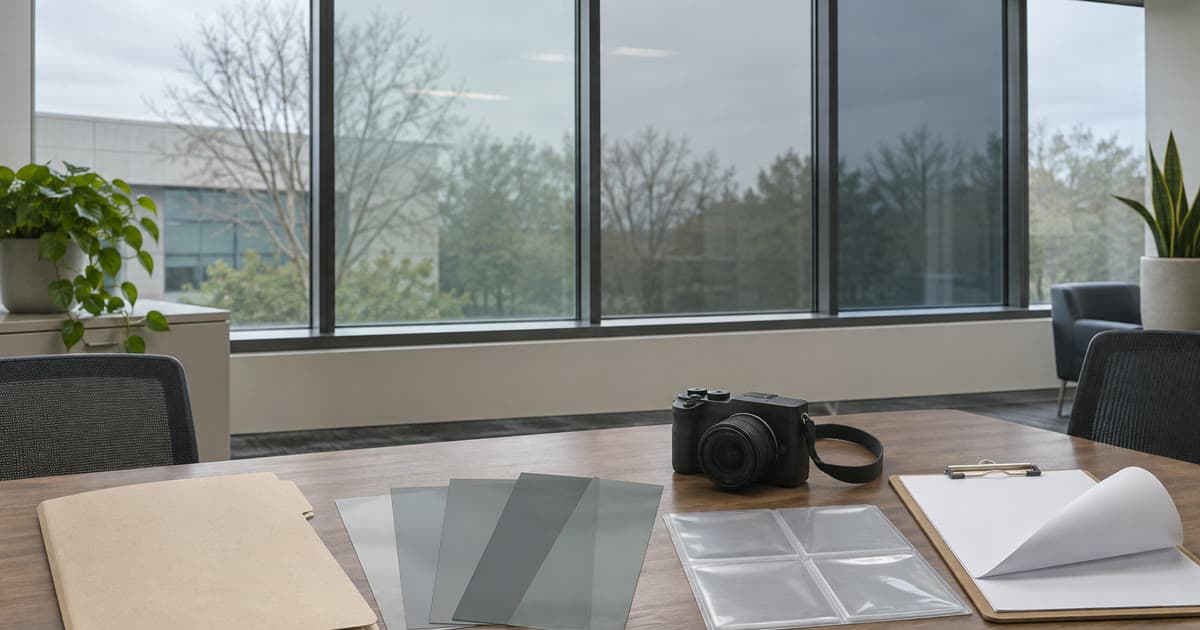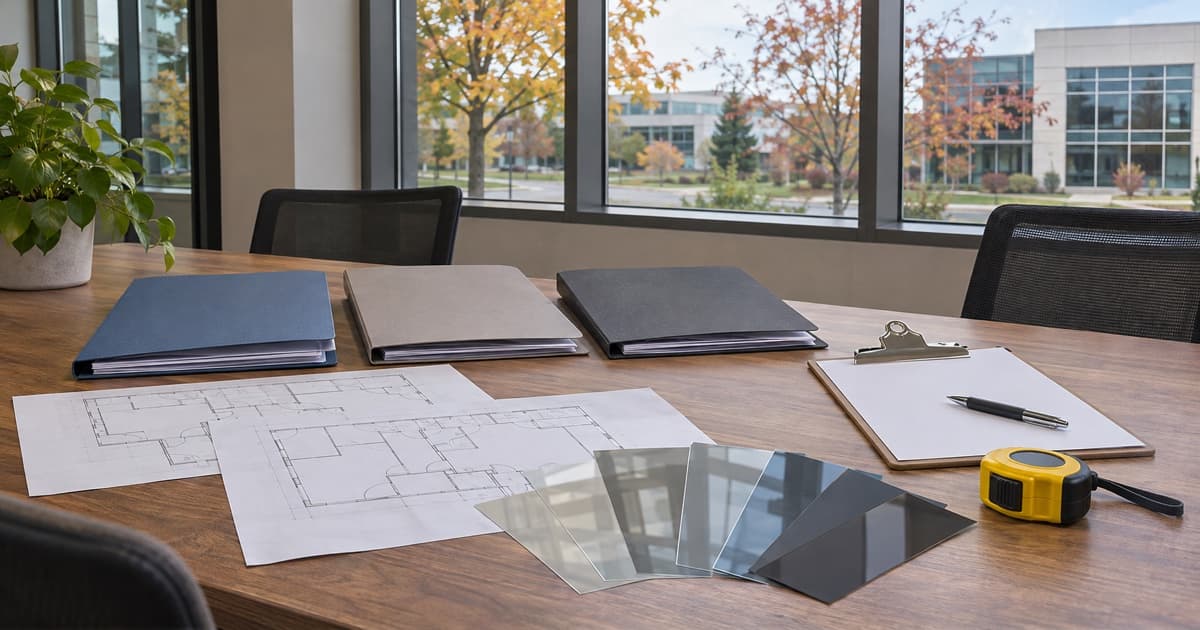
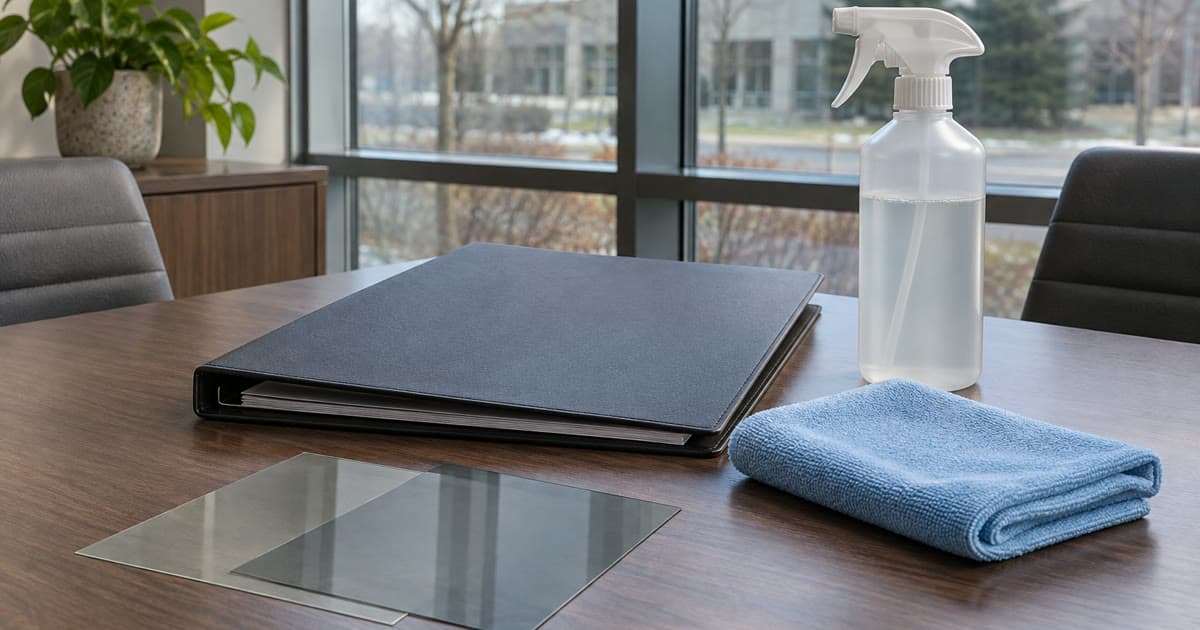
Commercial window film cleaning and care begins with a handover record. It should identify the installed solar or privacy film, treated areas and applicable instructions. That record is more useful than a generic waiting period passed from one person to another.
A facilities team may approve the installation while a separate contractor cleans the windows. Connect those teams before routine cleaning resumes. The person working at the glass needs to know which surfaces have film and where to find the relevant guidance.
Plan commercial window film cleaning and care
Keep the installed product name and code with the completed scope. Include room or pane references that can be matched to the actual glass. Where different products were used, avoid labelling the entire floor simply “tinted windows.”
The distinction matters when a property has clear solar film, decorative frosting and untreated glass nearby. Appearance alone may not tell the cleaner what is installed or which guidance applies.
For a new project, ask how the installer will record completed areas and any changes from the proposed scope. The commercial quote checklist helps bring that handover requirement into the planning conversation.
The solar film options and privacy film options describe selection. They do not replace the instructions supplied for the installed product.
Create a cleaning handover record
Use this worksheet to connect the location, care information and responsible recipient. Leave a question open if the answer has not been confirmed; do not fill the gap with instructions from another installation.
| Area and installed product | Instruction reference | Cleaning-start guidance to confirm | Recipient | Outstanding question or contact |
|---|---|---|---|---|
| Room or pane reference | Document name and current version | Record the instruction received | Person or contractor receiving it | Clarification still needed |
| Additional treated area | Applicable product guidance | Record any differing condition | Responsible recipient | Named follow-up contact |
| Your project entry |
Store the record where facilities staff can retrieve it later. If the cleaner receives a separate work order, include the treated-area references and the location of the care instructions there as well.
Record who received the guidance. Sending a document to a general mailbox may not establish that the person cleaning the glass has seen it. Ask the relevant team to confirm how the information will reach the people doing the work.
Confirm when routine cleaning can begin
Ask the installer which instructions apply to the actual product and conditions. Keep that answer with the care record. Do not borrow a cleaning-start date from automotive tint or a different type of window film.
XPEL's dedicated commercial care guidance describes temporary haze associated with mounting moisture. That explanation does not identify every mark or tell you when every installation is ready for the same treatment. If the appearance concerns you, contact the installer or manufacturer rather than trying to correct it yourself. XPEL Commercial Care & Maintenance, V1.0.
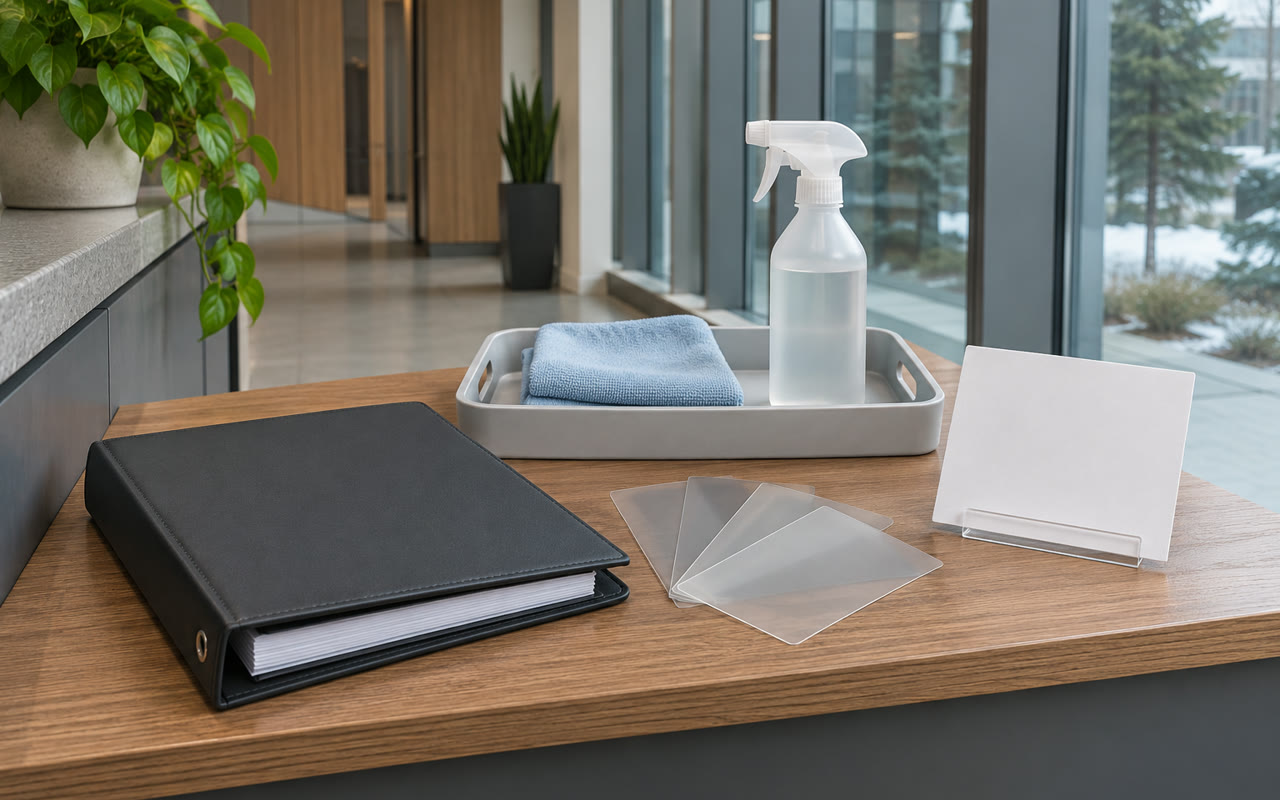
Illustrative editorial image; not a Clear Guard customer property or performance test.
When an area is handed back to the business, distinguish general room access from permission to clean or attach materials to the film. If the handover does not answer a question, request clarification and record the response.
Planning a new film project? Request a commercial film review and identify who will receive the care instructions. Clear Guard reviews the scope by phone before arranging a site assessment.
Use the documented gentle-cleaning approach
XPEL's commercial guidance recommends gentle cleaning products and soft materials, including a soft microfiber cloth. It cautions against harsh products and, for exterior film, bristle brushes or aggressive cloths. Use the guidance that applies to the installed film rather than assuming every method suitable for bare glass is suitable here. XPEL Commercial Care & Maintenance.
Before the first routine clean, identify the products and tools the contractor intends to use. Resolve any uncertainty with the installer or manufacturer. A general description such as “our usual cleaner” is less useful than the actual product information when seeking clarification.
Do not turn an unexplained mark into an experiment with solvents, scraping or stronger pressure. Record the location and observation, then ask for the appropriate next step. This article does not provide a stain-removal or adhesive-removal recipe.
Keep signs, tape and later changes in the discussion
A shop may change its window display, or an office may attach a temporary notice after installation. Ask about the proposed material and application before using it on the film. Do not assume it will remove cleanly or leave the surface unchanged.
Pass the care record to a new cleaning contractor or facilities contact when responsibilities change. Include any additional instructions received since installation. An outdated copy should be identified so that two different versions are not used at the same property.
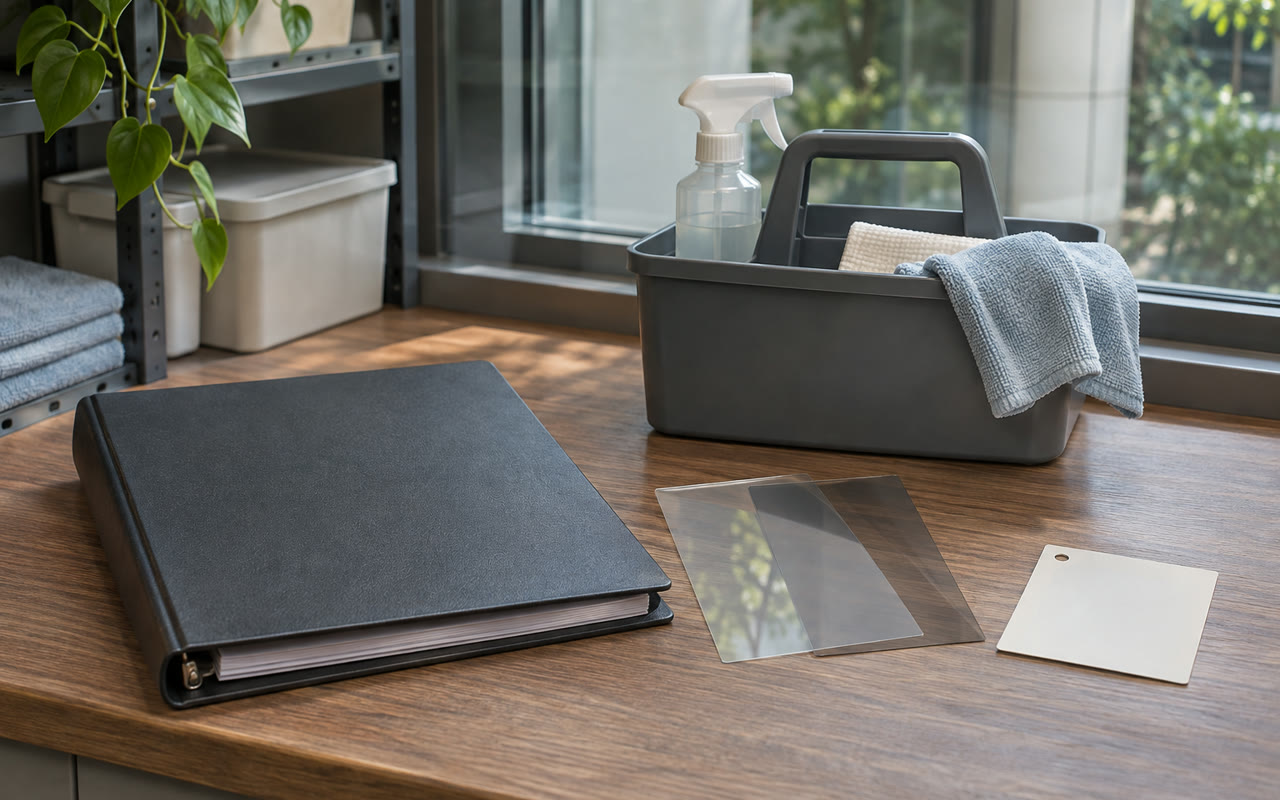
Illustrative editorial image; not a Clear Guard customer property or performance test.
Where rooms are refurbished or glazing work is planned, tell the relevant project contact that film is present. The care record should help identify the installed material, without being treated as approval for later work.
Document a concern clearly
A useful concern report describes what can be observed. Record the area, when the change was noticed and the instructions followed. Photographs can identify the location and appearance, but they do not establish the cause.
| Location | Observed change | When noticed | Care information followed | Person contacted |
|---|---|---|---|---|
| Room or pane reference | Describe the appearance without diagnosing it | Date and relevant circumstances | Document or instruction reference | Installation or manufacturer contact |
| Your project entry |
Avoid assigning fault from a photograph or an incomplete history. Keep the question specific and preserve the relevant product information. Existing-installation concerns should go to the installation contact; a new-project quote form is not a promised maintenance-response channel.
Frequently asked questions
When can newly installed commercial film be cleaned?
Follow the instructions confirmed for the installed product and conditions. Record that guidance at handover and pass it to the cleaning team. Do not use a universal number of days taken from another film project or automotive tint advice.
Can the cleaning contractor use the usual glass-cleaning products?
Check the applicable film instructions first. Identify the proposed products and materials so any uncertainty can be resolved. A method used on nearby untreated glass does not automatically establish suitability for the filmed surface.
Should haze or a mark be scrubbed away?
No aggressive treatment should be improvised. Some temporary haze can relate to mounting moisture, but appearance alone does not identify every issue. Document the concern and seek guidance for the installed film from the installer or manufacturer.
Include care handover in your project scope
Explore commercial film services when planning a new installation.
For a proposed Southern Ontario solar or privacy film installation, include your cleaning-handover requirements when you request a commercial film review. We discuss the project before arranging an assessment and written quote.