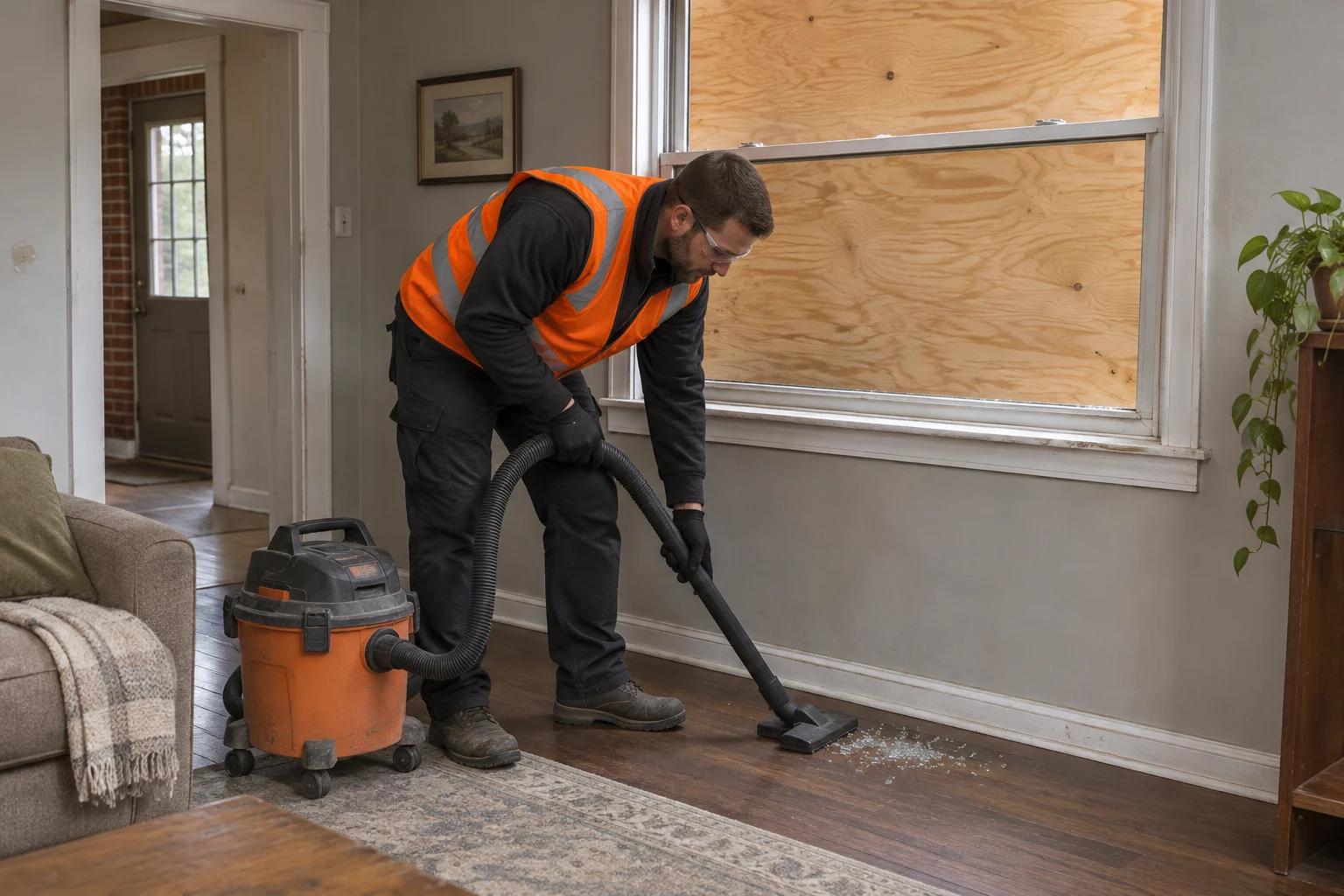
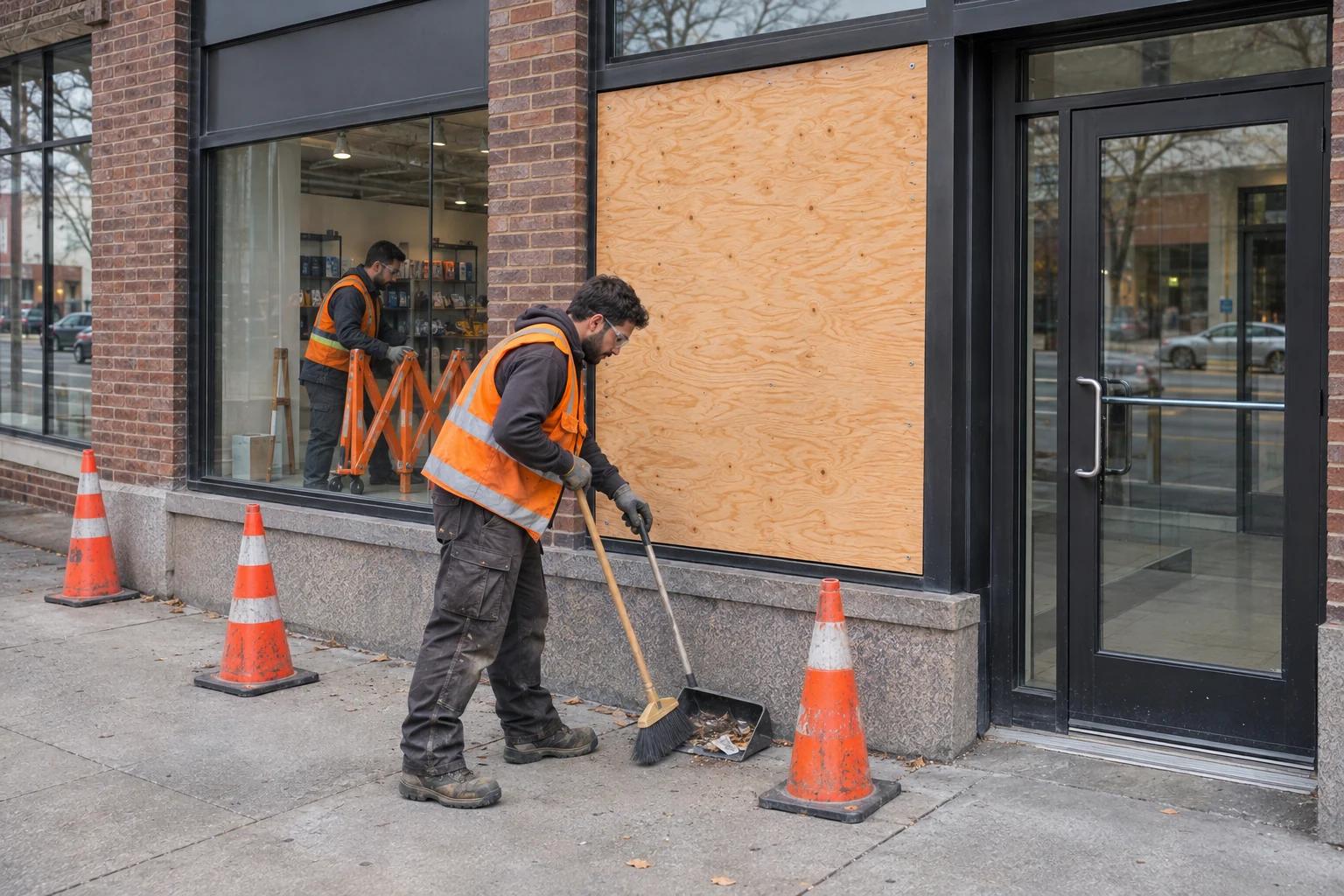
A smashed display window can leave the building exposed and put staff and customers near loose glass. Start by making sure people are safe, then identify who can authorize temporary boarding and which entrances must remain usable.
Keep people clear and contact police
If the break-in could still be in progress or there’s an immediate threat, stay out and call 911. If the incident is over and there is no immediate danger, contact local police for reporting instructions. Ask staff to leave the affected area undisturbed until police say they can enter. Toronto Police Service break-and-enter guidance
Identify the affected glazing and the required exits
When it is safe, note which display windows, doors or overhead panels are affected. Tell dispatch if a damaged door is a required exit or the only usable entrance. Required exits and fire access must stay unobstructed. Check with the building manager about whether the store can safely reopen. Ontario Fire Code
Give dispatch the right contacts
Provide the contact for whoever can meet the crew, approve the work, and handle billing. Send the postal code, a wide storefront photo if safe, and approximate dimensions if you know them. Let dispatch know if your building requires a purchase order.
See emergency commercial storefront board-up.
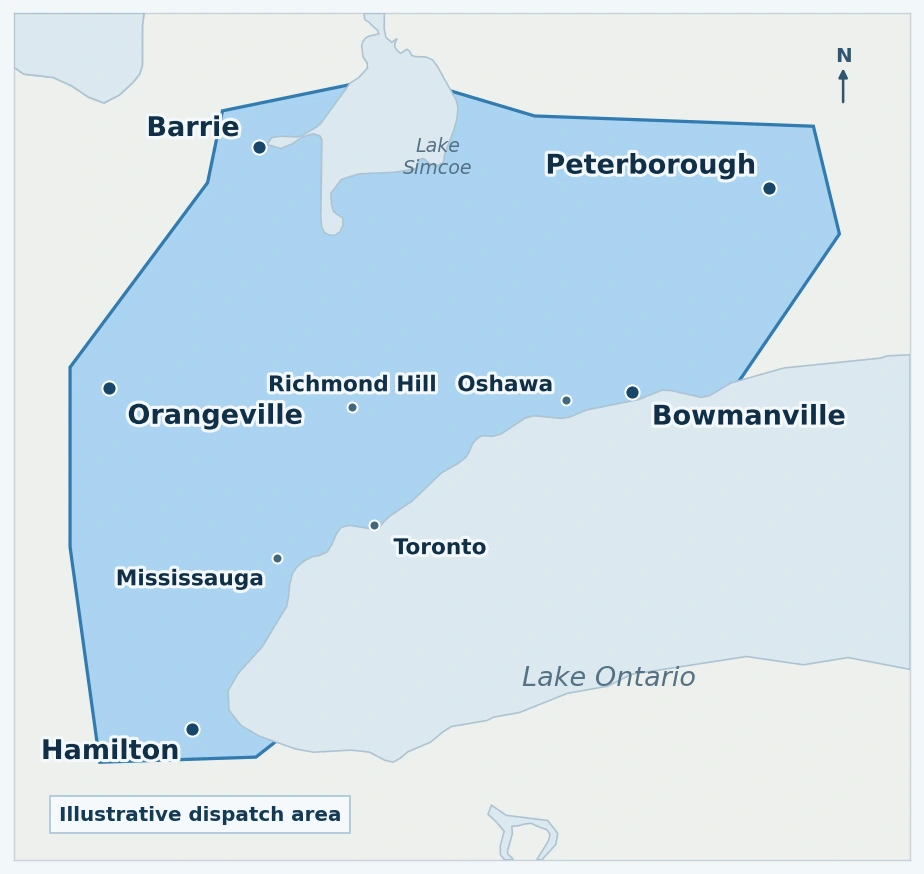
Send your postal code to confirm the current dispatch window.
Coordinate the permanent glazing and board removal
Keep job photos and the itemized invoice with your incident records. Clear Guard measures the glass during the board-up visit. If you need a glazier, we can provide a separate replacement quote and remove the board when we install the new glass. If your building has a preferred glazier, confirm who will remove the board with them. Once the glass is replaced, talk to your property manager about security film or door fortification if needed. Read our storefront glass prevention guide.