
Condo window film compatibility cannot be decided from a photograph or the fact that a window is double-pane. The exact glass construction matters.
A window may combine insulated panes, factory tint, a Low-E coating and tempered or laminated glass. These descriptions are not mutually exclusive.
The practical task is to identify the assembly, inspect its condition and check the proposed film against current manufacturer guidance.
Condo window film compatibility starts with the assembly
Film manufacturers publish separate performance sheets and film-to-glass guidance. A heat-rejection figure does not establish permission to install the product on your window. XPEL specifications and compatibility resources.
Some solar films absorb energy in the glass as well as reflecting it. Existing glazing and uneven exposure affect the technical review. Do not infer suitability from the words “ceramic” or “clear.” IWFA window-film FAQ.
Ask an installer to identify the proposed product, installation side and glazing it was checked against. Written confirmation should name your glass rather than say only “safe for condos.”
Window descriptions and the checks they require
The table below explains what to collect. It is an identification checklist, not a manufacturer approval matrix.
| Window description | Information needed before choosing film |
|---|---|
| Clear single-pane glass | Glass type, dimensions, thickness, condition and the exact film. |
| Double-pane insulated glass | Construction of both panes, existing coatings, factory tint and sealed-unit condition. |
| Low-E glass | Coating type and location, pane construction and manufacturer records. |
| Tempered or heat-strengthened glass | Verified glass treatment plus the rest of the assembly; treatment alone is insufficient. |
| Factory-tinted or reflective glass | Original tint or coating specification and the proposed combined assembly. |
| Laminated glass | Exact laminate and glazing construction; obtain specific manufacturer review. |
| Triple-pane glass | Full assembly documentation and specific manufacturer review. |
| Glass with existing film | Identify the film and assess removal; do not assume stacking is acceptable. |
XPEL's current compatibility resource distinguishes glazing combinations and contains restrictions. Laminated and triple-pane assemblies require particular care; do not treat them as automatically approved. XPEL current film-to-glass chart.
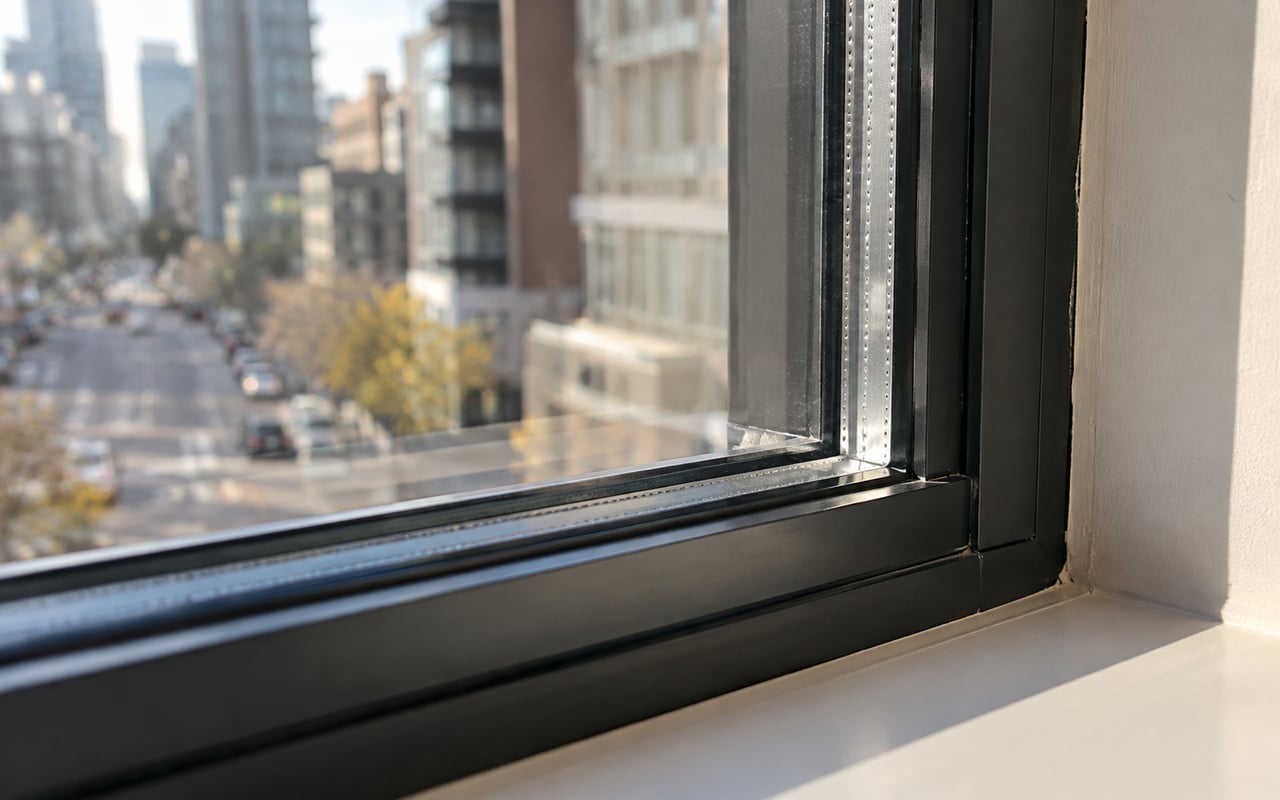
AI-generated editorial illustration; not a technical cross-section or compatibility certification.
Gather records instead of guessing from reflections
Ask property management for the original glazing schedule or replacement-window records. Request the window supplier and glass manufacturer's details if available.
Photograph the whole window, frame, visible spacer markings and any etched corner stamp. Record which windows were replaced. A replacement pane may differ from neighbouring original glass.
A stamp can help identify glass treatment. It does not establish the whole insulated assembly or the location of every coating. Installer instruments and manufacturer records may be needed.
Do not dismantle glazing or attempt a heat test. Leave uncertain identification to the building team and qualified installer.
Include glass condition and shading in the assessment
Tell the installer about cracks, chipped edges, persistent fogging between panes or previous breakage. Photograph partial shading from balconies, nearby structures and deep blinds.
Also describe heaters close to the glass and any opaque stickers or coverings. These details belong in the assessment, even if the glazing specification appears familiar.
An exterior-access requirement needs its own plan. Interior and exterior products are not interchangeable. Exterior work also depends on safe access and building authorization.
Contact Clear Guard with the records you have. Unknown glass should lead to further identification, not an assumed approval.

AI-generated editorial illustration.
Keep technical approval separate from appearance approval
A film may be technically suitable while failing the condo's appearance requirements. A sample that looks acceptable may still need a glazing review.
Obtain both checks before installation. Ask management who can approve the work and whether the windows form part of the common elements. CAO common-element guidance.
For product terms, consult the manufacturer warranty information. Request the documents applicable to the selected product and installation.
Frequently asked questions
Can solar film be installed on double-pane windows?
Some film-and-glass combinations may be suitable. Double-pane construction alone is insufficient. Confirm coatings, glass treatment, dimensions, condition and the proposed product before approval.
Does Low-E glass mean no film can be used?
No universal answer follows from the Low-E label alone. Identify the coating and assembly, then obtain a product-specific review. Do not assume all Low-E windows share the same construction.
Are tempered windows automatically compatible?
No. Tempering is one attribute of the glass. The installer still needs to review the assembly, coatings, condition and selected film.
Ask Clear Guard to review your glazing information. Include management's requirements and photos of the affected windows before selecting a shade.
Related reading
Property-management questions · Tint and facade appearance · Commercial Low-E and double-pane review.