Condo solar film tint should match your goals for heat, glare, daylight and exterior appearance. The darkest film is not automatically the right choice.
If management wants minimal facade change, start by reviewing a light, low-reflectivity candidate. Then compare it with untreated glass from inside and outside.
No generic film label guarantees an unchanged exterior. The existing glass is part of the finished appearance.
Compare condo solar film tint using separate measurements
Visible light transmission, or VLT, describes how much visible light passes through a tested assembly. Higher VLT generally means more transmitted daylight.
Exterior visible reflectivity describes reflected visible light. It does not measure tint darkness or guarantee a matching facade.
Total solar energy rejected, or TSER, measures solar-energy rejection under the stated test conditions. It is not a percentage reduction in room temperature or cooling bills.
Compare these columns separately. XPEL lists all three in its architectural performance sheet. XPEL VISION R0326V3.
Compare light and darker candidates on the same basis
The following are nominal manufacturer figures for film on 1/8-inch (3 mm) clear test glass. They are not measurements of your condo windows.
| Film | VLT | Exterior visible reflectivity | TSER | Glare reduction |
|---|---|---|---|---|
| Clear View Plus 70 | 72% | 8% | 55% | 20% |
| Clear View Plus 55 | 58% | 7% | 57% | 34% |
| Clear View Plus 40 | 40% | 6% | 62% | 53% |
| Clear View Plus 20 | 21% | 5% | 67% | 77% |
Every value comes from XPEL VISION R0326V3, using the same test basis. Product names are identifiers; they are not exact VLT readings.
In this specific comparison, darker options have lower listed exterior reflectivity. Darkness and mirror-like appearance are therefore different selection questions.
The table also shows that a light-transmitting option can provide solar control. It does not mean that every clear-looking film has the same performance.
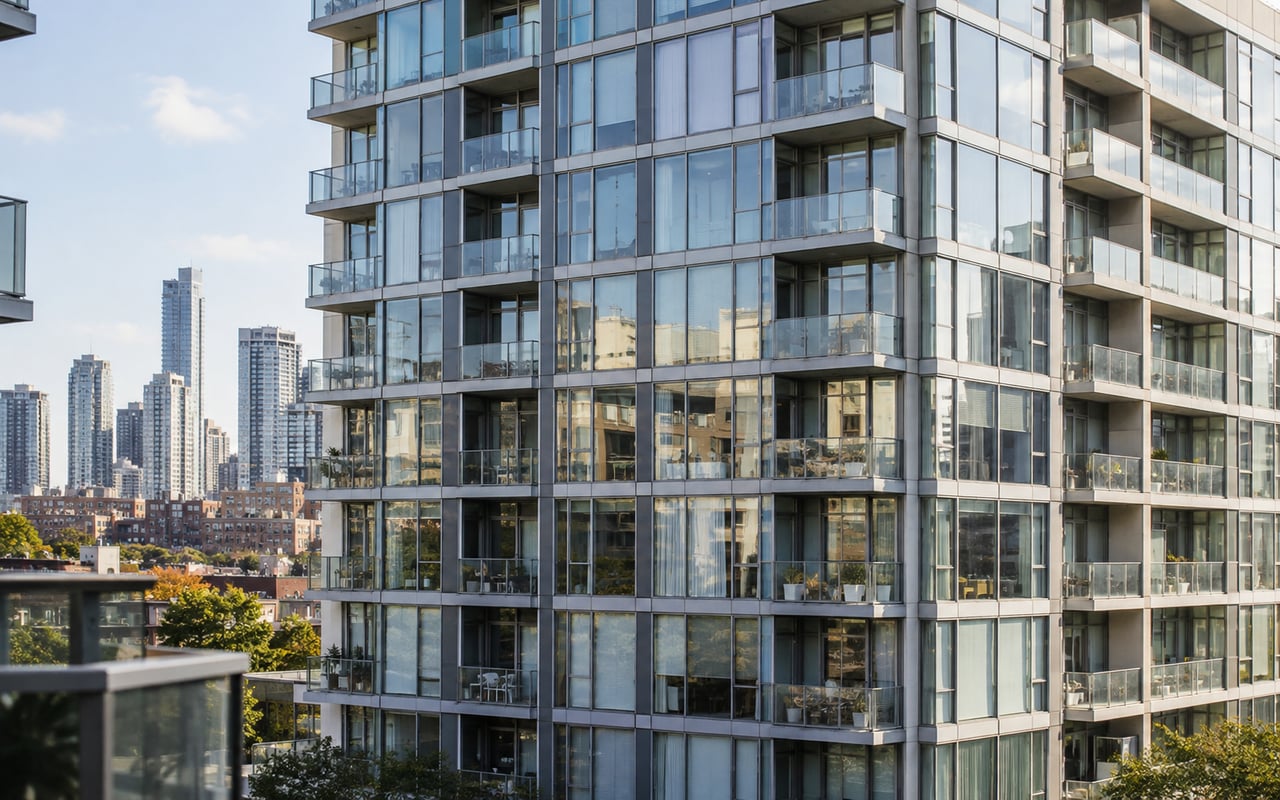
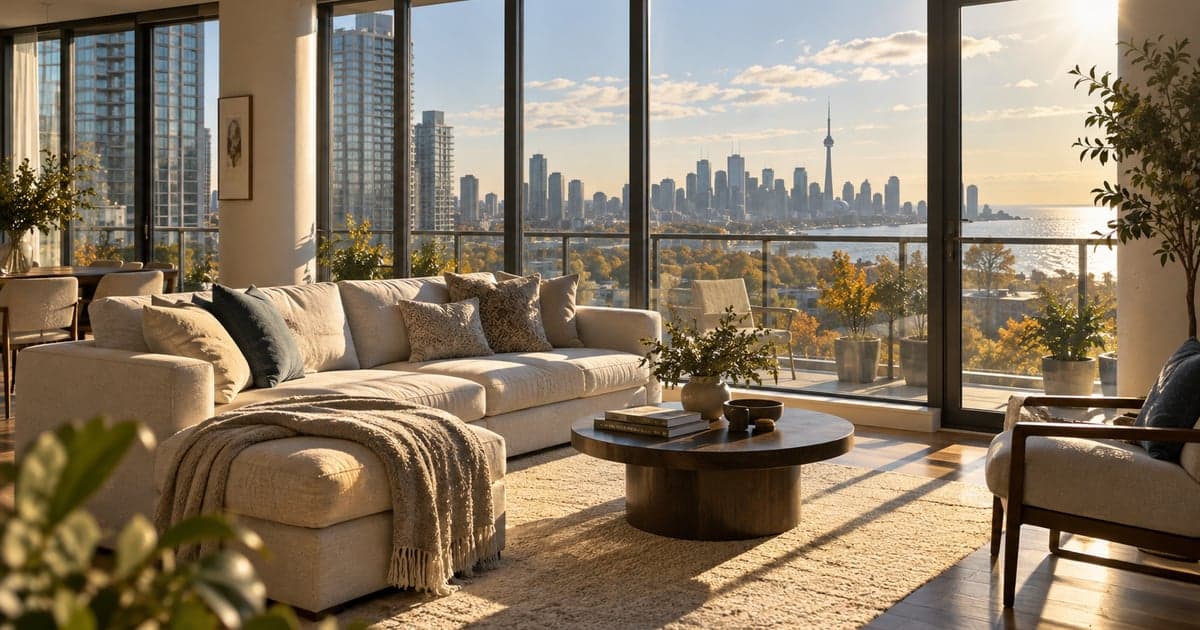
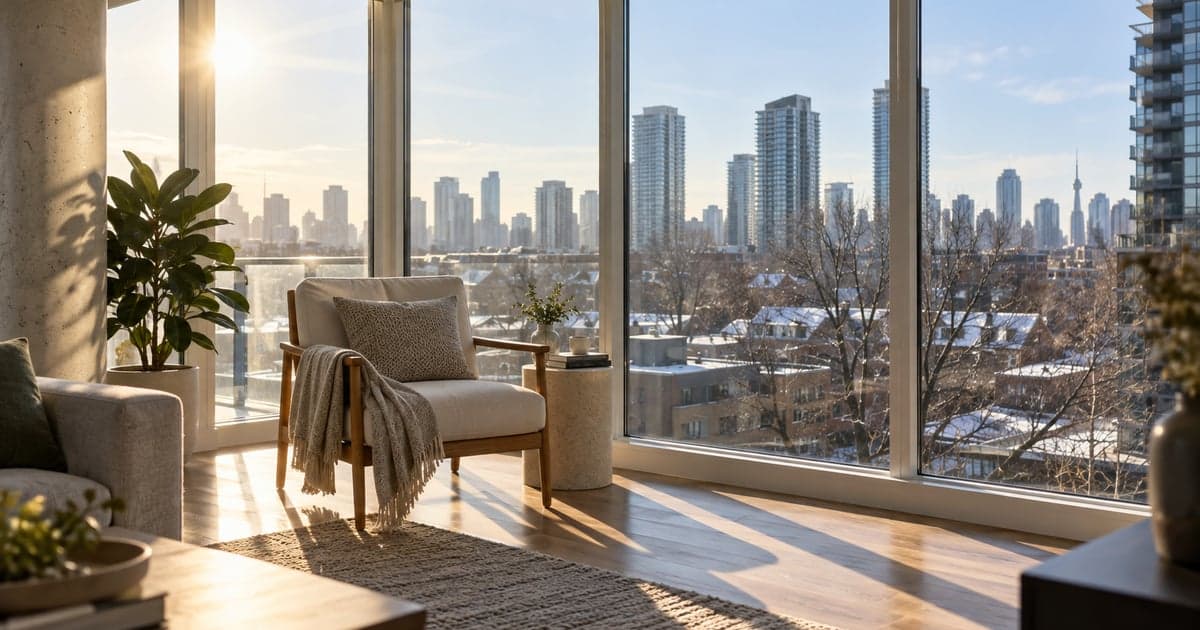
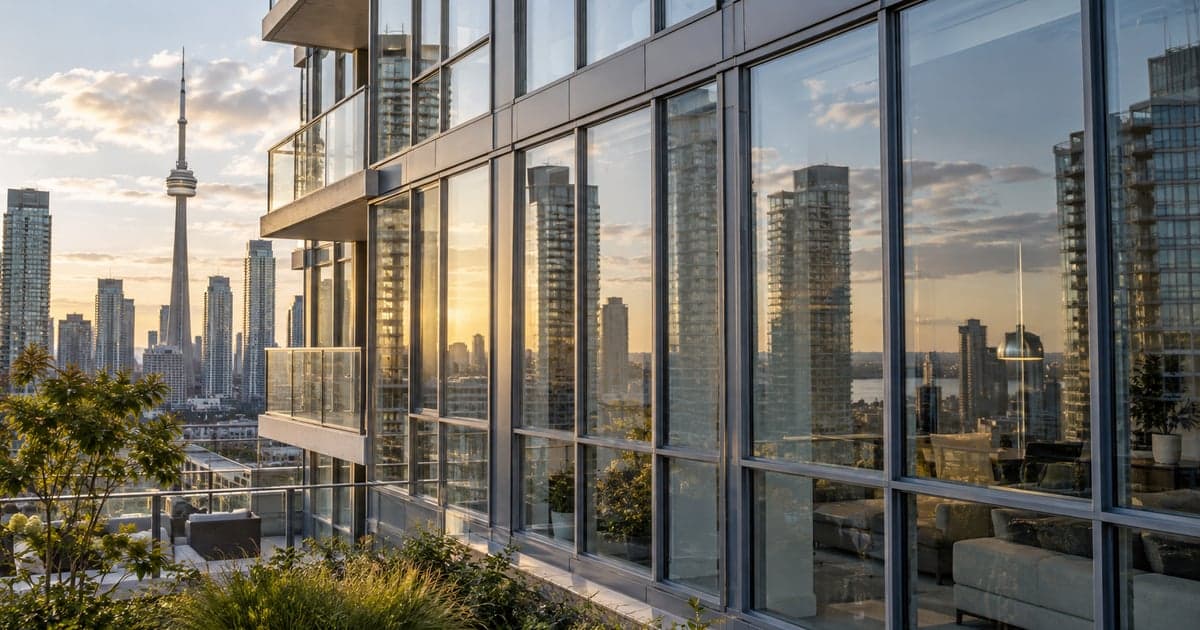
AI-generated editorial illustration, not a photograph of these products installed.
Use tint ranges as shortlist categories
“Light,” “medium” and “dark” are useful discussion terms, not universal product standards. Ask for the exact VLT rather than relying on a shade name.
For a heat complaint where daylight is important, review a higher-VLT option first. In the table above, Plus 70 is the lightest candidate.
For strong glare, compare a medium shade during the actual uncomfortable period. Also check room brightness when direct sun is absent.
A dark option needs a clear reason for sacrificing daylight. Review evening use, cloudy days and the visibility of neighbouring panes before approving it.
These are selection suggestions, not compatibility approvals. The exact product must still pass a glazing review.
Choose low reflectivity without promising invisibility
Clear-view and neutral films are reasonable candidates when facade consistency matters. Ask about colour as well as exterior reflectivity.
An untreated window already reflects light. A manufacturer's reflectivity number does not describe the change relative to your existing coated or tinted glass.
Review the proposed assembly beside an untreated pane. Look for changes in shade, colour and reflections. Include the balcony door if it sits beside the treated windows.
View the sample in sun, shade and evening lighting. Use an authorized exterior viewpoint that represents how the building is normally seen.
Do not approve appearance from an AI image or a screen simulation. These illustrations cannot reproduce a specific film on your glass.
Contact Clear Guard with management's appearance requirements. We can help prepare a shortlist and sample review before an installation decision.
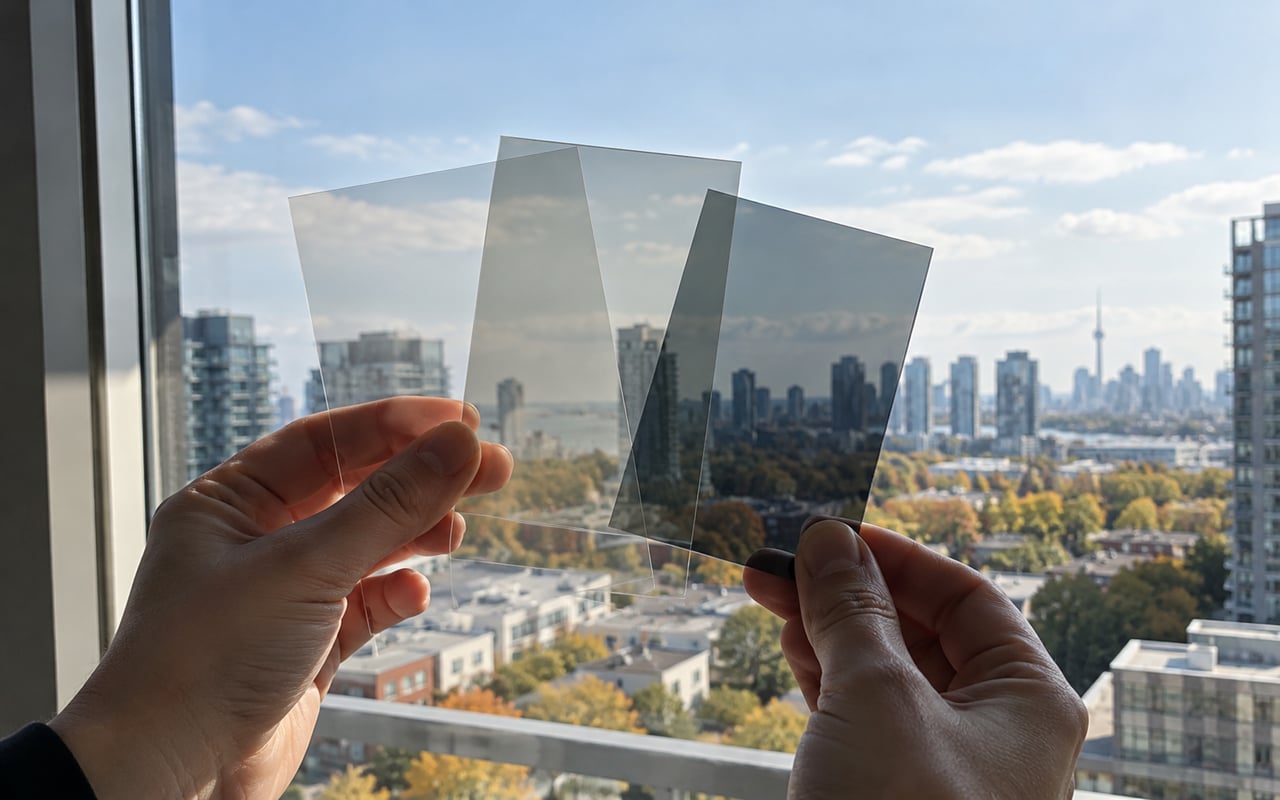
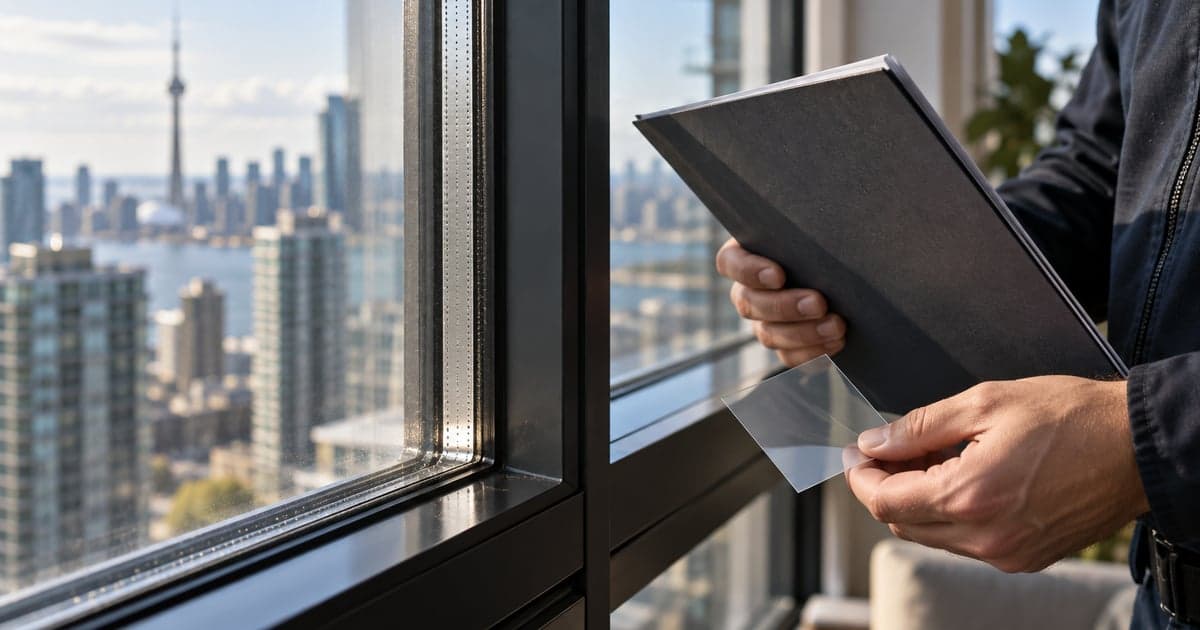
AI-generated editorial illustration; sample shades do not represent measured product results.
Distinguish heat control from privacy
Solar film and privacy film serve different priorities. A light solar film may retain outward views without obscuring views into the suite.
Reflective glass does not provide dependable privacy after dark when the interior is brighter. Plan blinds or suitable privacy finishes separately. IWFA advanced solar-control guide, page 55.
Likewise, UV rejection alone does not establish solar-heat rejection. Request the whole specification rather than selecting a film from one advertised percentage.
Obtain building approval for the chosen finish
Keep the product name, sample location and treated-window schedule in the approval record. Confirm that management accepts any different treatments across rooms.
Obtain written management approval and documented glass compatibility before installation. A sample that looks right is only one part of the decision.
Frequently asked questions
Which film changes exterior appearance the least?
Start by reviewing a light, low-reflectivity, neutral candidate. The best match depends on your existing glass. Require a representative sample rather than a promise of invisibility.
Does 70 in a film name mean exactly 70% VLT?
Not necessarily. XPEL lists 72% VLT for Clear View Plus 70 on its stated test glass. Use the measured specification column when comparing products. XPEL R0326V3.
Does darker film always look more reflective outside?
No. VLT and reflectivity are separate measurements. Review both and compare the actual sample against neighbouring untreated glass.
Ask Clear Guard about a condo solar-film sample review. Share your window records and requirements for daylight, glare and facade consistency.
Related reading
Glass compatibility · Management approval checklist · Autumn AC shutdown · Winter and spring overheating · Solar-film specifications.