Your condo AC has been turned off, but afternoon sun still makes the living room uncomfortable. Cool evenings do not necessarily mean a cool suite.
When management mentions a “21-degree rule,” ask what it refers to. Toronto's heating requirement concerns indoor temperature. It is not a universal rule requiring AC shutdown when the overnight outdoor temperature falls below that number.
This guide explains the distinction, the questions to ask, and where solar window film can help. It covers Toronto rules; other GTA municipalities have their own requirements.
The 21°C rule concerns indoor heating
Toronto's current bylaw requires landlords to maintain at least 21°C in qualifying rented homes from October 1 to May 15. It applies where heating is normally at the landlord's expense. Heat need not operate when the home already meets that minimum. Toronto By-law 1511-2025, Schedule A, heating provisions.
The City's guidance also permits turning heat down or off when outdoor conditions keep the building warm enough. It does not prescribe an overnight outdoor AC cutoff. Toronto heat guidance.
A building may use an outdoor-temperature trigger as an operating policy. Ask for that policy in writing. A building policy and a municipal requirement are different things.
Condo AC turned off too early needs a date-specific review
Toronto's current Indoor Temperature Standards Bylaw took effect June 1, 2026. It requires existing installed cooling systems to operate from June 1 through September 30, maintaining indoor temperatures at no more than 26°C. The obligation names owners, operators and landlords. Toronto By-law 1511-2025, cooling provisions.
That means a September shutdown deserves a different review from an October shutdown. Do not assume a cool forecast alone settles the question.
These provisions do not require every property to install new in-suite AC. The separate amenity-space requirement concerns defined purpose-built rental apartment buildings. Do not apply that requirement to every condominium. Toronto By-law 1511-2025, definitions and amenity-space provisions.
For a condo-specific concern, ask management which provision and operating policy apply. Toronto 311 can help identify the appropriate City process. Tenants should also notify their landlord.
Seasonal changeovers can leave sunny suites uncomfortable
Some buildings have two-pipe hydronic changeover systems. The same water circuit serves heating or cooling, so an individual thermostat cannot independently supply both. Other buildings use different arrangements. Confirm yours before assuming the thermostat or cooling equipment has failed. Trane, hydronic changeover distribution, page 5.
Ask whether cooling has been disabled centrally or whether your suite has a maintenance problem. A changeover notice does not diagnose a blocked filter, control fault or other local issue.
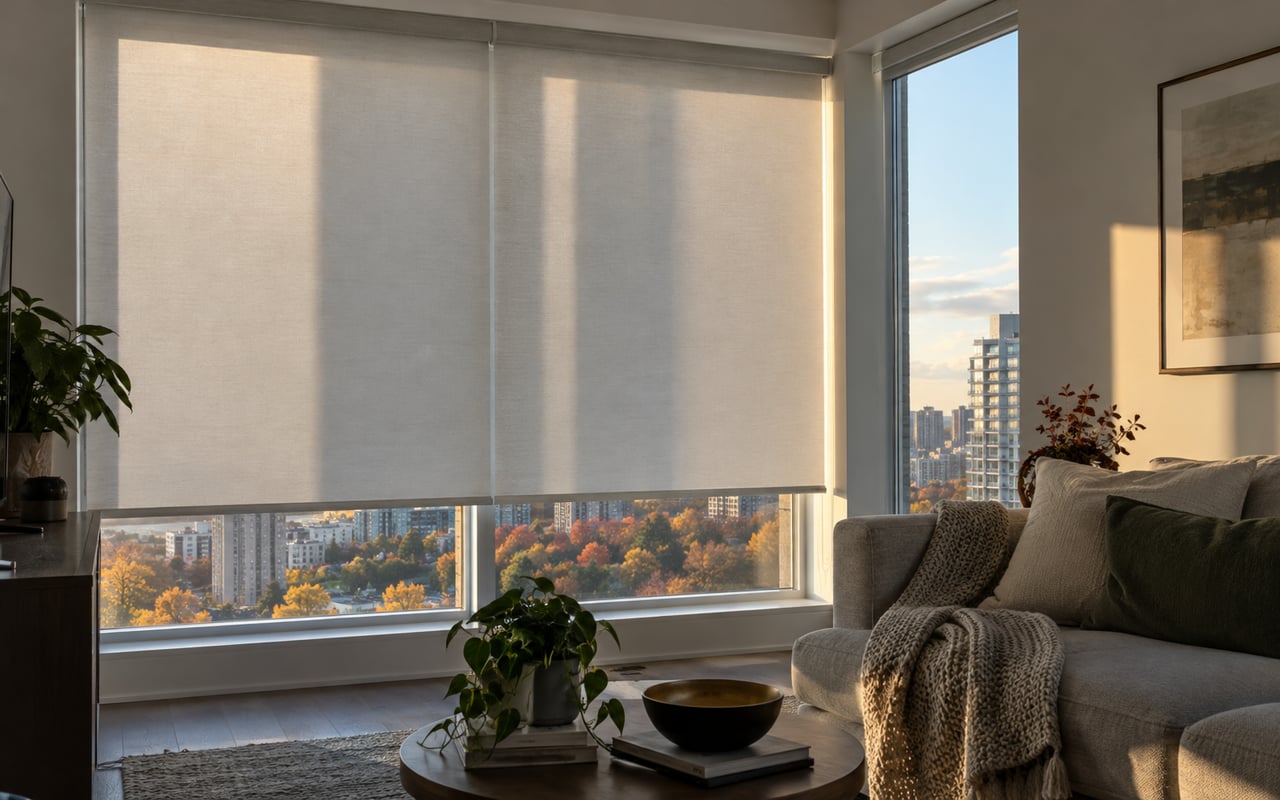
Meanwhile, sunny glass can continue admitting solar heat. Curtains may improve glare and comfort, but they do not restart the cooling plant. Neither does window film.
AI-generated editorial illustration.
Give management a useful temperature record
Record the room, date, time and indoor temperature during the uncomfortable period. Keep the thermometer away from direct sun and heat-producing appliances. Note the thermostat setting and whether heating or cooling was available.
Include the window direction, visible sunshine and any changeover notice. Ask management how it wants temperatures measured for its investigation. A thermostat reading alone may not represent every room.
Request answers to these questions:
- What date was cooling disabled, and what triggered the decision?
- Is this a building policy, equipment constraint or municipal requirement?
- Can heating be reduced while warm weather continues?
- Can staff inspect the suite and assess the sunny rooms?
- What temporary cooling arrangements are permitted?
Do not wait for a film installation if the space is unsafe to occupy. Use the City's hot-weather guidance and cooling resources.
Solar film targets the heat entering through glass
Solar-control film can reduce solar heat admitted through windows. It may be useful when the hottest rooms track afternoon sun. It cannot correct excessive central heating or replace mechanical cooling. IWFA heat-control guidance.
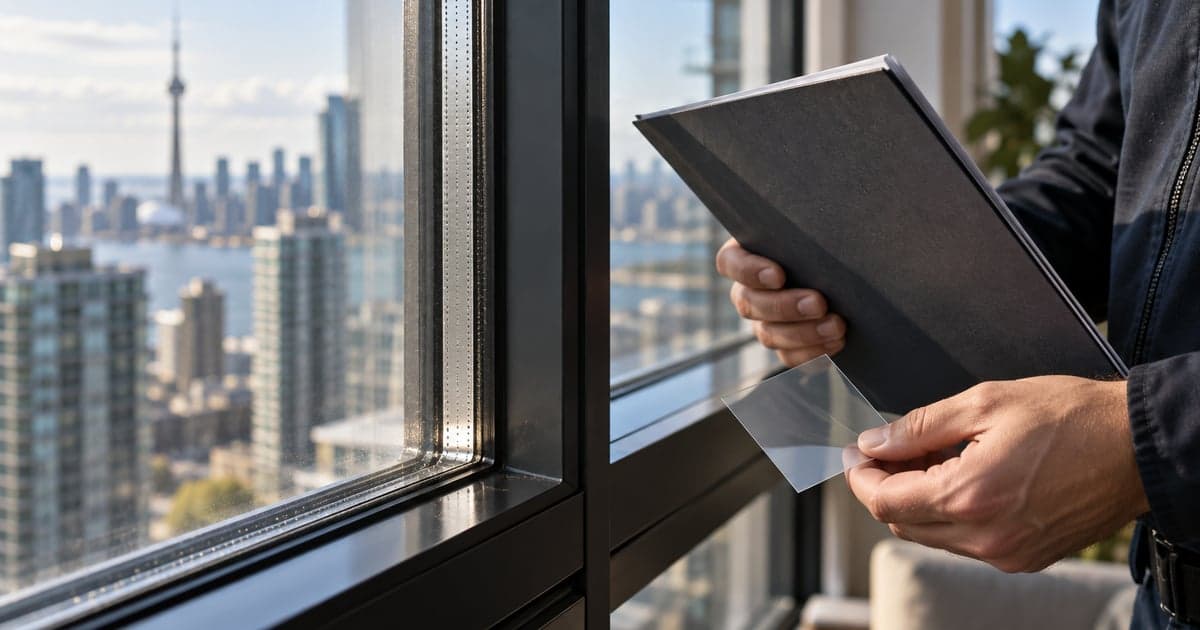
Start with the actual glass specification and a sample. A lighter film may retain more daylight, while a darker option may better address glare. Product selection also needs an exterior-appearance review.
Contact Clear Guard with your window photos, sun exposure and management's requirements. We can review the scope before recommending a film or arranging an assessment.
AI-generated editorial illustration.
Frequently asked questions
Does an overnight temperature below 21°C mean AC must shut off?
Toronto's cited bylaw contains no such outdoor cutoff. Ask management whether the number belongs to a local operating policy. The heating minimum refers to qualifying rented homes indoors.
Can solar film keep a condo cool without AC?
Film can reduce one source of heat: solar gain through the glass. Indoor conditions also depend on heating, ventilation, insulation, appliances and weather. A specific temperature reduction needs building-specific evidence.
Should I install film before asking management?
Obtain written permission and confirm glass compatibility first. Interior installation does not automatically remove exterior-appearance or common-element approval requirements.
Ask Clear Guard about solar window film. Share your condo location, affected rooms, glazing information and approval requirements.
Related reading
Spring overheating before AC starts · Window compatibility checklist · Property-management approval · Tint and exterior appearance.