Commercial window film samples help you judge a finish in its intended setting. They let an office manager, property owner or retail operator discuss daylight, reflections and privacy using the same physical reference.
A useful review records what people actually observed. It also records what the sample could not answer. That distinction matters when a small piece of film becomes the basis for a larger commercial specification.
Prepare commercial window film samples for review
Start with the question you want the sample to answer. You might need to compare a storefront's appearance, screen visibility beside a window, or screening through a glazed partition. Keep these questions specific.
Shortlist suitable products with the installer and record their names and codes. A loose swatch and a professionally applied sample are different review situations. Agree an appropriate approach before putting anything on the glass yourself.
Identify who needs to attend and which conditions matter. A landlord may want to see the exterior appearance; an office operator may need to judge a working screen. Plan the review so both can observe their concern.
The Clear View Plus, Ceramic and Alloy comparison can help prepare a solar-film shortlist. Use privacy film finishes when the main requirement is screening a view.
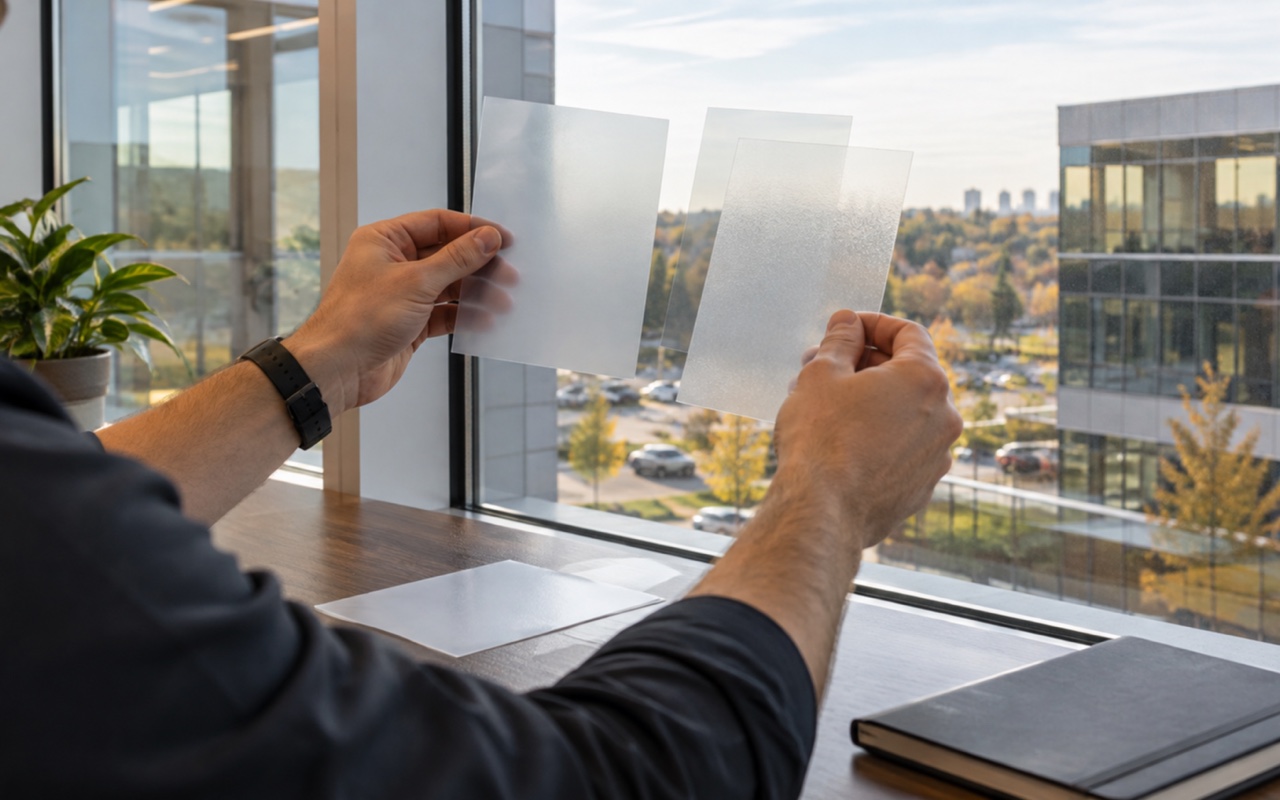
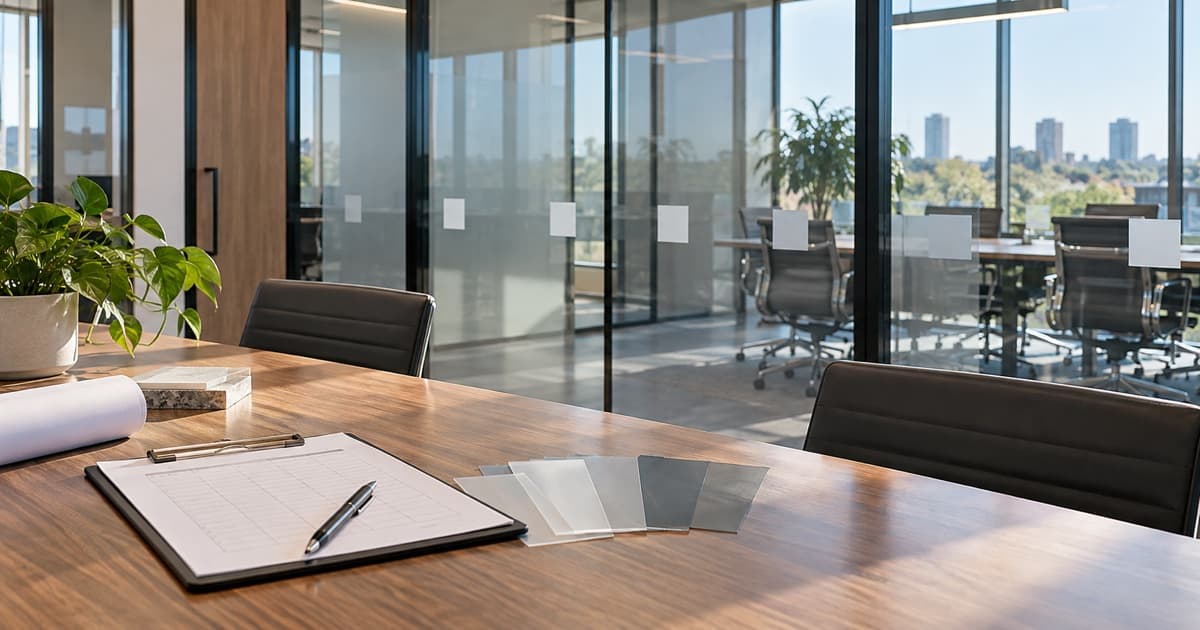
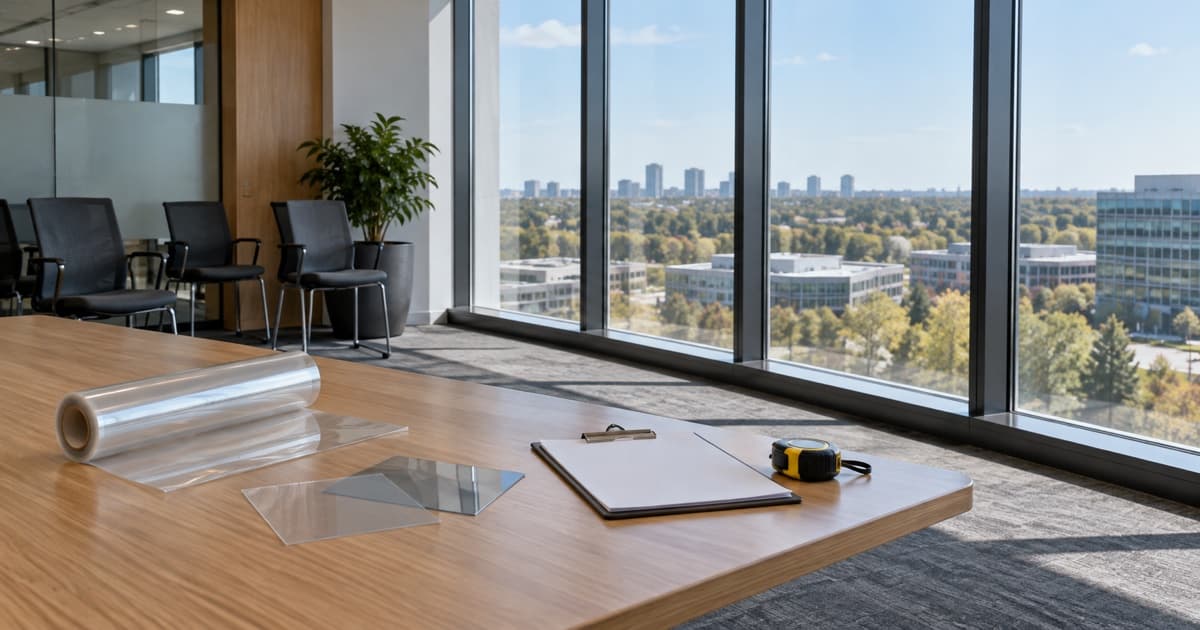
Illustrative editorial image; not a Clear Guard customer property or performance test.
Observe solar-film appearance from useful positions
For commercial solar film, look through the proposed sample from the places people normally sit or stand. Include the outside view, nearby screens and the room's usual lighting.
Then inspect from outside where access permits. Record whether tint or reflections are acceptable for that property. A finish may be preferred indoors while still requiring a separate exterior appearance decision.
| Review item | Where and when to observe | What to record | What it cannot prove |
|---|---|---|---|
| Daylight and tint | Occupied positions under relevant daylight | Reviewer preference and observed conditions | Whole-room brightness in every season |
| Reflections | Inside and outside, with normal lights | Views affected and whether they remain acceptable | Appearance under unobserved lighting |
| Screen usability | Normal desk or counter position | Screen content and reflections visible during review | Elimination of glare at every time |
| Privacy sightline | Observer's side with the room in use | Visible detail, silhouettes and uncovered margins | Universal confidentiality |
| Product and glass | Identified sample and glazing information | Product code and compatibility check still needed | Approval from appearance alone |
Repeat relevant observations when conditions change, where practical. If the afternoon sun or evening lighting was not reviewed, write that down. An empty entry should not be mistaken for a satisfactory result.
Tell us what you need to compare when you request a solar-film review or privacy-film review. Clear Guard discusses the scope by phone before arranging a site assessment.
Keep measured performance separate from preference
Visible light transmission, or VLT, and total solar energy rejected, or TSER, describe different product properties. A sample's apparent darkness does not tell you its complete solar-control performance.
The VLT and glare comparison explains the published measures. Preserve the stated test-glass basis when comparing sheets. Do not turn an appearance preference into a temperature or energy prediction.
XPEL maintains architectural product sheets and separate film-to-glass resources. Review the proposed product against the actual glazing rather than assuming an attractive sample establishes suitability. XPEL product specifications.
| Decision | Appropriate evidence | Keep separate |
|---|---|---|
| Appearance preference | Observations from the relevant decision-maker | Manufacturer performance figures |
| Product performance | Exact product sheet with its stated measurement basis | Assumed building results |
| Glazing compatibility | Project-specific review of film, glass and installation conditions | Acceptance of colour or finish |
These decisions may involve different people. Recording them separately helps the next person understand what remains unresolved without treating a sample review as technical approval.
Review privacy samples with the room in use
Turn on the normal room lights and place furniture where it will be used. Check from the observer's side of the glass, including seated and standing positions. Use non-confidential screen content for any display review.
For frosting, look for visible silhouettes, backlighting and views around clear margins. Include a person near the glass if that reflects normal room use. A review of an empty room can miss the condition you wanted screened.
Privacy film can be less effective at night when interior lights are on. An afternoon observation cannot establish the evening result. XPEL decorative-film FAQ.
Describe the limitation precisely. “The display remained visible from corridor seating” gives the installer a useful next question. “Privacy failed” leaves the viewing position and requirement unclear.
Keep an observation record
Use this checklist for the sample review itself. It records selection evidence; it is not a pane installation schedule or a legal acceptance form.
- Sample product name and code.
- Sample type and the glass or location reviewed.
- Date, daylight conditions and room lighting.
- Reviewer positions and the task or view assessed.
- Appearance observations and preferences.
- Privacy observations, where relevant.
- Conditions not reviewed and follow-up needed.
- Reviewer name and the decision still outstanding.
Keep photographs as context for the location and viewpoint. They do not measure solar rejection or prove privacy under every lighting condition. Do not substitute a photograph for a review the decision-maker has not completed.
Use the commercial quote checklist to carry the selected product and outstanding checks into procurement. If the proposed product changes, revisit the observations affected by that change.
Frequently asked questions
Can I choose commercial window film from a website photo?
Photos can help shortlist appearance, but they do not reproduce your glass and lighting. Discuss an appropriate physical sample review before choosing a finish. Record any important conditions that remain unreviewed.
Does a lighter sample always mean less heat rejection?
Do not infer the full performance from appearance. Compare the exact product's VLT and TSER separately, using the stated measurement basis. Then assess whether a suitable candidate meets your appearance requirements.
Can a sample prove that people cannot see in at night?
A sample can reveal visibility under the conditions checked. It does not guarantee every future lighting, furniture or viewing arrangement. Check the relevant evening conditions and record unresolved views.
Request a commercial sample review
Explore commercial film services when preparing the requirements for your property.
Preparing a Southern Ontario commercial film specification? Send the location, approximate glazing scope and the appearance or privacy decisions still unresolved. Request a solar-film review or privacy-film review. We review the project before arranging an assessment and written quote.