Both window bars and security window film are legitimate, retrofit-able security options for ground-floor and basement glass. Both add delay. Both are installed without replacing the window. The question of which is right for a specific window depends on the room behind it, the building code requirements for that room, and the look the homeowner is willing to live with.
The key distinction: bars are a visible exterior barrier; film is a near-invisible layer. Each approach has tradeoffs the other doesn't, and one of the most important tradeoffs — the bedroom egress question — is the one most comparisons leave out.
What Window Bars Actually Do
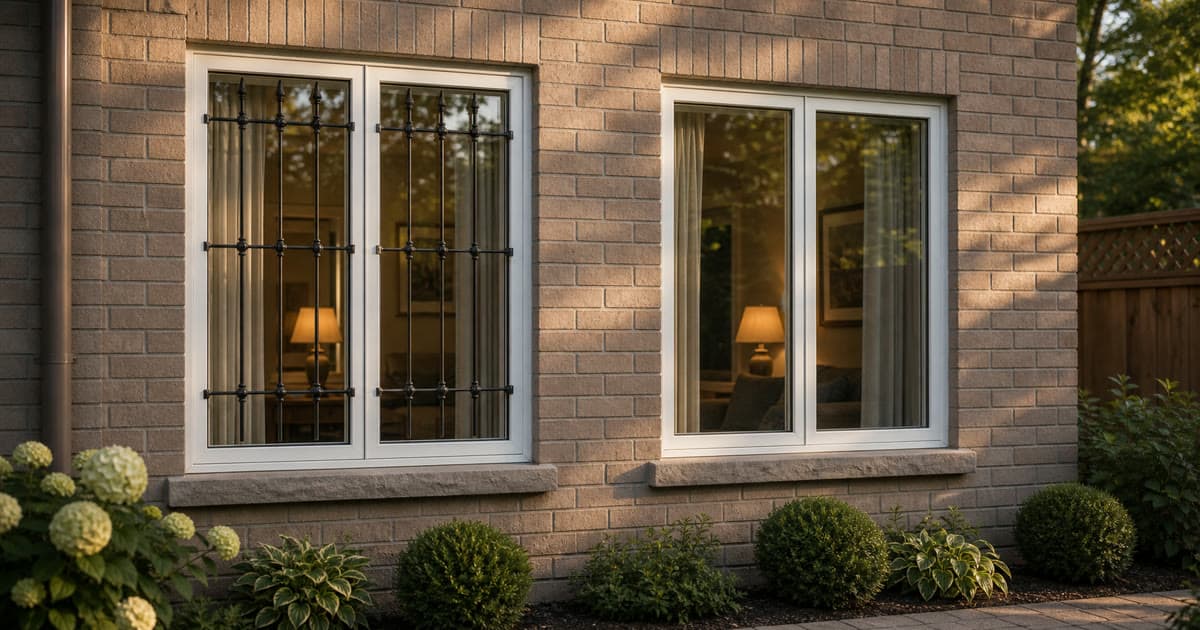
Window bars are metal grilles or security bars installed on or around the exterior window frame. They mechanically prevent a person from passing through the window even if the glass is destroyed — the grid remains in place regardless of what happens to the glass.
Genuine strengths: Window bars are highly visible from the outside, which functions as a deterrent for opportunistic intruders who are scanning for easy targets. The hardware is mechanical — no adhesive, no aging film — and works regardless of glass type. For commercial properties after hours, or utility rooms where aesthetics don't matter, bars are a durable, low-maintenance choice.
Genuine tradeoffs: Bars have an obvious visual impact. On a residential property, they communicate something about the perceived risk of the neighbourhood that most homeowners would prefer not to broadcast. Exterior bars require maintenance against rust and paint failure over time. And — most importantly — bars create a code question when the window is a bedroom window.
Removable interior swing-bars exist as an alternative. They shift some of the egress concern but introduce a usability problem: the bar is only effective when latched, and a bar that must be unlatched during a fire evacuation is a poor safety product. Most residential applications are better served by another approach.
What Security Window Film Actually Does
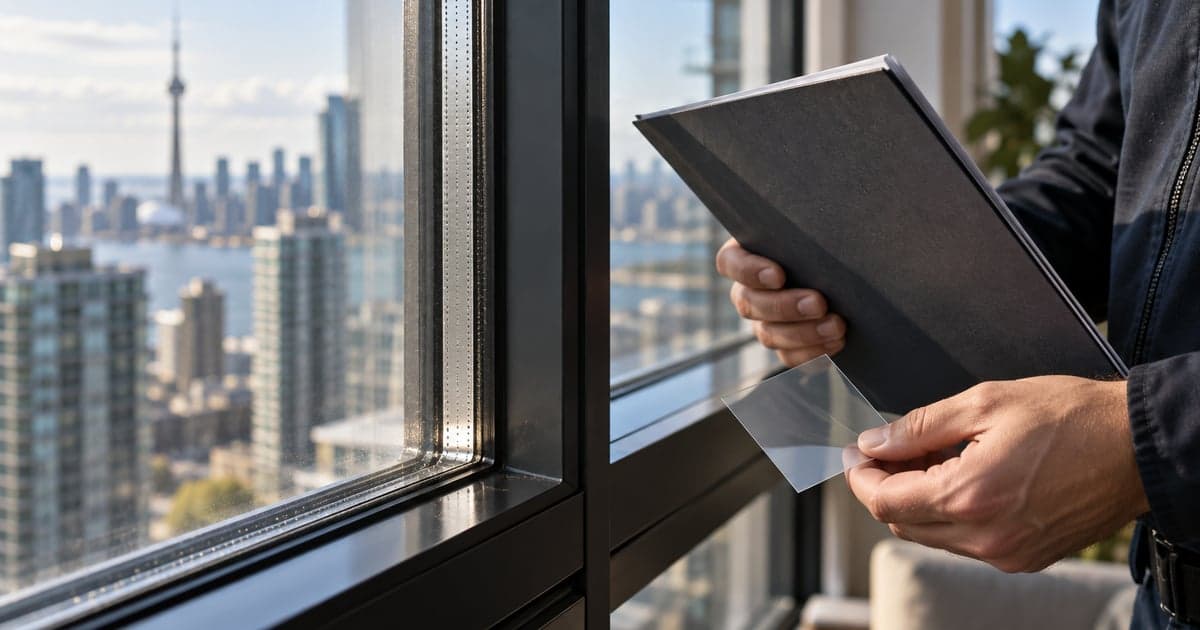
Security window film is a polyester-based adhesive film applied to the interior face of the glass. The glass still shatters on impact — film does not prevent that — but the film holds the fragments together so the pane stays in the frame and reaching through to unlock a door or get inside is blocked.
Genuine strengths: Film is virtually invisible after installation, from the inside and the outside. It does not change the appearance of the home. It does not affect egress — the window still opens normally from the inside. A filmed window that gets breached still allows the window to function as an escape route; the film tears, but the window mechanism is intact.
Genuine tradeoffs: Film is a delay product, not a physical barrier. It holds the pane together under impact, but it does not keep a person out of the window the way bars do. A determined intruder with sustained tools and time can eventually defeat the film on a large pane. The protection it provides is against the typical opportunistic attempt that relies on a quick, quiet breach.
For the mechanical detail, How Security Window Film Works covers the physics. Does Security Window Film Actually Stop Break-Ins? explains delay. Our security film system guide covers interior, exterior, privacy, and selective options.
The Egress Question — Read This Before Deciding on Bars
This section is the one most bars-vs-film comparisons bury or skip entirely. It is also the most practically important one if the window in question is a bedroom window.
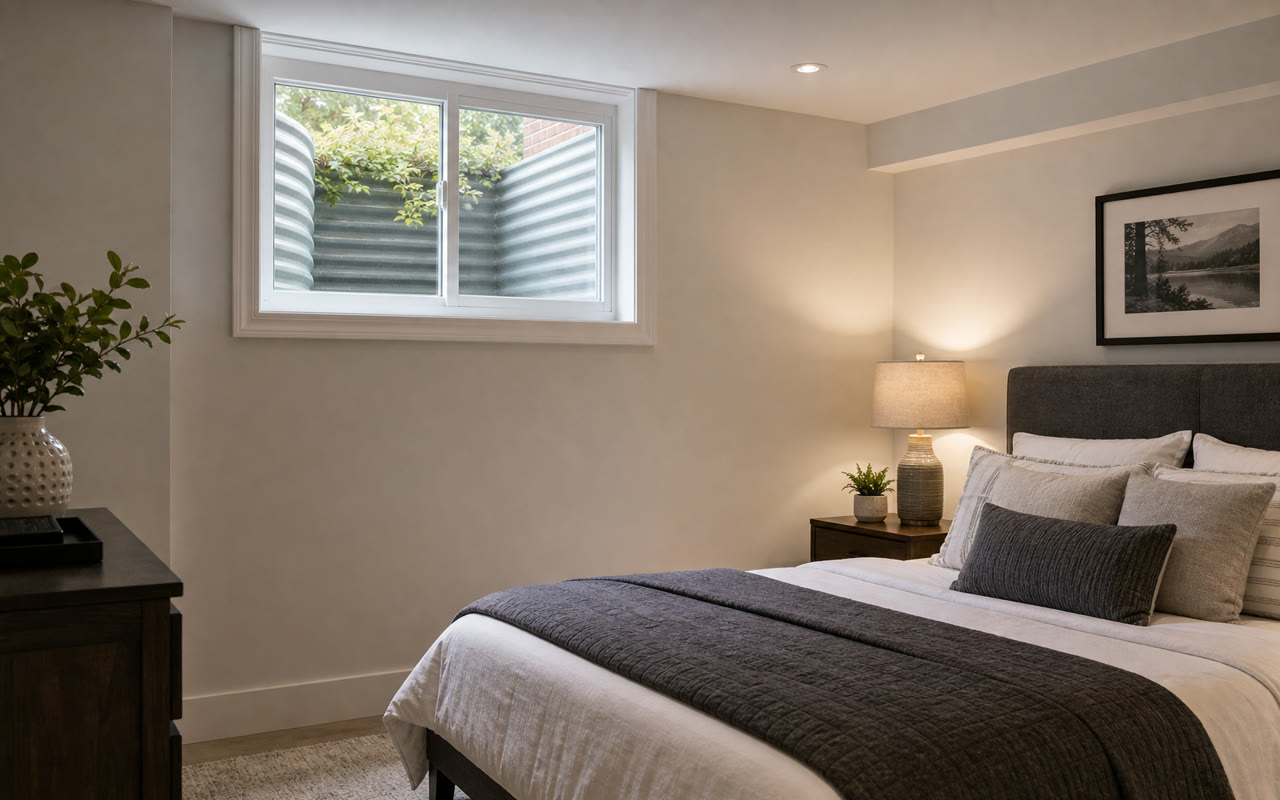
Bedroom windows in Ontario are subject to egress requirements. The requirement is that a bedroom window must be able to open from the inside in an emergency — without tools, without special knowledge, and without removing hardware. The window needs to provide a clear exit path for an occupant who cannot reach another exit.
Permanent exterior bars on a bedroom window can conflict with this requirement. If the bars prevent a person from exiting through the window from the inside — even in an emergency — that window may no longer function as the code-compliant egress window for the room.
Important: this article is not legal or code advice. The specific requirements depend on the window dimensions, the type of bar hardware, and the current code interpretation in your municipality. Homeowners and property managers — particularly those with rental units — should confirm with their municipality or a qualified building inspector before installing bars on any bedroom window. This applies most urgently to basement bedrooms, where the bedroom egress window may be the primary exit path.
Film does not raise this question. Film is applied to the interior and exterior glass surface; the window itself remains fully operable.
A Clear Guard technician can walk each pane on the property, identify which rooms have egress requirements, and recommend film or bars per window based on what is actually behind the glass. The assessment is free and takes about 30 minutes.
The Aesthetic and Resale Dimension
Bars are visible from the street. On a residential property, they communicate a visual signal that prospective buyers tend to notice and question. For most modern GTA detached homes, bars are not the aesthetic the homeowner wants to project — and not the signal a listing photograph should lead with.
Film is virtually invisible after installation and curing. It does not appear in listing photos. It does not change the kerb appeal of the property.
This is observation, not judgment. Some properties wear bars well — heritage homes with existing decorative wrought-iron grilles, commercial storefronts, ground-floor rental units where the visible deterrent signal is acceptable or desirable. For those properties, bars on non-egress windows are a legitimate choice. For most residential GTA detached homes, film is the less disruptive option on every dimension other than the physical-barrier argument.
The Decision Matrix: Which Is Right for Each Window
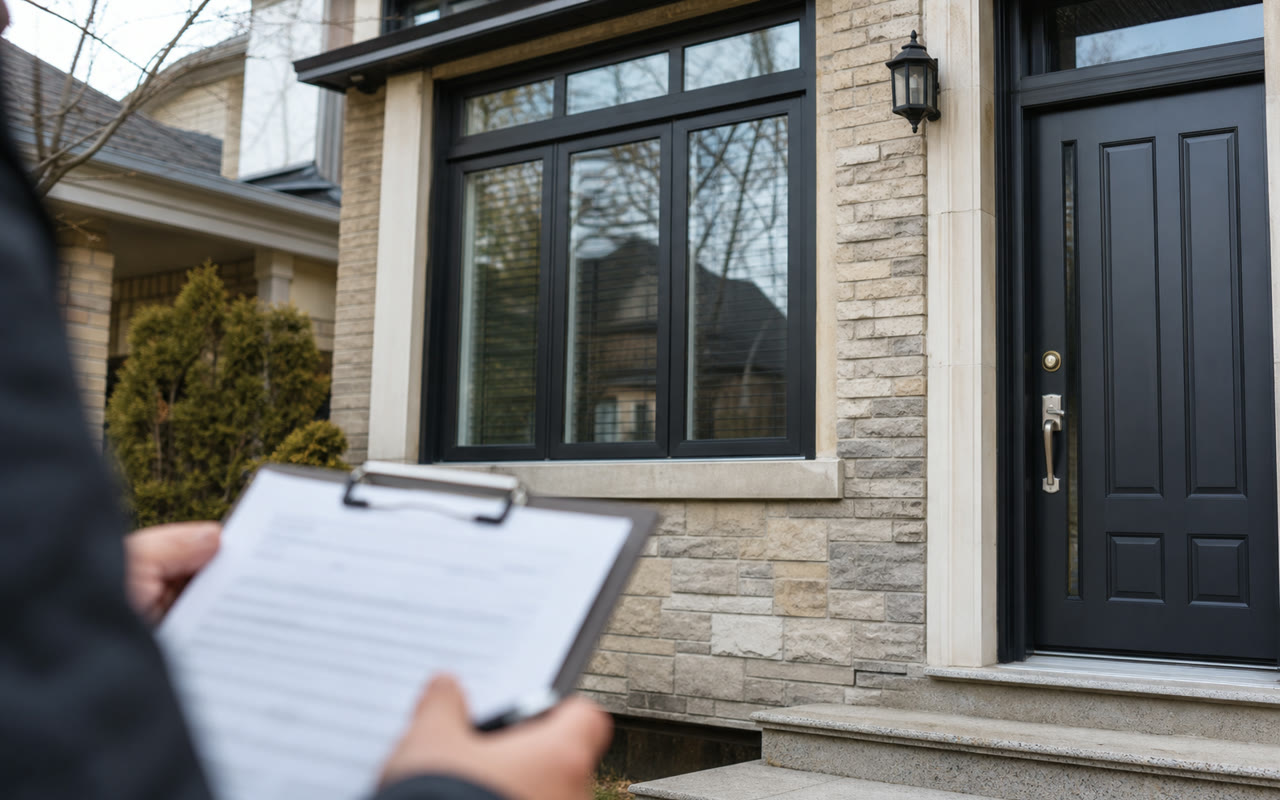
The right choice is per-window, not a blanket preference. This table is the practical guide:
| Scenario | Typical recommendation | Why |
|---|---|---|
| Bedroom window (any storey) | Film | Egress requirement makes permanent bars a code question; film leaves the window fully operable. |
| Basement bedroom window | Film | Same egress requirement; basement bedrooms have the highest fire-safety stakes. |
| Basement utility or mechanical room window | Either — often film | Not an egress room, so bars are permitted — but film achieves the delay without exterior aesthetic impact. |
| Ground-floor living area window | Film | Visible from the street; aesthetic and resale weigh against bars. |
| Large patio slider (6 ft or wider) | Film (14 mil) | Bars are impractical at this scale; film handles the impact-and-reach-through path on large sliders. |
| Storefront or ground-floor commercial glass | Often bars with film | Bars give visible after-hours deterrence; film blocks the reach-through if the glass is breached. |
| Heritage home with existing decorative grilles | Keep the grilles; add film | The aesthetic argument against bars doesn't apply — the grilles are a feature. The egress question still applies to bedrooms. |
Most properties end up with film on residential glass and, in a small number of non-egress locations, bars remain a legitimate option. The assessment identifies the per-window answer.
For the Basement Windows and Grade-Level Glass post, the egress dimension for basement windows is covered in more detail.
What to Ask During an On-Site Assessment
Before committing to either option on any window, these four questions separate a transparent recommendation from a one-size-fits-all install:
- Is the room behind this window an egress-required room (a bedroom)?
- If bars are being considered, has the municipality's current requirement been confirmed?
- If film is recommended, what thickness and what edge-anchoring method?
- Which windows on this property are not worth either treatment, and why?
A good assessment answers all four before the homeowner has to ask.
Frequently Asked Questions
Window bars or security window film — which is better? Neither is universally better. Window bars are a visible physical barrier; security window film is a near-invisible interior layer that holds shattered glass in the frame and blocks the reach-through. The right choice depends on the window, the room behind it, and whether the room has a building-code egress requirement.
Can you put bars on bedroom windows in Ontario? Bedroom windows are required to function as egress windows — they must open from the inside in an emergency without tools or special knowledge. Permanent exterior bars can conflict with this requirement. Homeowners should confirm current requirements with their municipality before installing bars on any bedroom window.
Does security window film replace the need for bars? On most residential glass, yes. Film blocks the reach-through that drives most opportunistic break-ins, without changing the look of the home or affecting bedroom egress. Bars remain appropriate for non-egress windows — basement utility rooms, mechanical rooms, and some commercial storefronts — where the visible deterrent is acceptable and the egress question doesn't apply.
Will window bars affect my home's resale value? Visible exterior bars tend to be a flag that prospective buyers notice in listing photos. Most modern GTA detached homes show better without them. Heritage homes with existing decorative grilles and commercial properties are exceptions where bars wear well.
What about removable interior swing-bars? Removable interior bars shift the egress problem but introduce a usability one: the bar is only effective when latched, and a bar that must be unlatched during a fire evacuation is a poor safety product. Most GTA homes are better served by security film applied to the glass itself.
Related reading: