Window Film vs. Window Replacement: Cost and Security Compared
Most GTA homeowners who are quoted on window replacement ask the same follow-up question: Does a new window make it harder to break in?
The honest answer: not inherently. A brand-new insulated glass unit (IGU) uses the same annealed or tempered glass as the original window. When struck, it shatters the same way. The glass fragments, and the opening becomes accessible. The age or quality of the window does not change what happens when the glass breaks under impact.
This creates real confusion, because homeowners often conflate two separate decisions: thermal efficiency and maintenance (which window replacement solves) and forced-entry resistance (which requires either security film, laminated glass, or both).
This post is for homeowners who have been quoted on window replacement and are trying to understand whether the security question changes the calculation. The answer depends on your existing frame condition, your budget, and which problem you are actually trying to solve.
What Window Replacement Actually Does — and Does Not Do
Window replacement solves several real problems: air leakage, thermal performance, condensation and fogging from failed seals, aging wood frames, rotted jambs, and aesthetics. These are important. If your windows are failing on these fronts, replacement is often the right answer.
But replacement does not inherently address forced-entry resistance.
Here is why: The security property of glass is determined by what happens when it breaks, not by how new or well-built the window is.
Annealed glass — the most common glass in residential double-pane units — breaks into sharp, irregular fragments on impact. The pane shatters and clears the opening.
Tempered glass — used in some door lites and building-code-mandated locations — shatters into small, relatively harmless cubes. But like annealed glass, it does not hold together; it clears the opening when struck.
Neither type resists the hand-through reach that follows a break-in via glass impact. Neither type holds the pane intact after breakage.
Some window manufacturers offer a third option: laminated glass. This is a factory process where two glass layers are bonded with a polyvinyl butyral (PVB) interlayer — the same material used in car windshields. When laminated glass is struck, it cracks, but the interlayer holds the pane together. The opening remains closed. But laminated glass is not the default; it is an optional specification that must be requested and usually adds a premium to the replacement cost.
The practical takeaway: if your windows are original single-pane or standard double-pane, replacement to a standard IGU does not add a security layer. If you want security as part of your replacement, you must specify it — and that specification drives cost upward.
Security Film and Laminated Glass: Same Outcome, Different Approaches
Security film and laminated glass achieve the same result: when the glass is struck and shatters, the pane remains bonded and the opening stays closed.
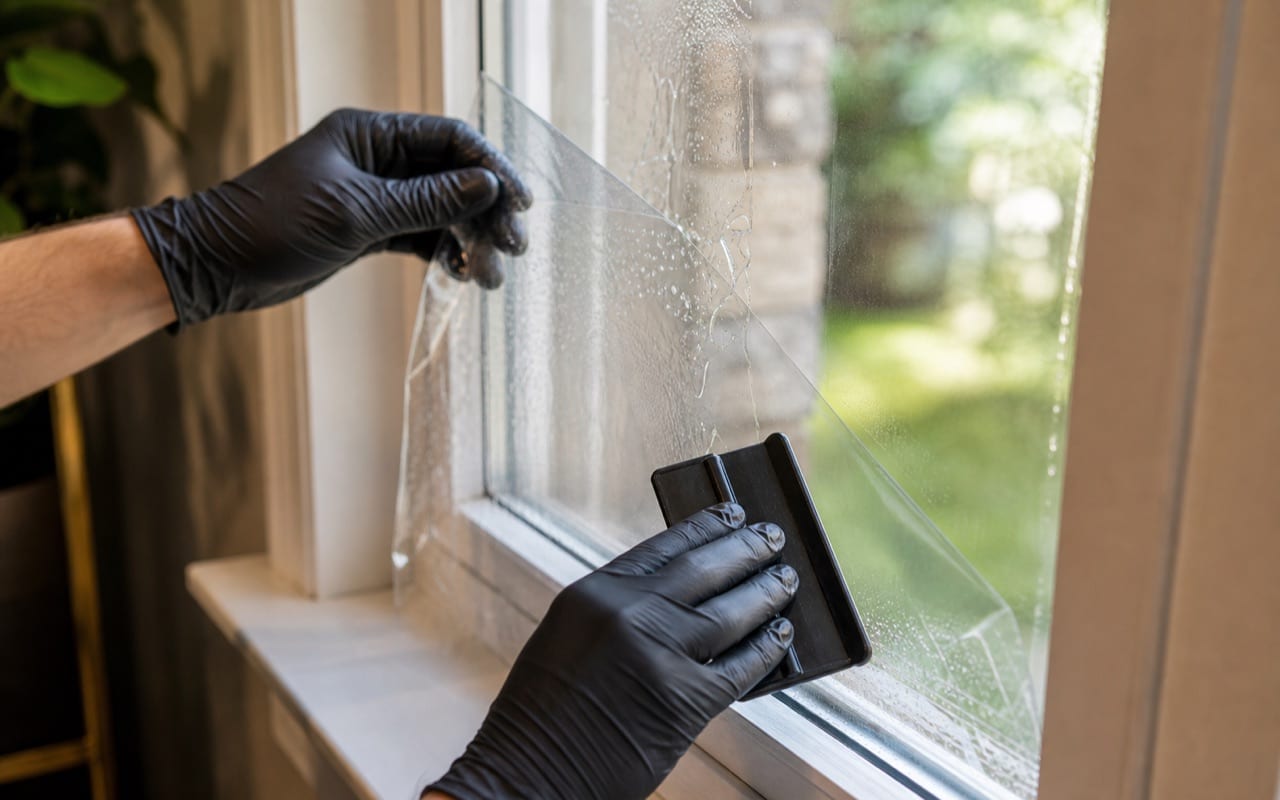
Security window film is a polyester laminate applied to the interior (or exterior, or both) surface of existing glass. When the glass breaks, the film holds the fragments in place. The pane crazes and stays bonded to the frame. A hand-reach-through is no longer possible.
Laminated glass achieves this through a factory-applied interlayer at the time of manufacture. The result is functionally identical: the pane holds after impact, and the opening does not become accessible.
The key differences:
Retrofit vs. replacement: Laminated glass requires replacing the entire window unit. Security film is applied to existing glass in a few hours with no construction disruption.
Cost trajectory: Film scales with the number of windows and the thickness of the film applied. Laminated glass is priced per unit and adds a premium to the window replacement cost, plus the cost of frame replacement if the frame is failing.
Timeline: Film can be applied to individual windows as needed. Laminated replacement typically requires a full-window scope — a larger project with longer lead times.
Frame condition: Film works on sound frames. Laminated replacement allows you to address frame rot or structural failure at the same time, if needed.
Timeline and disruption: Film retrofit takes hours; replacement takes days or weeks depending on the contractor's schedule. Film is a no-construction option; replacement involves interior finishing work.
Neither is universally superior. The choice depends on your specific situation.
Cost Comparison: Film Retrofit vs. Window Replacement
Homeowners ask for specific numbers. The honest answer is that costs vary widely — by region, by contractor, by window size, by material choice, and by the current condition of frames.
Rather than cite invented figures, here's what to expect:
Security film retrofit:
- Installed per square foot of glass
- Scales up with window count and film thickness
- No disruption to the home interior
- Typically completed in one visit
- Generally the lowest-cost option for homeowners whose frames are sound
- Can be applied to individual windows as budget allows
Standard window replacement (existing frame, new IGU):
- Varies widely by region and contractor
- Depends on window material (vinyl, fiberglass, aluminum), size, and IGU count
- Typically requires interior finishing work if frames are damaged
- Lead times vary by manufacturer availability
- If the goal is thermal efficiency, replacement makes sense; if the goal is forced-entry resistance alone, film is more cost-efficient
Laminated glass upgrade within replacement:
- Adds a premium over standard IGU cost
- Available as a custom spec from most major window manufacturers
- Must be confirmed at the quote stage (many contractors offer it but do not lead with it)
A practical observation: If your existing frames are sound and your primary concern is the ground-floor security vector, film addresses the forced-entry risk directly — without the cost and disruption of full replacement.
If your frames are failing (rotted wood, loose glazing compound, or structural damage), film is not a substitute for addressing the frame first. The frame must be repaired or replaced before film is applied.
Which Scenario Favours Which Option
Film alone is the right choice when:
- Your windows are structurally sound and frames are intact
- Your primary concern is forced-entry resistance to ground-floor glass
- You want minimal interior disruption
- Budget is a constraint
- You want to address specific high-risk windows (sidelights, basement hopper, ground-floor patio slider) without committing to a full replacement scope
Laminated replacement is the right choice when:
- Your windows are already due for replacement on efficiency or frame grounds
- You want both thermal performance and security in a single project
- The window frame itself is failing (rotted wood, broken hardware, failed seals)
- You want a cohesive upgrade across multiple windows
Film plus replacement (sequenced) is the right choice when:
- The frame is failing and requires replacement
- You also want the added security of film on the new unit
- Film adheres equally well to new glass and adds a forced-entry layer that replacement alone does not provide
Sidelights and small decorative lites are often the strongest case for film alone. Replacing a sidelight is disproportionately expensive — a full-frame replacement job for 2–3 square feet of glass. The same security outcome is achieved with film in hours rather than days, at a fraction of the cost.
Basement hopper windows are frequently overlooked in renovation scopes. They are typically original, single-pane, and ground-level. Film is usually the right call unless the window itself is failing.
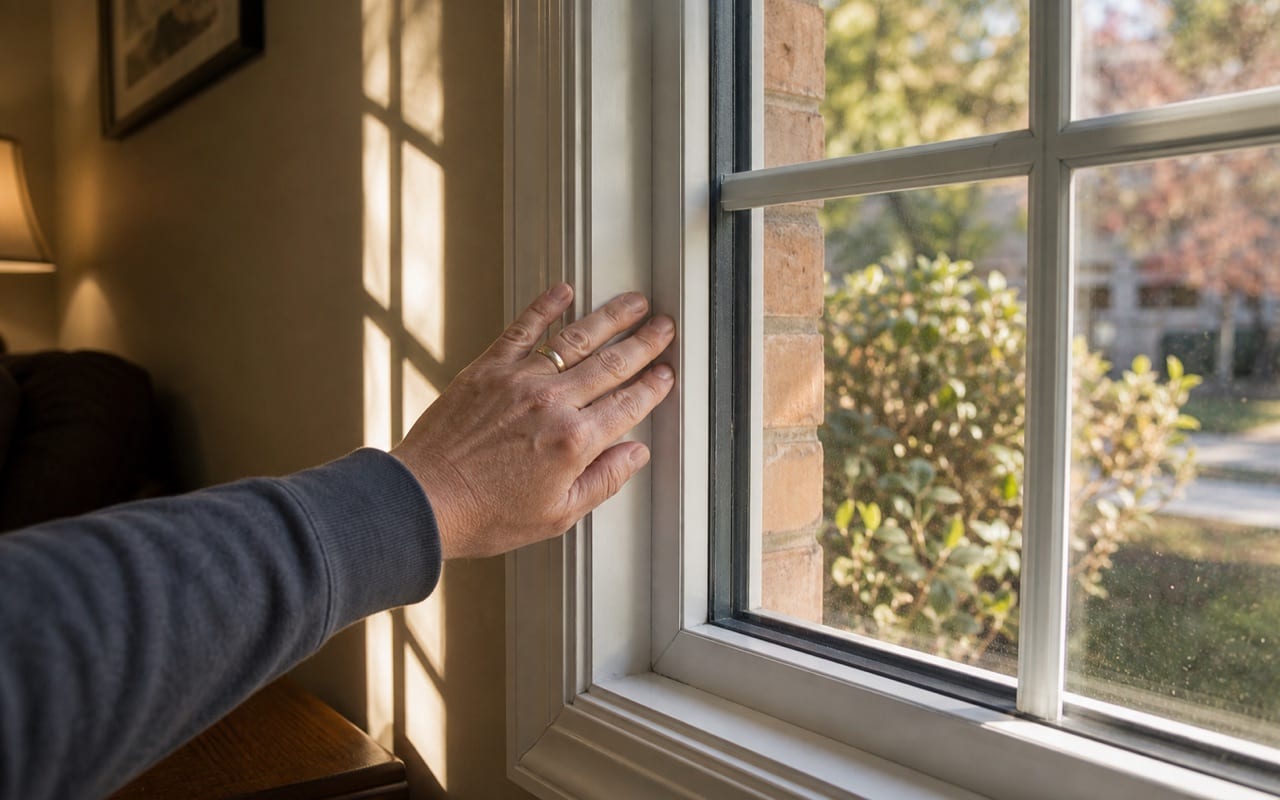
What a Clear Guard Assessment Determines
An on-site assessment answers the specific question: What does your home actually need?
A technician will examine:
- Glass type: annealed, tempered, or already laminated
- Frame condition: wood, vinyl, or aluminum — cracked, rotted, or intact
- Glazing integrity: failed seals, fogging, or sound construction
- Security priority of each opening: ground floor, sidelight, basement, rear-facing
If the frame is failing: The technician will note that film is not the first step. The frame must be addressed. Replacement or professional repair comes first; film comes after, if you want the added security layer.
If the glass is already laminated: Film is typically not necessary for the security function (though it may still be applied for UV or privacy reasons).
If the glass is standard annealed and the frame is sound: Film addresses the forced-entry vector directly, without the cost and timeline of replacement.
If you are considering replacement: The assessment identifies whether a laminated glass spec makes sense for your opening, and it highlights which windows could be addressed with film alone while others benefit from replacement.
The assessment takes approximately 30 minutes, covers the entire property, and results in a written recommendation — not an obligation to purchase anything.
FAQ
Does replacing my windows make them harder to break into?
Not by default. A brand-new double-pane IGU uses the same annealed or tempered glass as the original unit. When struck with force, it shatters on impact, and the opening becomes accessible. The security property of glass is determined by what happens when it breaks, not by how new or well-built the window is.
The only exception is if you specify laminated glass as part of the replacement. Laminated glass has an interlayer that holds the pane together after impact — but this is an optional upgrade, not included by default, and must be requested at the quote stage.
What is the difference between laminated glass and security window film?
Both achieve the same security outcome: when the glass is struck and shatters, the pane remains bonded to the frame and the opening stays closed.
Laminated glass is a factory process requiring full window replacement. Security film is applied to the interior surface of existing glass in a retrofit installation. Laminated glass is permanent and factory-sealed; film can be maintained and is easier to remove if needed.
For a homeowner whose frames are sound and whose primary concern is forced-entry resistance, film is typically more cost-efficient. For a homeowner replacing windows on efficiency grounds anyway, adding laminated glass in the same project is often a sensible bundling decision.
When is security film the right choice instead of replacing my windows?
When your existing frames are structurally sound and your primary concern is the forced-entry vector at ground-floor glass. Film addresses that directly without the cost and disruption of replacement. It is also the clear choice for individual windows (sidelights, basement hoppers, ground-floor patio sliders) where replacement would be disproportionately expensive relative to the glass area.
Film is not a substitute for frame repairs. If the frame is rotted or failing, that must be addressed first.
Ready for an Assessment?
Not sure whether your existing windows are worth filming or whether replacement makes sense for your property, a Clear Guard technician can tell you. Free assessment, 30 minutes, no obligation.
Related reading
- How Security Window Film Works: A Visual Guide
- The Glass Breaker Test: How to Know If Your Windows Are Actually Vulnerable
Book a free window and frame assessment. A technician will examine your glass type, frame condition, and the security priority of each opening — and give you a written recommendation for film, replacement, or a combination of both. No pressure to purchase; no obligation.