
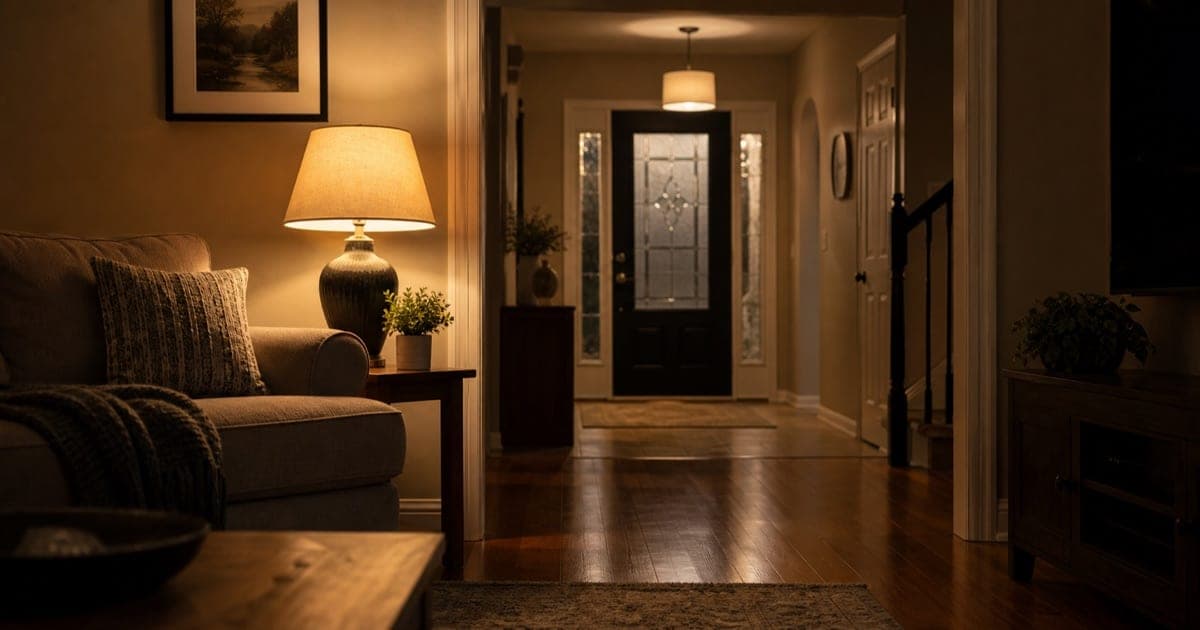
Layered Family Safety Planning: Detection, Delay, and Retreat
Most families have one layer of home security: the alarm system. Alarms matter — they are not a complete plan.
A complete plan has three layers that work together: detection, which catches the event early; delay, which slows entry long enough; and retreat, which gives the family a pre-planned set of actions.
This post is about how these layers work together, and why a family that has thought about all three is a family that will act calmly if one ever becomes necessary.
Layer One: Detection
Detection includes alarm systems, exterior cameras, smart doorbells, and neighbourhood watch programs. These tools tell you something is happening.
Detection does not stop anything. It is the trigger that starts the clock.
If you have a monitored alarm system, the most important number to know is the dispatch window — the time between when the alarm signal is received by the monitoring centre and when police are notified and begin response. This varies by monitoring provider and municipality. Ask your provider what that window is. In Toronto, average Priority 1 (emergency) response time is approximately 12–13 minutes from dispatch, though this can vary.
Cameras and smart doorbells extend your visible perimeter and add to detection, but they do not add physical delay — an intruder can see a camera and still proceed.
Neighbourhood watch programs raise ambient street awareness, but again, detection only. They do not slow entry.
The role of detection is to sound the alarm and start the clock. What happens during that clock is the job of the next two layers.
Layer Two: Delay — What It Means and Why It Matters
Delay is the physical resistance between an entry attempt and a successful breach. It is measured in time.
An unfortified exterior door — standard deadbolt, original frame, standard strike plate — can be forced in seconds with a single kick or shoulder strike. The exact time varies by door age, frame condition, and technique, but it is measured in seconds, not minutes.
A reinforced door — structural-screw frame anchoring, heavy-gauge strike plate, multi-point locking, hinge reinforcement — resists that attempt significantly longer. In testing conducted at an Oakville facility, an ARX Guard reinforced door withstood 5,000+ pounds of force, compared to the roughly 420 pounds of a standard residential kick. The result is meaningful delay — time that matters.
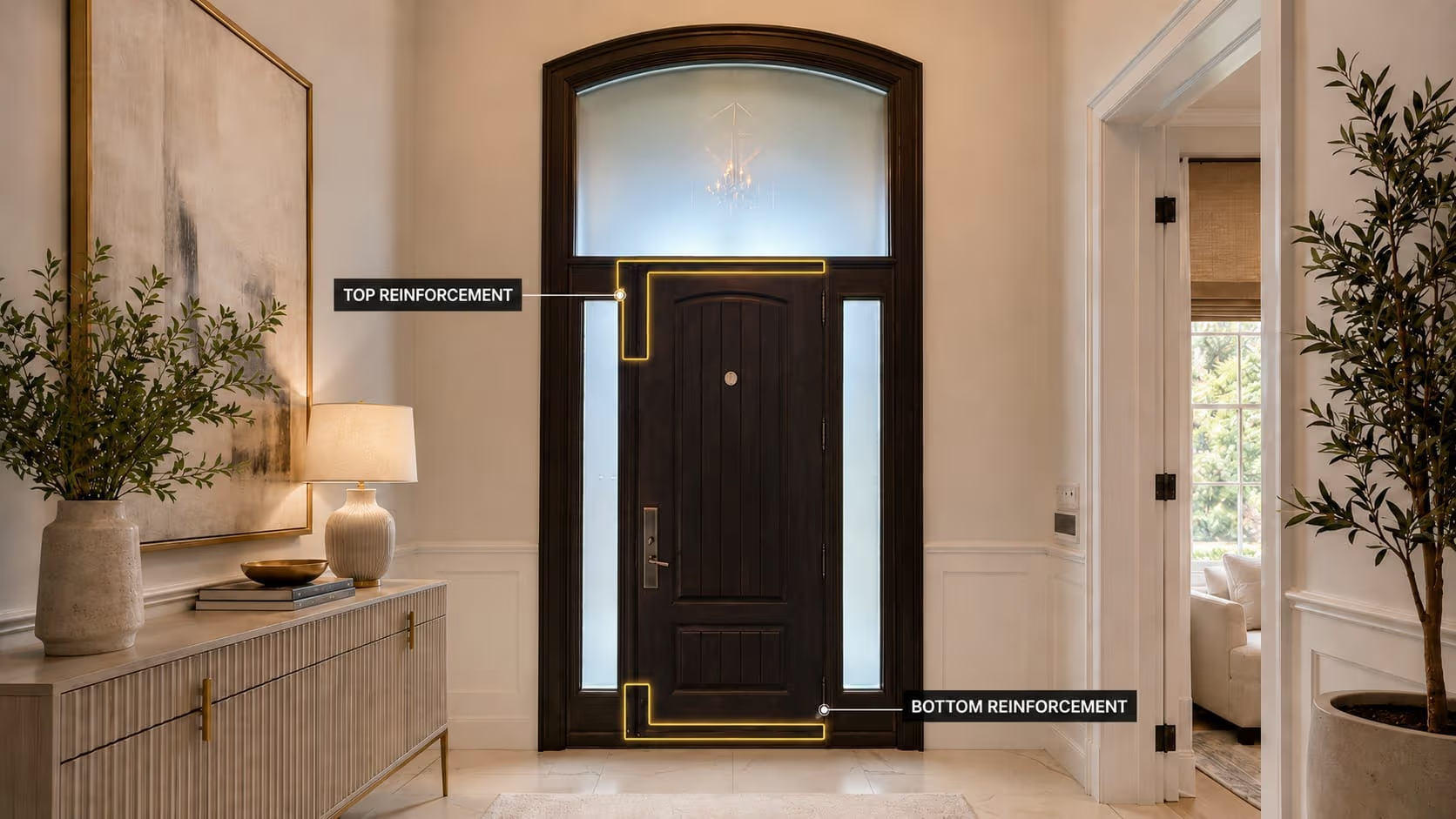
Similarly, window film adds a parallel delay at glass entries. An unfilmed pane can be breached and cleared in seconds. A filmed pane — once struck, once shattered — holds the glass in place. The reach-through that would otherwise follow is no longer possible until the film itself is defeated — a meaningfully longer process.
Delay does not prevent anything. It buys time.
Here is the crucial calculation: delay is only useful if you have a plan for what to do with it. This is where the third layer comes in.
Layer Three: The Family Retreat Plan
A retreat plan is a pre-agreed set of actions for every member of the household when the alarm sounds and a forced-entry attempt is in progress.
It does not have to be complicated. It has four components:
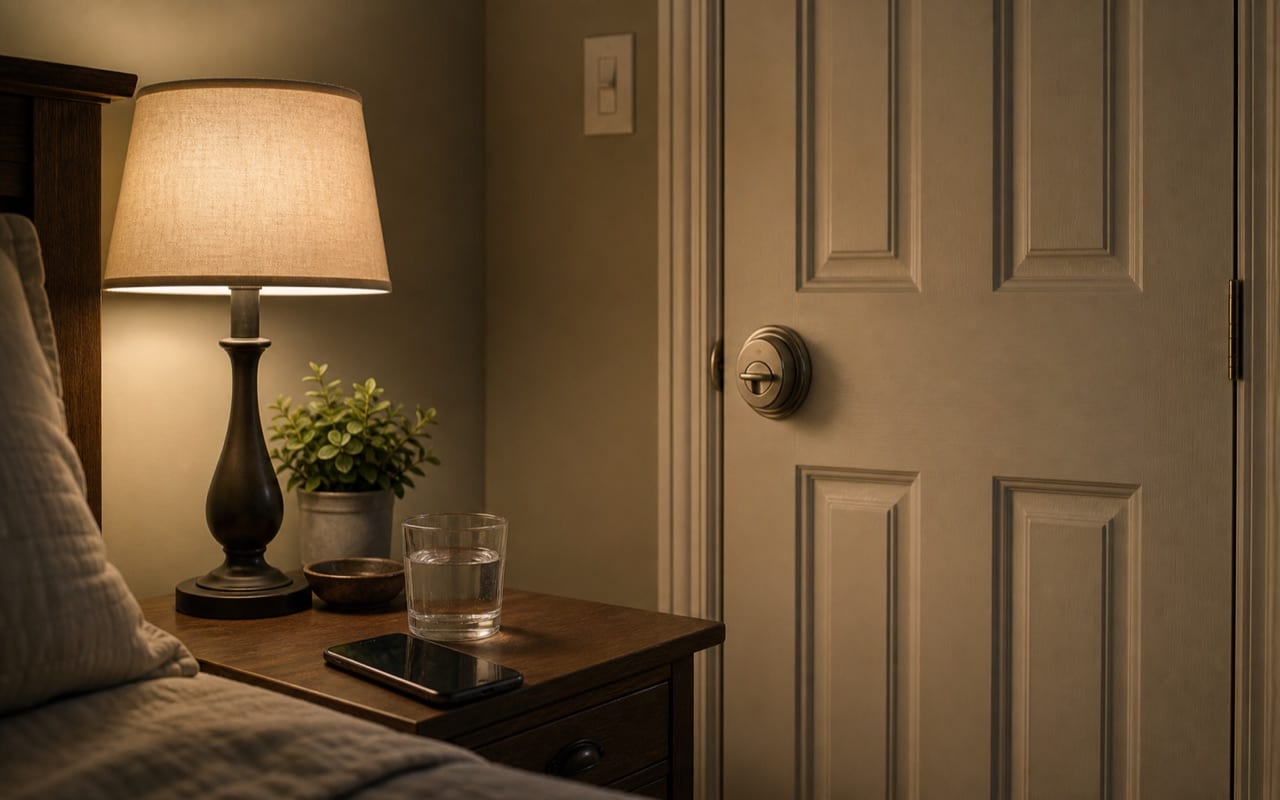
1. A designated room
- Typically the master bedroom or an interior room with a lockable door
- Ideally accessible from every sleeping area without passing through the entry
- The room where the family goes when the alarm sounds at night
2. A phone
- Already in the room or always charged there at night
- The tool for communicating with 911
3. What to say to 911
- The home address
- Number of people in the house and their names
- Where in the house they are
- Whether movement has been heard, and where
4. Staying put
- The plan is to create distance and communicate, not to investigate
- Do not go toward the sound. Do not open the room door. Do not approach the entry.
- Distance, communication, and a locked door between the family and the intruder are the plan.
Children need to know this plan the same way they know a fire drill. Practice it once — not repeatedly — so it is not new information in a stressful moment. The goal is familiarity, not anxiety.
The Role of the Designated Room Door
An interior bedroom door with a passage set provides minimal resistance. A solid-core door with a privacy lock and a reasonable door frame is meaningfully different.
If you have a hollow-core interior door on your designated room, consider replacing it with a solid-core door. This is inexpensive compared to other security upgrades and directly addresses the one door that matters during a forced-entry event while you are home.
Where Security Window Film Fits Into the Layered Plan
Security window film is a delay product for glass entries: sidelights beside front doors, ground-floor windows, patio sliders, rear-yard glazing, and basement windows.
When a filmed pane is struck, it shatters but the film holds the fragments together. A person cannot reach through a held pane — they must spend additional time defeating the film itself. This changes the time cost of a glass-entry attempt from seconds to a meaningfully longer process.
For a family with a retreat plan, the filmed patio slider means the person attempting entry at the rear of the house spends additional time on that vector while the family is moving to the designated room and on the phone with 911.
Sidelights beside front doors are often the most vulnerable glass in a home. They are ground-level, often decorative (and therefore overlooked), and within arm's reach of the deadbolt. A filmed sidelight is a concrete, specific recommendation that makes sense to families: it addresses the one glass that is also the entry point.
Film adds meaningful delay. It is not a guarantee. It buys time.
Where Door Fortification Fits
ARX Guard door fortification addresses the most common forced-entry method: door kick-ins and shoulder strikes at the frame.
The standard residential door frame is secured to the rough opening with short screws into the door frame. Under force, these shear. The lock itself is often not the failure point — the frame is.
ARX Guard reinforces this weak point with an upper component that attaches to the structural frame above the door (the header) and a lower component that attaches to the threshold below. A hockey-stick mechanism with a latch ties the entire door assembly into the structural studs of the house, distributing force across the entire frame rather than just the strike plate.
The result: a door assembly that resists the most common forced-entry attempts significantly longer than the unfortified version.
For a family with a retreat plan, the reinforced front door is the first layer of delay. It is the entry that takes the longest to breach. While an intruder is trying to force the front door, the family is moving to the designated room, locking the door, and calling 911. Those seconds matter.
Door fortification and window film work together. A reinforced door hardens the frame. Filmed glass hardens the alternative entries. Together, they create delay across multiple vectors.
What a Clear Guard Assessment Determines
A free on-site assessment identifies the specific weakest entry points in your home — not generic recommendations, but observations about your property.
A technician examines:
- Which doors have original frames and short-screw installation
- Which windows and sidelights are unfilmed
- Which glass is at greatest risk of a reach-through entry
- Whether the garage-to-house interior door is fortified
- The condition of hinges and frame integrity
The output is a clear picture of where delay is thin and where it is adequate. The family can then prioritize: which improvements matter most for our home and our retreat plan?
If the focus is the front door, fortification makes sense. If the weak point is the patio slider or sidelight, film is the priority. If the family sleeps upstairs and the main vulnerability is a ground-floor window, that window gets filmed first.
An assessment takes approximately 30 minutes, and the result is a written recommendation — not an obligation to purchase anything.
FAQ
What are the three layers of home security?
Detection, delay, and retreat. Detection (alarms, cameras, doorbells) tells you something is happening. Delay (reinforced doors, filmed glass) slows the entry attempt. Retreat (a pre-planned room, a phone, a script for 911, and the decision to stay put) is what the family does during that delay window.
How long does it take to force a residential door?
An unfortified door — standard deadbolt, original frame — can be forced in seconds with a single kick or shoulder strike. A reinforced door, tested to withstand 5,000+ pounds of pressure, resists that attempt significantly longer. The key is that delay buys time for the family to reach the designated room, lock the door, and communicate with 911.
What should a family retreat plan include?
A designated room, a phone (already in the room or always charged overnight), knowledge of what to say to 911 (address, number of people, where in the house they are), and a commitment to stay put and communicate rather than investigate. Children should know the plan in advance so it is not new information in a stressful moment.
Does window film stop a break-in?
No, film is a delay product, not a guarantee. It holds shattered glass together and prevents the hand-through reach. This buys time for the alarm to trigger and the family to move to the designated room. The combination of delay (film, reinforced doors) and a retreat plan is what matters.
Ready to assess your home's weak points in the context of a family safety plan?
Book a free on-site assessment. A Clear Guard technician identifies your home's weakest entry points and shows you exactly where delay is thin — so you can prioritize the improvements that matter most for your family's plan. Written recommendation within 48 hours, no obligation.
Related Reading
If you've already thought about your family's plan and want to dive deeper into specific entry points, these posts may help:
- Break-In Prevention for Toronto Homeowners — a complete entry-point audit
- Homes Backing Onto Trails and Ravines — protecting the rear yard
- After a Nearby Break-In: A Calm, Practical Checklist — immediate steps if something has happened nearby