Does Security Window Film Actually Stop Break-Ins?
The short, honest answer: no. Security window film does not stop break-ins.
Neither does a deadbolt. Neither does an alarm. No single product on the residential market stops a determined intruder who has unlimited time and is willing to make noise.
What security window film does is more specific — and more useful — than "stopping" a break-in. It removes the fastest entry path through a glass pane. Standard residential glass goes from intact to walk-through in seconds. Filmed glass does not. That difference in time is what drives most residential break-in attempts to fail or be abandoned.
The rest of this post explains why that framing matters, what film actually does mechanically, and when film is not the right answer.
What "Stopping a Break-In" Actually Means
Most people asking this question are conflating two very different things:
"Stops anyone from ever getting in" — No residential security product does this. Any installer who claims their product is impenetrable is overselling, and you should treat that as a signal to look elsewhere.
"Removes the easy path so an intruder moves on" — This is what real residential security does. It is also what officers who investigate break-and-enter cases consistently describe when asked what makes a home a target.
The break-ins that affect most residential homes are not sophisticated, extended attacks by professionals. They are quick, opportunistic attempts by someone who has identified what looks like an easy path — a patio slider that is closed but unlatched, a basement window at grade level, a sidelight beside a front door. The calculation is about time and noise. The faster and louder the attempt, the higher the probability of detection.
This is the framing that matters: not "does film stop break-ins" but "does film remove the easiest target on this property."
What Standard Glass Actually Does on Impact
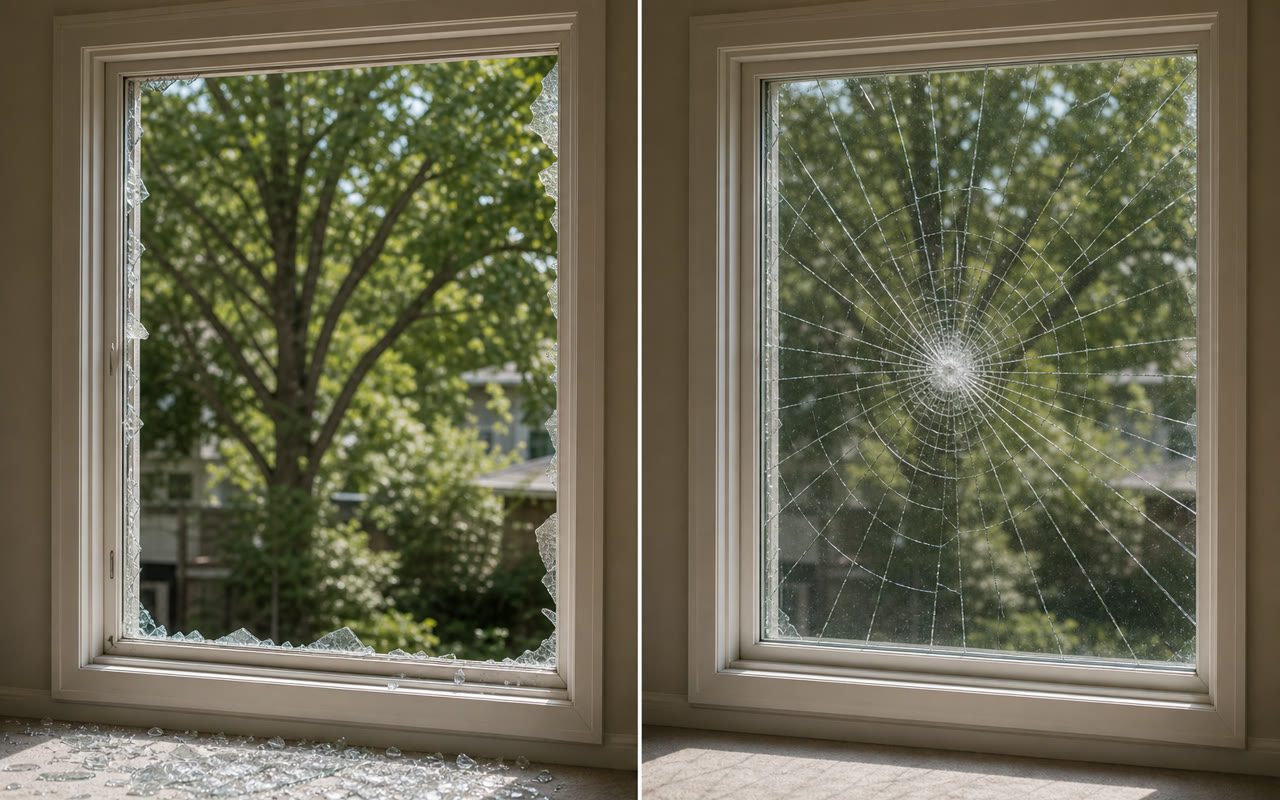
Standard double-pane residential glass, under a focused impact, shatters and clears the frame quickly. A hard object — a rock, a small hammer, a gloved elbow — applied to the centre of a typical residential pane causes it to fracture. The glass falls inward and outward. The frame is empty.
From there, the intruder has two options: reach through the cleared frame to defeat the latch or handle from the inside, or climb through directly. Either option takes very little additional time on a standard unfilmed window.
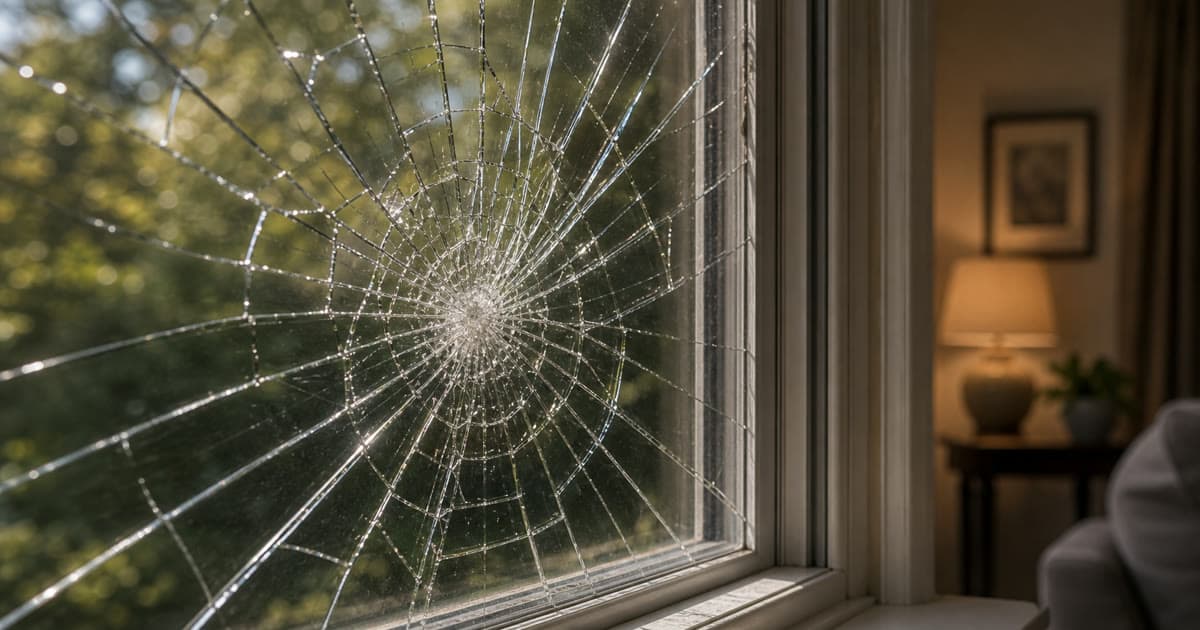
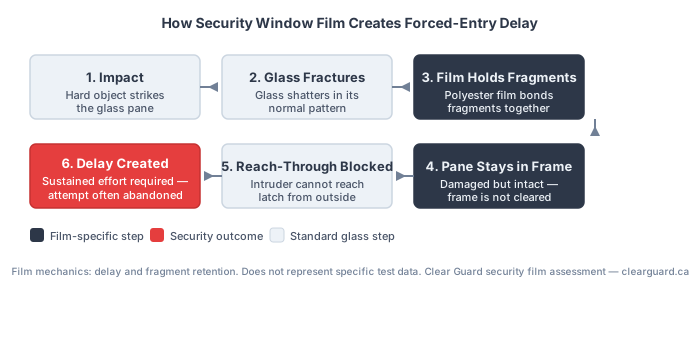
What changes with film is that "cleared frame" outcome. The glass still fractures. But the fragments stay adhered to the film surface. The pane goes opaque and spider-webbed — but it does not fall away. The frame is not empty.
Before reaching through, an intruder now has to defeat the film itself: tear through it, peel it from the frame, or breach the entire frame assembly. This is not a seconds-level task. It takes meaningfully longer, it is louder, and it requires sustained effort in a visible location.
If you want to see how your current windows behave under impact, the Glass Breaker Test post walks through a simple at-home assessment you can do before calling for a quote.
What Security Film Actually Does
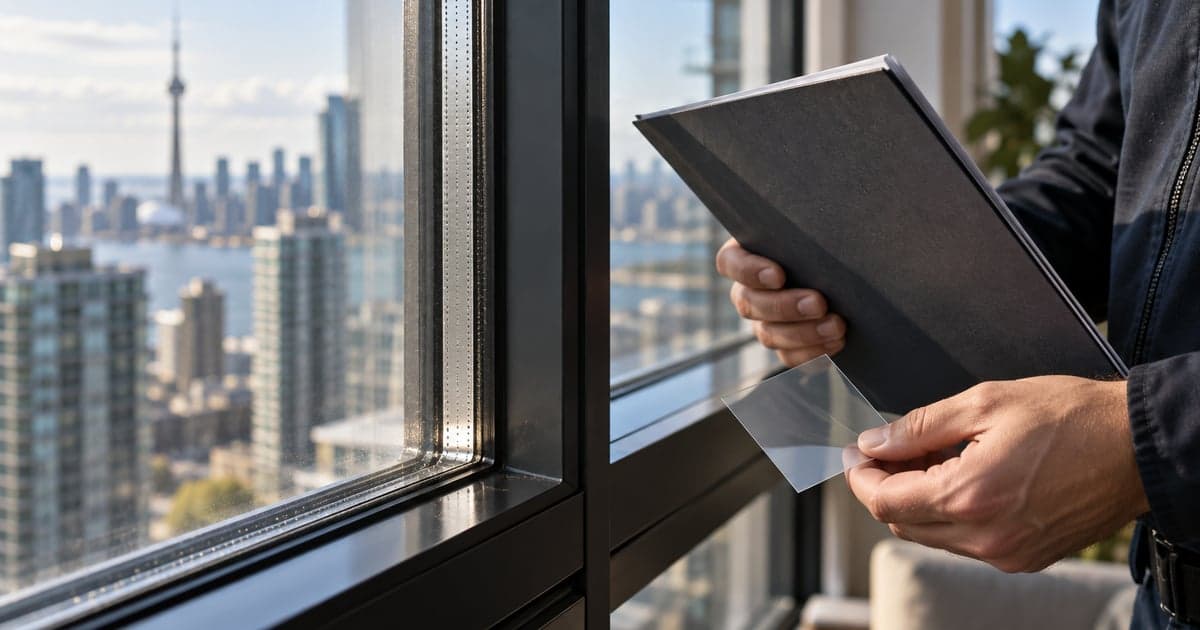
Security film is a polyester-based adhesive film bonded to the interior and/or exterior face of the glass. The film itself is nearly invisible after installation — looking at a filmed window from the inside or outside, most people see no difference.
On impact, the mechanics are: the glass shatters in its normal pattern, the film holds the fragments together, and the pane stays in the frame as a single, damaged-but-intact panel. To clear the frame, an intruder has to work against the film — and the film is bonded to both the glass surface and (when properly installed) the frame itself.
The language that matters:
- Delay — not prevent.
- Reach-through blocked — not break-in stopped.
- Significantly harder to clear — not impenetrable.
This framing is not a caveat. It is the accurate description of what film does, and it is the framing that earns trust with a reader who has already decided they don't want to be sold to.
A Clear Guard technician can walk the property with you, identify which windows are your highest-exposure points, and tell you whether film is the right layer for each one — or whether your door is the higher priority. The assessment is free and takes about 30 minutes.
For a deeper look at the mechanics, the How Security Window Film Works post covers the impact physics in detail. For product specifications, the security window film page covers what we install.
Why Delay Is the Real Deterrent
The mechanism behind residential security is not impenetrability — it is the intruder's internal cost-benefit calculation.
Three things happen during the additional time that a filmed window creates: an audible alarm (if installed) has time to sound and the response to begin; an occupant inside has time to call for help or move to a safer part of the home; and the intruder is exposed in a visible location for longer, increasing the probability that someone sees the attempt.
Officers who investigate break-and-enter cases consistently describe entry time as a primary factor in whether a residential target gets attempted. The opportunistic intruder is not committed to a ten-minute breach of a filmed window. Past a certain point, the calculation tips, and the attempt stops.
Film alone is not a complete picture. The layered approach — film on the glass, fortification on the door, exterior lighting, and a basic family response plan — is what each layer is actually designed for. The Layered Family Safety Planning post covers how these elements work together. Each layer multiplies the delay the others create.
The Two Situations Where Film Is Not the Right Answer
Being direct about this is the point.
When the primary risk is the door, not the glass. If your front door sits in a hollow-core frame with a standard short-screw strike plate, the most likely breach point is the door, not the window beside it. A kick-in that takes seconds at the door frame is not addressed by film on the glass. In that case, ARX Guard door fortification is the higher-leverage first step, and Why Your Front Door Might Be Your Biggest Security Risk explains the mechanics.
When the glass is inaccessible and the home is fully alarmed. A sealed second-floor window with no balcony or roofline access and a monitored alarm system already has meaningful protection at that location. Film still adds a secondary layer, but it is not the highest-leverage spend for that specific pane.
The goal of a free assessment is to tell you which windows on your specific property are worth filming — and which aren't.
So, Is Film Worth Doing?
For most GTA homes: yes, on the right windows.
Film earns its keep on accessible ground-floor glass, patio sliders, sidelights beside the front door, and basement windows at or near grade. These are the panes where a quick breach is actually plausible, where a delay of meaningful length changes the risk profile, and where a one-time installation holds its effect for years.
Film is not a whole-home treatment. Some windows — sealed second-floor bedrooms with no access route, basement utility windows behind locked mechanical rooms — are lower-value film candidates. The assessment identifies the priorities.
The decision is per-window, and it starts with the free on-site visit.
Frequently Asked Questions
Does security window film actually stop break-ins? No security product stops a determined intruder given unlimited time. Security window film holds shattered glass in the frame so an intruder cannot reach through to defeat the latch. That delay — meaningfully longer than a standard unfilmed window — is what deters opportunistic break-ins, which are the type that affect most residential homes.
Is security window film worth it? Film is most worth it on accessible ground-floor windows, patio sliders, sidelights, and basement windows — and only after the front door has been assessed and fortified if necessary. A free on-site assessment identifies which windows on your property are the priorities.
How long does security film delay a break-in? Standard residential glass clears the frame quickly after a focused impact. Filmed glass holds the pane in place; an intruder must then defeat the film itself, which takes significantly longer. The exact delay depends on the film thickness, the glass type, and the frame anchoring — which is why the assessment matters before any recommendation.
Does security film make my windows unbreakable? No. The glass still shatters on impact. What changes is that the fragments stay adhered to the film, the pane stays in the frame, and the reach-through is blocked. Film delays entry; it does not make glass impenetrable.
Related reading: