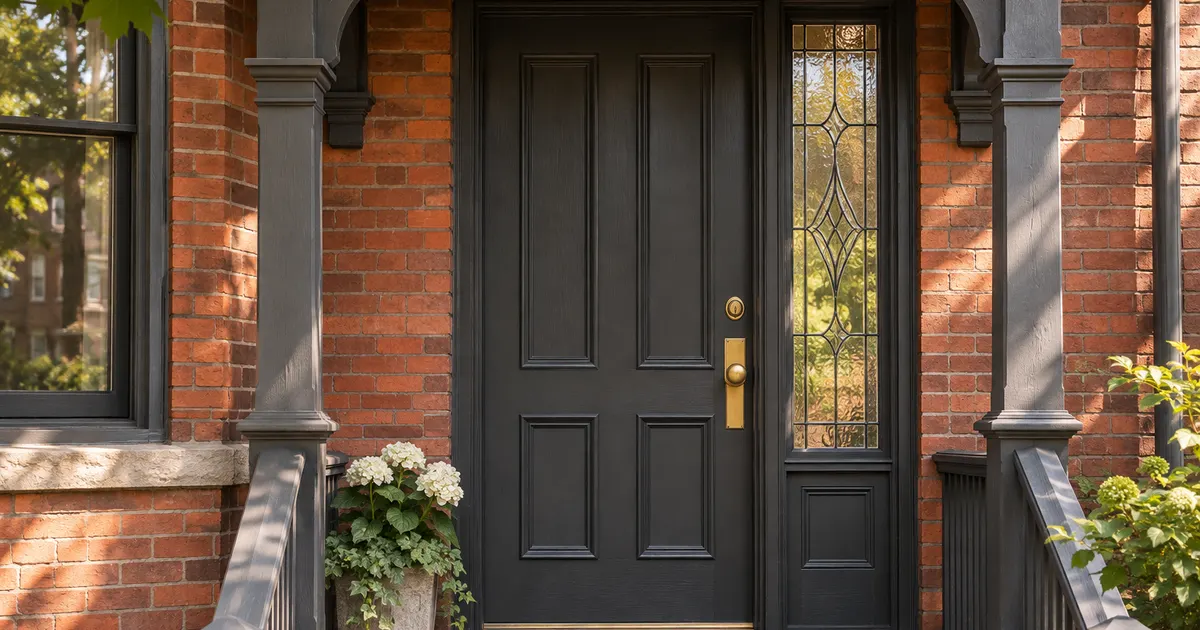
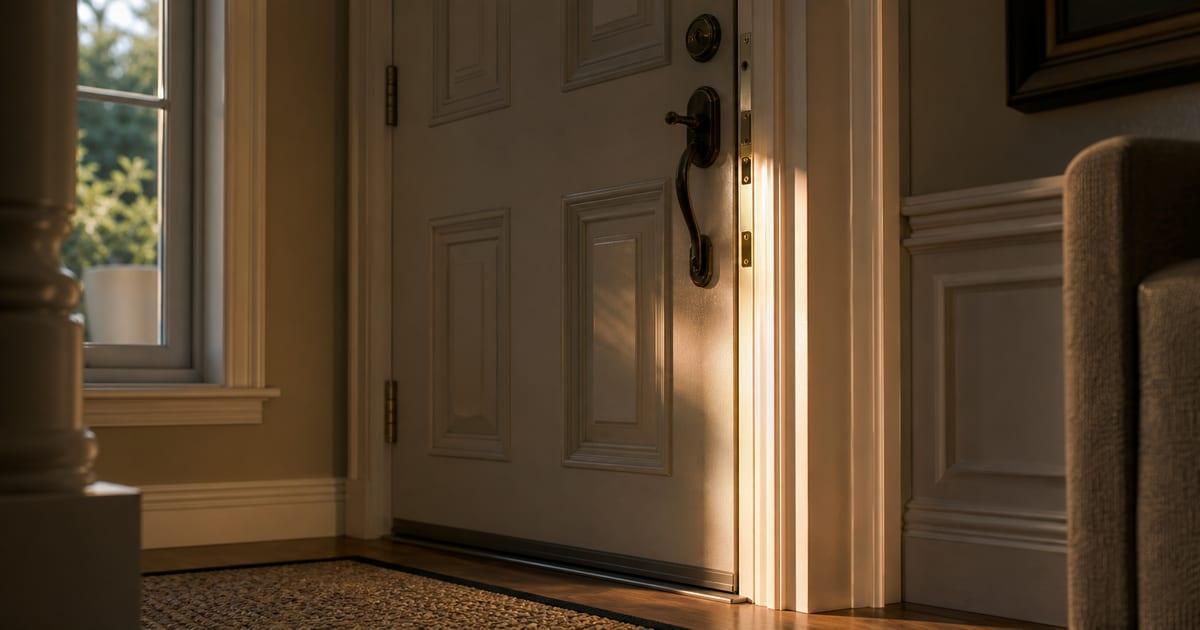
Door fortification starts with the door that is actually installed. Its slab, frame, lock area, hinges, nearby glass and normal operation all affect the assessment.
No single component fails first on every home. Inspect the actual door assembly before choosing a scope, then compare it with the other exterior entries on the property.
Treat the entry as an assembly
A better lock and door reinforcement do different jobs. Police guidance recommends secure locks, sturdy frames and secure hinges as parts of a layered approach.
See Halton Regional Police guidance on doors and locks. It does not prescribe one Clear Guard system or a universal repair.
A useful assessment records the door type, frame condition, locking hardware, hinge side and how the door closes and latches. It also notes any closer, weather-stripping or building requirement that must keep working.
ARX Guard door fortification can add substantial resistance to a suitable door assembly. The components and scope are selected after reviewing the actual door and what the client wants.
The recommendation may also be maintenance by another provider, a lock discussion, another approval or no Clear Guard work at that location.
Walk every exterior hinged door
Begin with the front, side and rear hinged doors. If the home has an attached or built-in garage, include the garage-to-house door.
Do not rank them by neighbourhood stereotype or construction year. Record what is present, how each entry is used and whether the property layout affects access or visibility.
| Entry | Assembly details to record | Nearby condition | Normal function to preserve | Open question |
|---|---|---|---|---|
| Front door | Slab, frame, lock area and hinges | Sidelight or transom glass | Closing, latching and exit | What scope suits this assembly? |
| Side or rear door | Current assembly and hardware | Windows or concealed approach | Daily access and weather seal | Does it need work or only maintenance? |
| Garage-to-house door | Door, frame and closer where present | Garage access and use | Tight fit, weather-stripping and self-closing function | Which requirements apply here? |
| Your entry | Observed details | Glass or access condition | Required everyday use | Person who can confirm the answer |
This worksheet is an observation aid, not a security grade or code review. A technician still needs to inspect the assembly before a written scope is proposed.
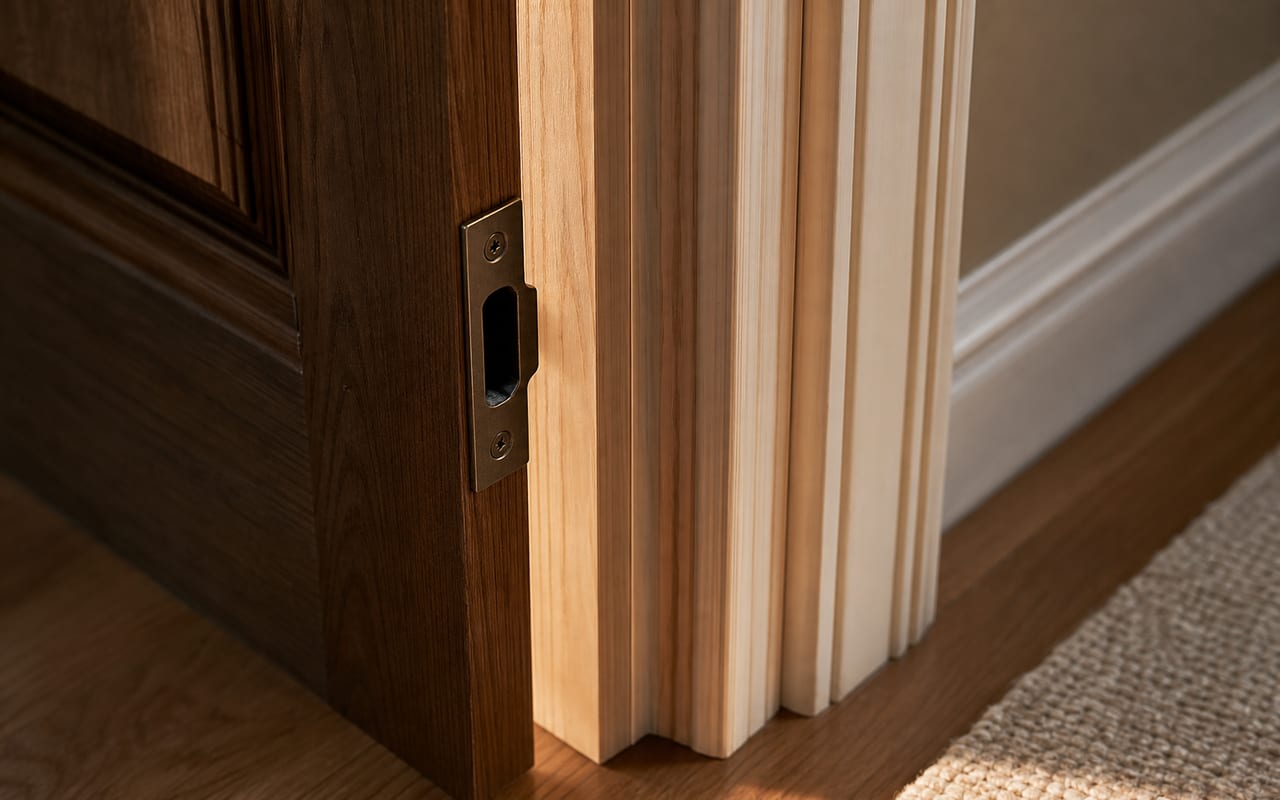
Illustrative editorial image; not a Clear Guard customer property or performance test.
Review accessible glass as a separate scope
Glass and the hinged door assembly need separate review. Reinforcing a door does not decide what should happen to a sidelight, transom or adjacent window.
If glass sits near interior hardware, record its position and the way the entry operates. The assessor can then compare a suitable film, a rigid glazing option or no glass work for that location.
Security film and ROCKGLASS are not door hardware. They address the glazing with different installation and frame considerations.
Use the window-priority guide for film questions. For fixed sidelights, the ROCKGLASS sidelight guide explains what information to bring to a glazing review.
A patio slider is also a separate system. Review the glass, frame, track and locking function together rather than treating it as another hinged door.
Preserve required door operation
Any proposed work must preserve normal closing, latching and safe exit. A security upgrade should not make the household rely on a key, special device or unfamiliar action to leave through a required door.
Ontario's housing provisions address how specified entrance, exit and dwelling-unit doors open from inside. They generally cannot require keys, special devices or specialized knowledge, subject to the Code's exceptions.
The Code also gives the garage-to-dwelling door a fume-barrier role. It calls for a tight fit, weather-stripping and a self-closing device.
Review the current Ontario Building Code Part 9 and obtain any required professional or property approval. This guide is not a code-compliance opinion.
Condominium rules, heritage controls and accessibility needs can add other decisions. Put those conditions in the assessment record instead of assuming the hardware choice resolves them.
Compare the entries before setting priorities
The first priority should come from the property's actual conditions and household needs. A front entry, side door, garage door and nearby glass may call for different work.
Use the forced-entry walk-around guide to record observations without attempting your own impact or pry test.
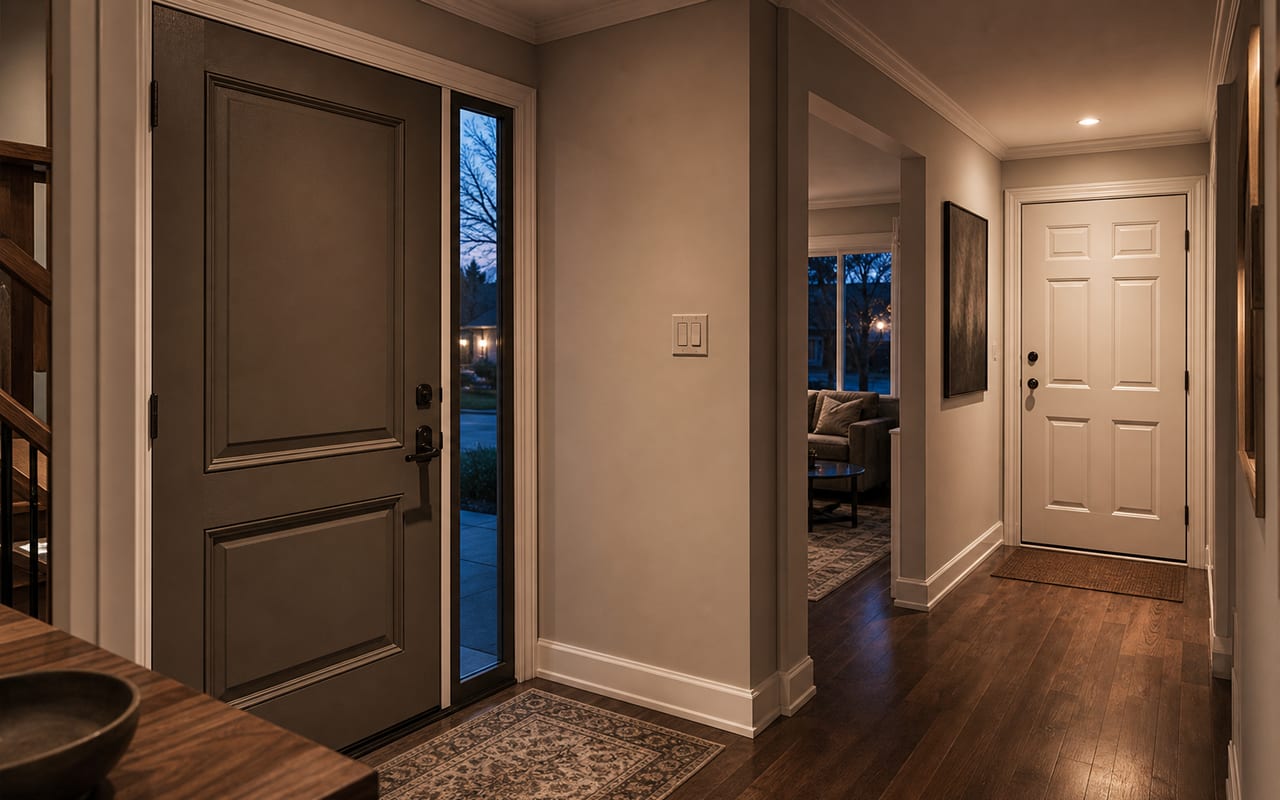
Illustrative editorial image; not a Clear Guard customer property or performance test.
Ask the assessment to separate each proposed line item. That makes it easier to phase the work without describing an unassessed entry as protected.
| Location | Proposed scope | Function to preserve | Separate glass question | Status |
|---|---|---|---|---|
| Entry reference | Door-fortification, maintenance referral or no work | Closing, latching, exit and other applicable functions | Film, glazing review or none | Proposed, open or excluded |
| Your entry |
The written quote should say what is included and excluded. It should not rely on a generic promise that one package fits every door.
Know what the assessment can decide
A Clear Guard assessment can document the relevant doors and glazing. It can also discuss household priorities and propose an eligible ARX Guard scope in writing.
It cannot turn every existing door into the same assembly. It also should not promise a breach time, that entry will be prevented or a fixed result against every attempt.
Ordinary habits still matter. Keep exterior doors and garage access locked, and address maintenance that prevents a door from closing or latching properly.
Frequently asked questions
Is door fortification the same as installing a new lock?
No. Locks, the door assembly and reinforcement are related but separate parts of the review. Record the current hardware and assembly, then let the assessment identify the appropriate scope or referral.
Does every GTA home need the same ARX Guard components?
No. The specific components are assessed for the actual door and what the client wants. A proposal may differ by entry, and some locations may need maintenance, another provider or no Clear Guard work.
Which door should be assessed first?
Review all exterior entries and nearby accessible glass before ranking them. Prioritize the observed conditions, required door functions and household use rather than a generic city or housing-era rule.
Request a property-specific door review
Photograph the whole entry from inside and outside, including nearby glass. Note any closing, latching or access concern without dismantling hardware or testing the door by force.
Book a free on-site assessment for a written quote that separates each proposed door and glazing scope.