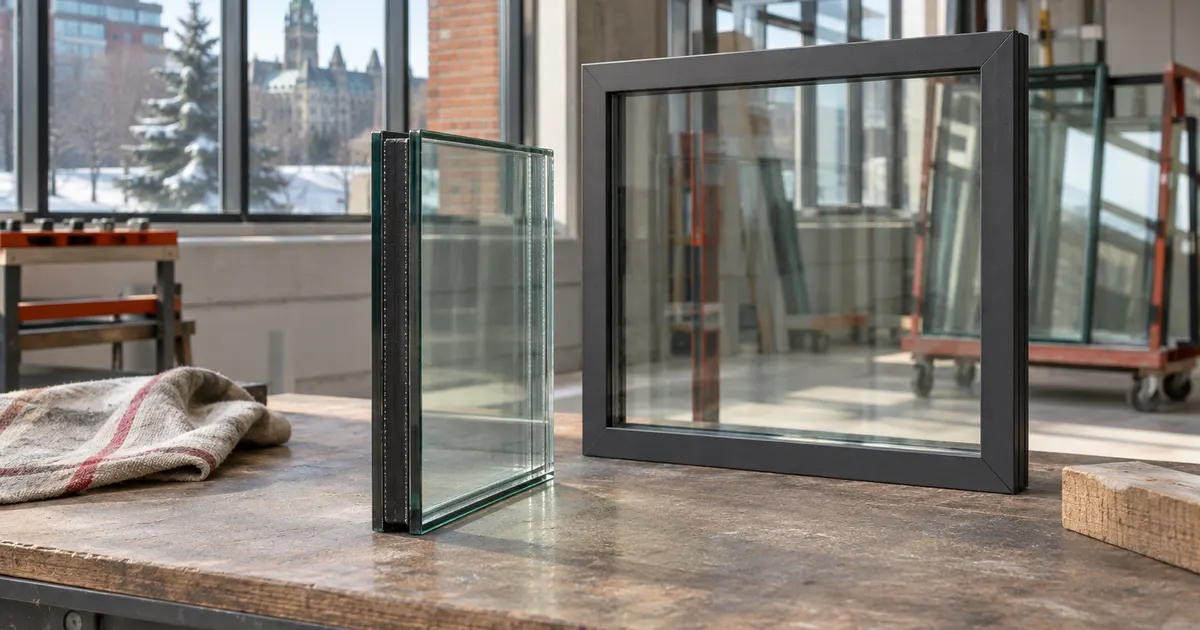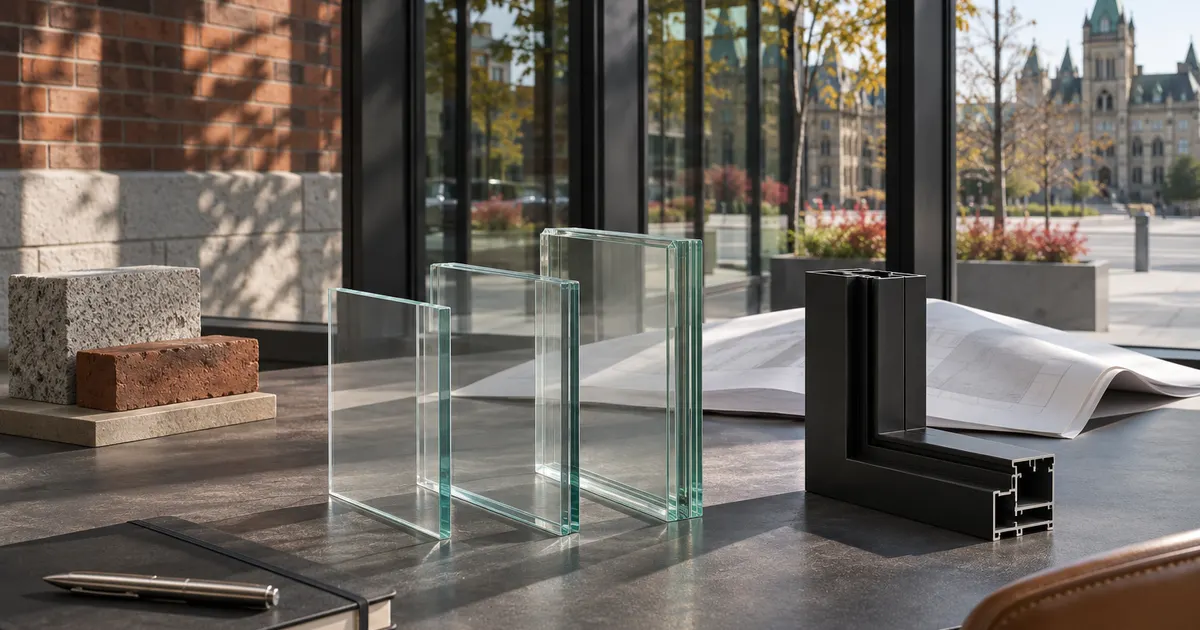
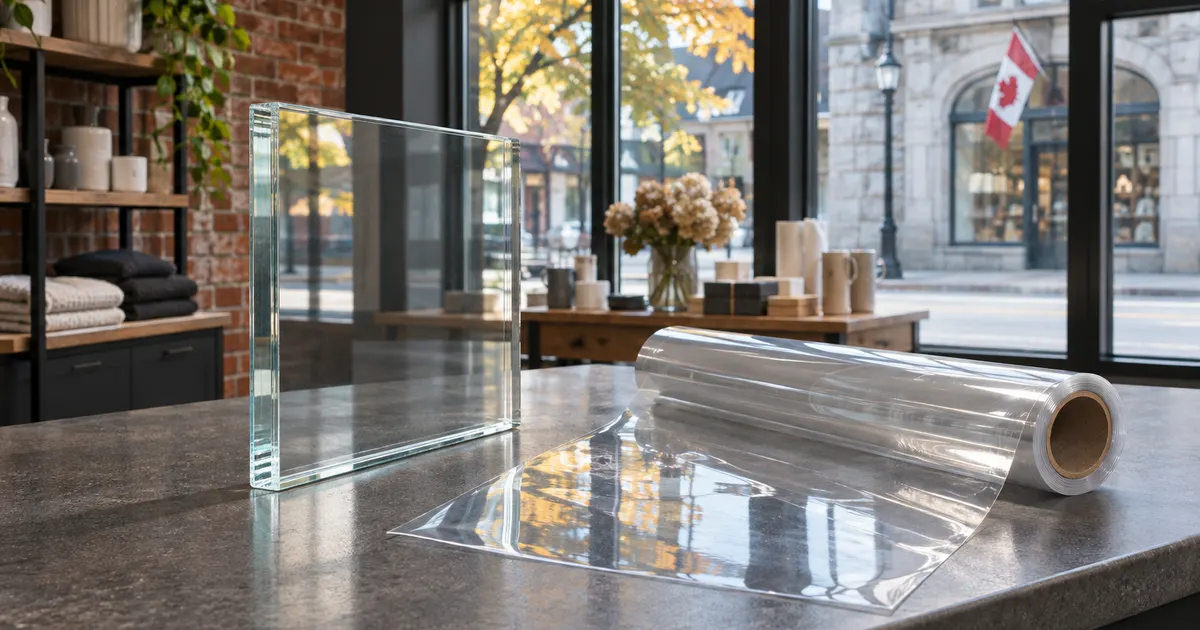
For a shop with sound windows, the first question is what you want to happen when something hits the glass. Security film helps the pane hold together after it cracks. A ROCKGLASS retrofit gives the window a separate, rigid polycarbonate panel to take the impact. Both leave merchandise visible, but the work at the frame is different.
When security film makes sense
Consider a row of display windows in a leased shop. The panes are clear, the seals are sound and you want to keep the existing storefront profile. Security film bonds to the glass. If the pane cracks, the film helps retain fragments. Clear Guard uses DOWSIL 995 at the perimeter to help hold the filmed glass to the frame. We assess whether the glass and attachment surface suit the installation.
Ask to see where the perimeter sealant will sit next to display graphics and mullions. If you also want heat control or privacy, identify those needs separately so the quote names the actual products proposed.
When a rigid panel makes sense
For a street-facing display you particularly want to shield, ask whether the frame can carry a retrofit panel in front of the existing glass. Review a frame finish against your storefront and stand inside the shop to check the view at eye level. At a door, the installer also needs to check how it swings and clears its hardware. ROCKGLASS commercial configurations
Can one storefront use both?
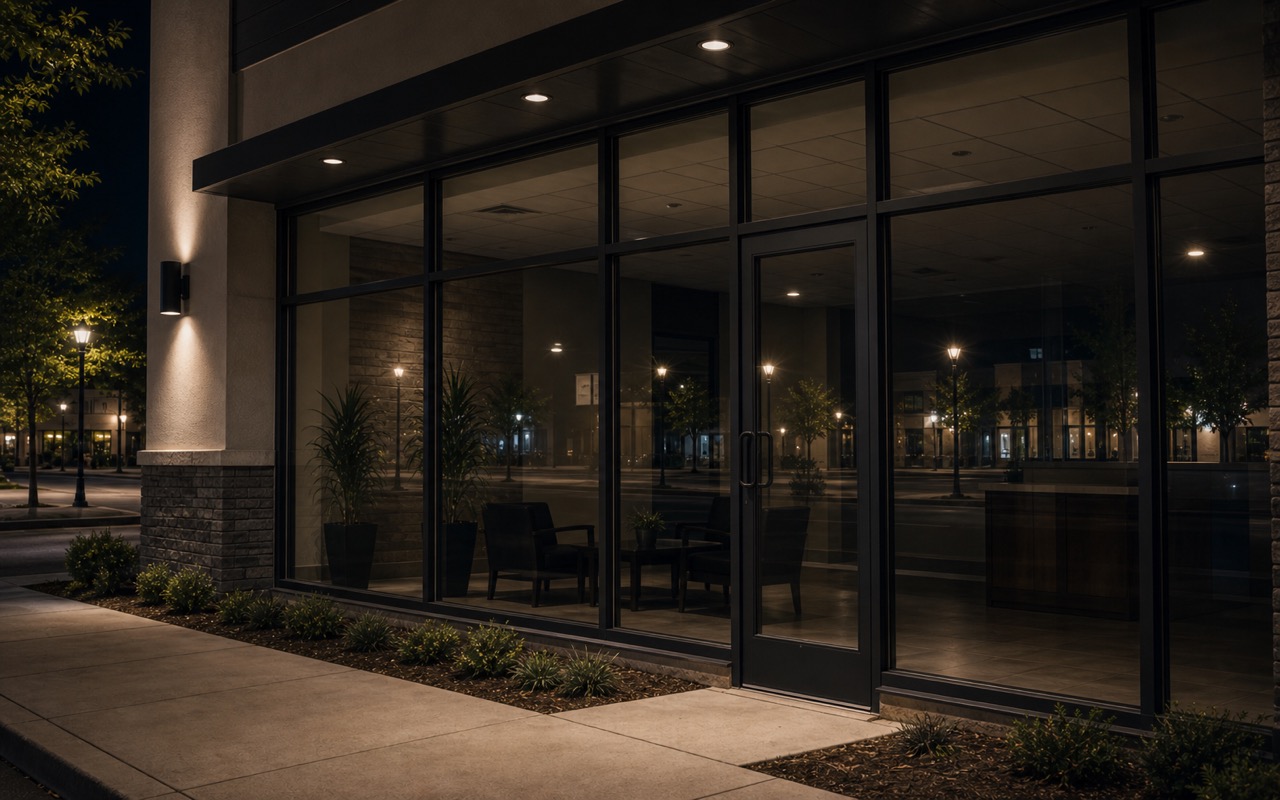
Yes. Take a convenience store with one large display beside several smaller, sound panes. Ask for a panel option on the display and a film option on the other windows. Put each on its own line in the quote. That gives you a way to phase work without assuming the same treatment suits every pane.
If a pane is cracked or fogged between layers, flag it before requesting film. An added film or panel leaves the original defect in place. A replacement hybrid insulated glass unit may address both concerns in one glazing job.
Budget for the work around the glass
A quote for an installed film and a quote for an installed panel should identify the same windows. List decals, lettering, blinds, display fixtures and any access restrictions individually. Ask who moves the displays and who reinstates the graphics. For leased premises, give the property manager a drawing showing any frame that would be visible from outside. Get the finish decision recorded before the installer orders materials.
Consider a café with a large fixed pane beside its patio and a frequently used glazed entrance. The owner wants to keep the seats by the window and the entrance easy to operate. Request a panel quote on the fixed pane, a compatibility review for film on the door, and a separate line for after-hours work if needed. That gives the owner a way to fund the most important window first without assuming that every piece of glass should get the same treatment.
How to read the two proposals
| Question | What to look for in the answer |
|---|---|
| What stays on the existing glass? | The film specification and perimeter attachment, or the position and finish of the separate panel frame. |
| What happens if an existing pane needs service later? | A description of access, removal and reinstatement for the selected system. |
| Who signs off on appearance? | The owner or landlord identified by name and a record of the reviewed sample. |
| How will the glazing be cleaned? | Product-specific care instructions that staff can keep with their opening and closing procedures. |
Ask the installer to explain any advertised test result in terms of the exact glass and frame proposed. A shop owner can choose the right physical arrangement without assigning a predicted break-in time to either option.
What to send for an assessment
Gather a wide view of the frontage, an inside view of each window and any landlord appearance requirements. Include business hours and whether customers must use the same door during work. Clear Guard can then discuss which parts of the project need measuring on site. Request a storefront glazing quote.