A quote for “3/8-inch security glass” gives you a dimension. It still leaves several buying decisions open. Is it a panel over existing glass, replacement glazing or the overall depth of a sealed unit? Compare the exact product, its frame and the documentation supplied for that combination.
How close is 3/8 inch to 10 mm?
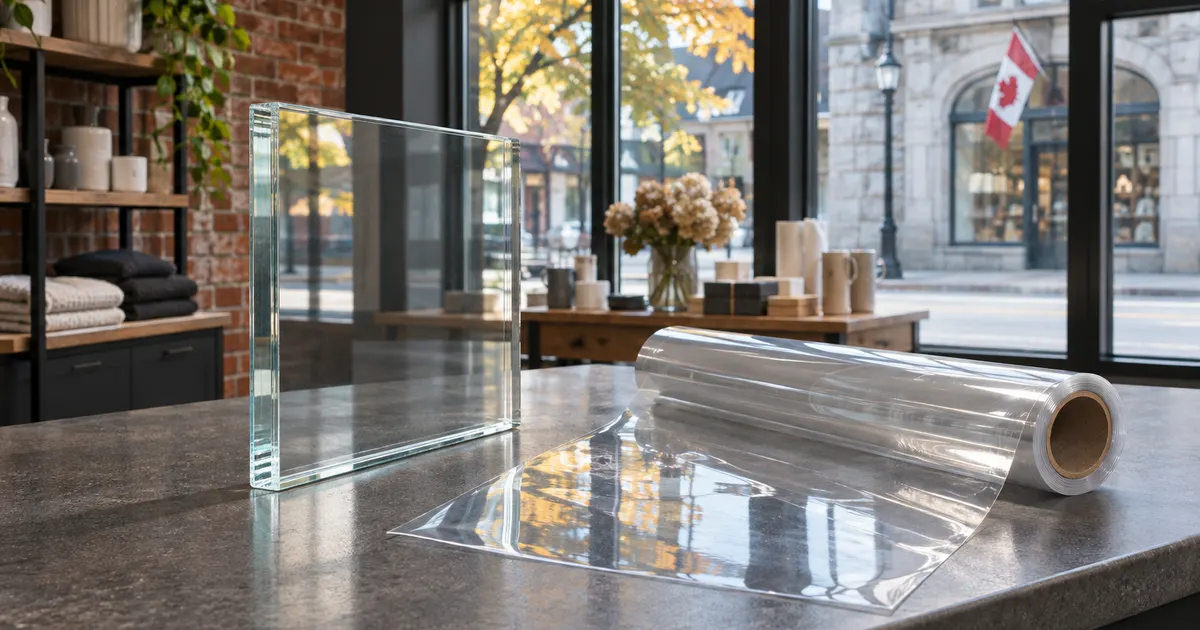
Three-eighths of an inch equals 9.525 mm. That is about half a millimetre thinner than a nominal 10 mm ROCKGLASS sheet. The dimension alone tells you little about how long a finished storefront will resist forced entry.
| Product | Published dimension | What the manufacturer describes |
|---|---|---|
| ROCKGLASS | 10 mm sheet | A framed retrofit panel over the existing glass, or ROCKGLASS in a replacement hybrid sealed unit. Verify which build the quote covers. |
| Riot Glass ArmorPlast AP375 | 0.375 inch nominal panel | A hard-coated polycarbonate security panel. Riot Glass Canada describes a retrofit shield mounted in front of the existing glazing. Ask which framing system is included. |
| DefenseLite Pro | 3/8 inch panel in one documented test configuration | An overglazed fixed window. The cited Intertek report describes a polycarbonate panel in front of 1/4 inch tempered glass. Match the quote to the tested build. |
Product references: ROCKGLASS commercial systems, Riot Glass AP375 specification, Riot Glass Canada retrofit description and DefenseLite Pro Intertek report Q8736.01-119-12.
What each test tells a buyer
ClearSecure’s product sheet lists a drop-ball result above 200 ft-lb. Its footnote identifies an in-house test simulating TAS 201. The sheet gives no thickness-specific forced-entry duration. The DefenseLite report describes a framed window tested under a different protocol. Putting those figures on the same strength scale would give a misleading result.
If a landlord or project specification requires a particular test, send the wording to each supplier. Ask for the report that identifies the specimen, frame, installation method and applicable result. A report for a fixed window may have a different scope from the entrance door on your drawing.

Compare the frame you are buying
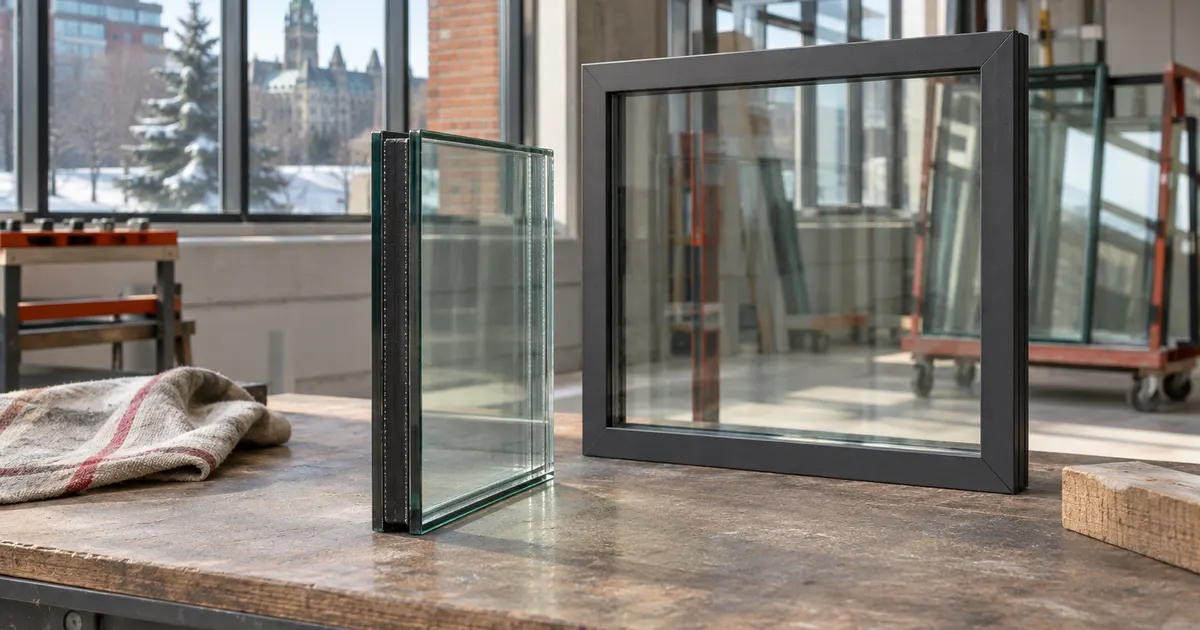
Look for a drawing of the perimeter detail and a description of what stays in place. If one quote includes a complete framed overglaze and another prices a replacement pane within the existing frame, they involve different labour and leave a different storefront profile. Include door glass separately from fixed display glass. A working door has to carry the extra weight and clear the hardware throughout its travel.
For example, two bidders may both write “front display, clear finish.” One includes removing a failed sealed unit and supplying a new hybrid unit. The other assumes the original unit is sound and prices an additional panel. The second proposal leaves the failed glass in place. Before comparing prices, give both suppliers the same photograph, identify the failed unit and ask for a revised scope that solves that condition.
Useful questions when someone quotes a tested product
Ask for the manufacturer and model, the test standard, the report identifier and the part of the report describing the installed specimen. Then compare that description with your window schedule. Does the frame match? Was the specimen fixed or operable? Is the test for the sheet on its own or for a complete glazed assembly? If there is a difference, ask the supplier to explain its relevance in writing.
That exercise is especially important if a procurement document specifies a particular result. A material data sheet can be valuable for panel selection while leaving the specified system rating unresolved. Keep the report with the quote it supports so a later change of frame or product can be reviewed before ordering.
A final practical question is how the storefront will look when the work is done. Ask to see a frame finish and clear sample against your real lighting. Two specifications can have similar nominal thicknesses while differing in visible border, reflections and the work needed to retain window graphics.
Put competing quotes on the same scope
- Give every bidder the same list of windows and doors, including which units are damaged.
- Ask for the product name, sheet thickness, overall build-up, frame finish and installation method for each.
- Identify who removes old glazing, disposes of it, reinstalls graphics and coordinates after-hours access.
- Request the exact test evidence and written coverage terms for the proposed installation.
An unnamed “armour glass” line item could describe several different products. Ask for its model and manufacturer before comparing it with AP375, DefenseLite Pro or 10 mm ROCKGLASS.