
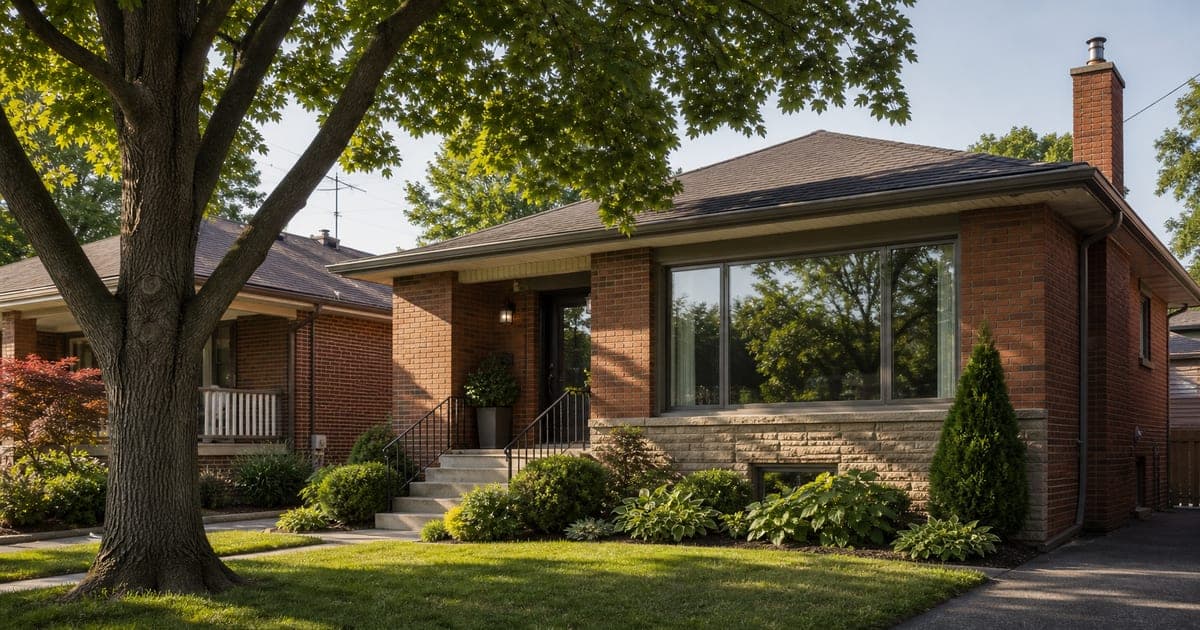
Leaside home security is best approached one property at a time. The neighbourhood contains older bungalows and semis, two-storey homes, additions, and newer rebuilds. That mix means there is no honest “typical Leaside weakness.” A useful review starts with five visible features: lower-level glass, side doors, large windows and rear glass, glass beside door hardware, and the lane or side-yard approach.
This is a calm inspection, not a prediction about crime. The aim is to find maintenance gaps, understand which entries receive little natural observation, and decide whether selected glass or hinged doors would benefit from more resistance.
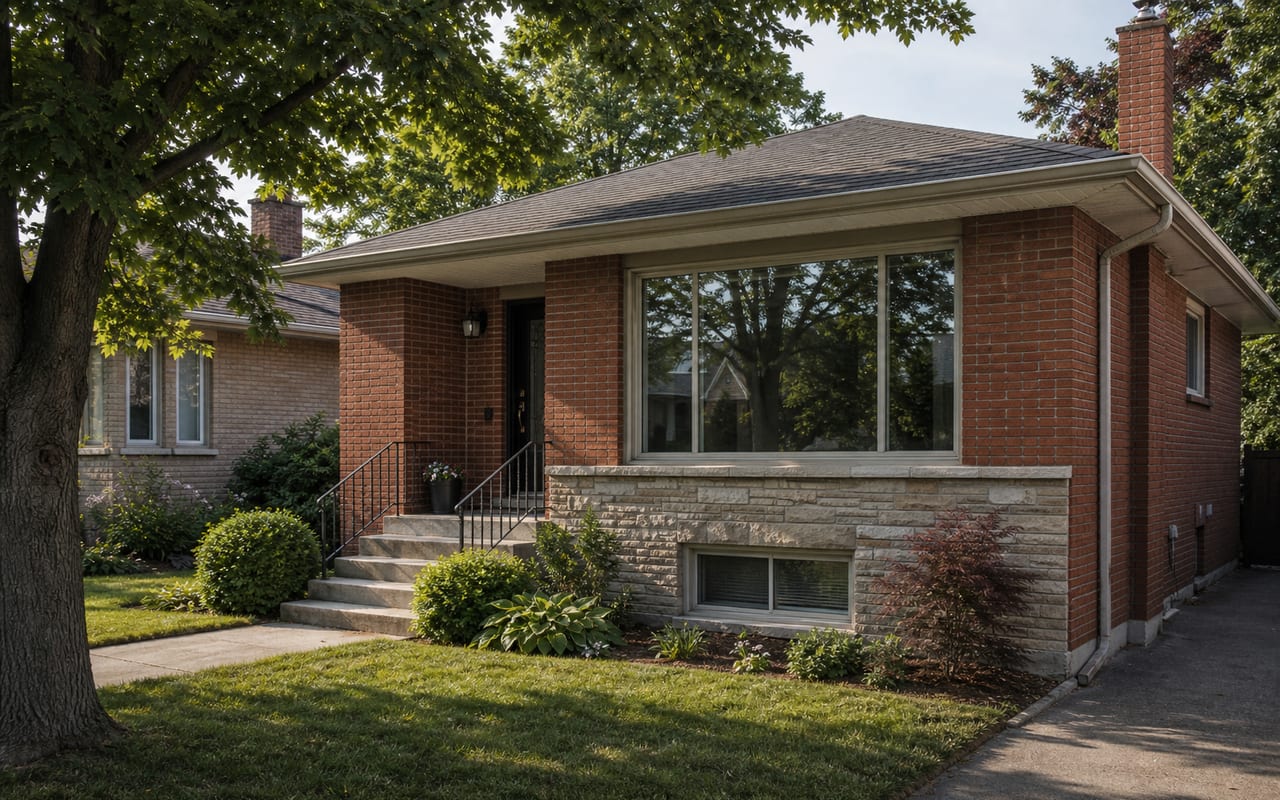
1. Lower-level and basement windows
Start at the foundation line. A basement window may be easy to overlook because it is small, but size alone does not determine priority. Check whether the window is accessible from grade, hidden by landscaping, close to a path, or part of a bedroom escape route.
Close and lock the window, confirm that the frame is sound, and clear debris from any well. Do not add a device that interferes with required emergency egress. If the glass is accessible, a technician can assess its type, condition, frame, and compatibility with security film.
Our guide to basement windows and grade-level glass explains the inspection in more detail.
2. Side and rear hinged doors
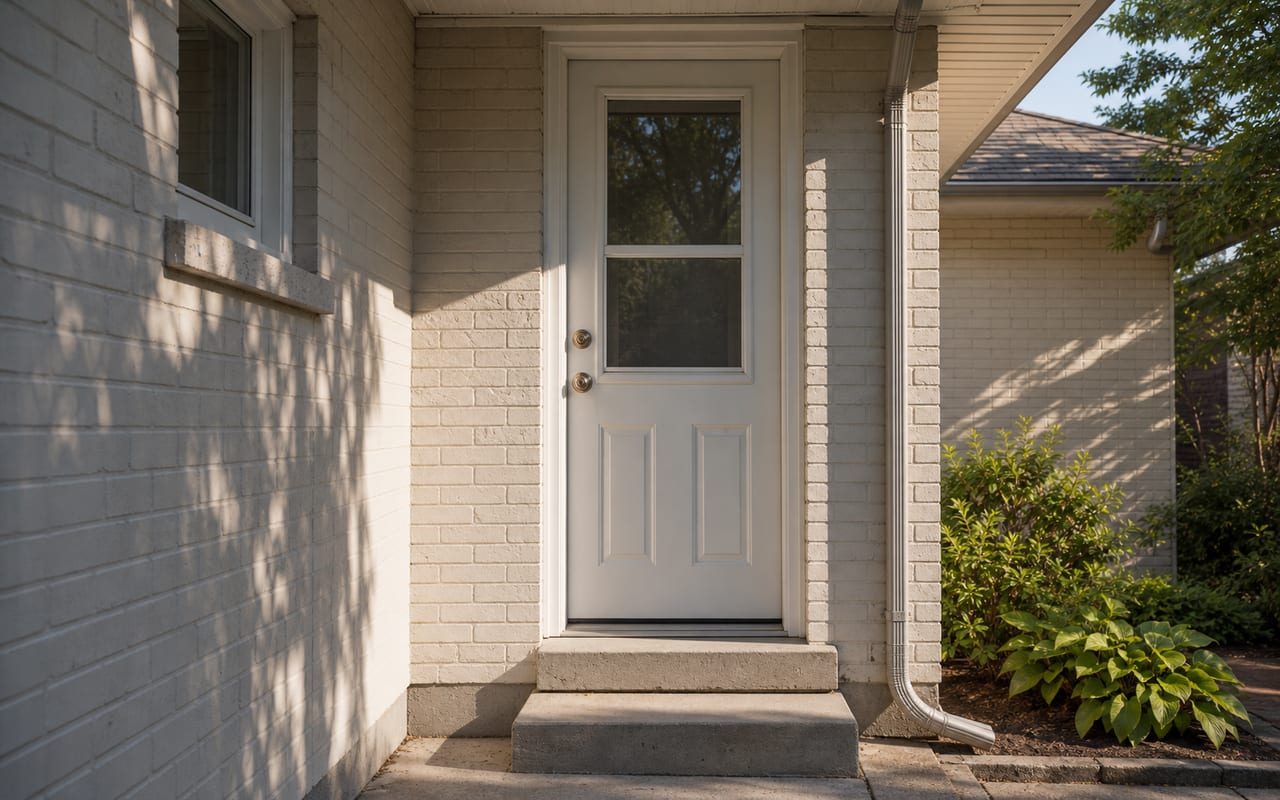
Side and rear entries can receive less casual observation than a front porch. In Leaside, these doors may sit between houses, beside a driveway, behind a fence, or near a detached or attached garage.
Check that the door closes squarely, the deadbolt engages fully, and the frame shows no splitting or loose trim. Toronto Police home-security guidance recommends securing every exterior door and window, not only the front entry.
ARX Guard door fortification is Clear Guard's option for adding resistance to eligible hinged-door assemblies. The parts and scope depend on the specific door and what the client wants. We do not describe one hardware package as universal.
A free on-site assessment can confirm whether a side or rear door needs fortification, maintenance, or no Clear Guard work at all.
3. Large windows and rear family-room glass
Leaside's housing mix includes front picture windows, rear additions, patio doors, and larger family-room glass. A newer window is not automatically a security product, and an older pane is not automatically unsuitable for film. The full glazing system matters.
Security film helps hold glass fragments together and adds resistance after impact. It does not make a pane unbreakable, guarantee that it remains in the frame, or provide a universal delay time. The glass, frame, selected film, installation, and site conditions all affect performance. XPEL describes its safety and security film in the same fragment-retention and delay terms.
Patio sliders also need ordinary hardware checks. Keep the installed lock working and use an appropriate secondary track or anti-lift device where suitable. Film reinforces the glass; it does not lock an open or unlatched panel.
4. Glass beside door hardware
Sidelights, glazed door panels, and nearby windows deserve a separate look because their position relates directly to the entry assembly. Measure how close the glass sits to interior hardware, identify whether it is decorative or clear, and note the frame material.
Do not assume that replacing the lock solves the whole entry. A useful assessment considers the door slab, frame, strike zone, glass, and the way the household uses the door. Film may be appropriate for the glass, while door fortification may be appropriate for the hinged assembly.
For older or character entries, read Sidelight Glass on Heritage Front Doors.
5. Rear lanes, side passages, and sightlines
Some Leaside blocks include public lanes, while many properties have long side passages or rear garages. The City of Toronto's current ward lane map shows numerous public lanes around local streets including Sutherland, Laird, Bessborough, and Millwood.
Where a lane or side passage exists, walk it in daylight and look back toward the house. Can a neighbour see the rear door? Does a hedge block a basement window? Does a light cover the route without shining into a neighbour's home?
York Regional Police CPTED guidance offers a useful general principle for any GTA property: maintain sightlines to doors and windows where practical, trim vegetation that hides access points, and light dark areas. Landscaping does not cause crime, and lighting does not guarantee prevention. These steps simply improve observation around the property.
What film system does Clear Guard usually install?
Clear Guard's primary residential system combines 14 mil interior security film with 7 mil exterior security film on the same pane. Most clients receive both layers after we assess the glass, frame, access, and site conditions.
The films are surface-specific: 14 mil on the interior face and 7 mil exterior film on the exterior face. Where privacy is also required, 12 mil frosted matte interior security film provides an obscured finish. 8 mil interior security film remains available selectively; it is not our standard or primary residential recommendation.
That does not mean every accessible pane receives the same treatment. A picture window, sidelight, basement window, and patio slider can have different glass, frames, and access conditions. The assessment decides whether the primary dual-sided system, a privacy film, a selective option, or no film fits each pane.
Turn the five checks into a property plan
The five features belong to one system. Lower-level windows and rear glass are glazing questions. Side and rear hinged doors are assembly questions. Lanes, fences, and landscaping are sightline questions. Locks, lighting, and household routines sit around all three.
Clear Guard serves Leaside through our Toronto service area. An assessment walks the whole property, preserves practical egress, and ends with a written quote for the glass and hinged doors that warrant work.
Frequently asked questions
Are older Leaside homes less secure than newer homes? Not automatically. Age can indicate different glass, frames, and renovations, but condition and layout matter more than a year label. Assess the actual windows, doors, sightlines, and access conditions before choosing an upgrade.
Can security film be installed on older residential glass? It can be suitable for many existing panes, but not by assumption. A technician must confirm the glass type, condition, frame, access, and film compatibility on site.
Which Leaside entry point should I address first? Start with basic maintenance and locks, then assess the most accessible glass and least-observed hinged doors. The priority may be a basement window, side entry, rear family-room glass, or another feature unique to the property.