Summer Break-In Season: What Changes When the Weather Warms
Every May, a quiet shift happens across GTA homes. Windows that stayed shut all winter get cracked open. Patio doors get unlocked for the afternoon and sometimes just left that way. Side entries that nobody used for months suddenly see daily traffic from the backyard. And families start planning the first week-long vacation of the year.
None of these things are problems on their own. But taken together, they represent a real change in your home's exposure — and it's worth understanding what that shift looks like from a security standpoint before the season gets fully underway.
This isn't about alarm. It's about preparation. A few small habits and the right physical fortification in the right places can carry you through a busy summer without having to think about this again.
Why Forced-Entry Risk Shifts in Summer
The physical security of your home doesn't change with the weather. Your doors and windows have the same vulnerabilities in July as they do in January. What changes is how they're being used — and how visible your absence patterns become.
Longer daylight hours mean more time spent outdoors, often with a rear door left ajar or a side entry propped. Backyard gatherings frequently involve the patio slider staying in an unlocked position for hours at a time, sometimes into the evening. These are normal habits, not reckless ones. But they do create windows of exposure that simply don't exist during winter months when the house stays buttoned up.
Vacations add a different dimension. A home that sits empty for seven to ten days without varied lighting, without cars coming and going, and without parcel pickup becomes a recognizable signal. None of this requires surveillance — it's observable from a slow walk past the property. The behavioural patterns that indicate an unoccupied home are well-documented, and they accumulate quickly once you're away.
The Entry Points That Become Active in Warm Weather
Not every window and door carries equal risk. Three categories deserve particular attention in summer:
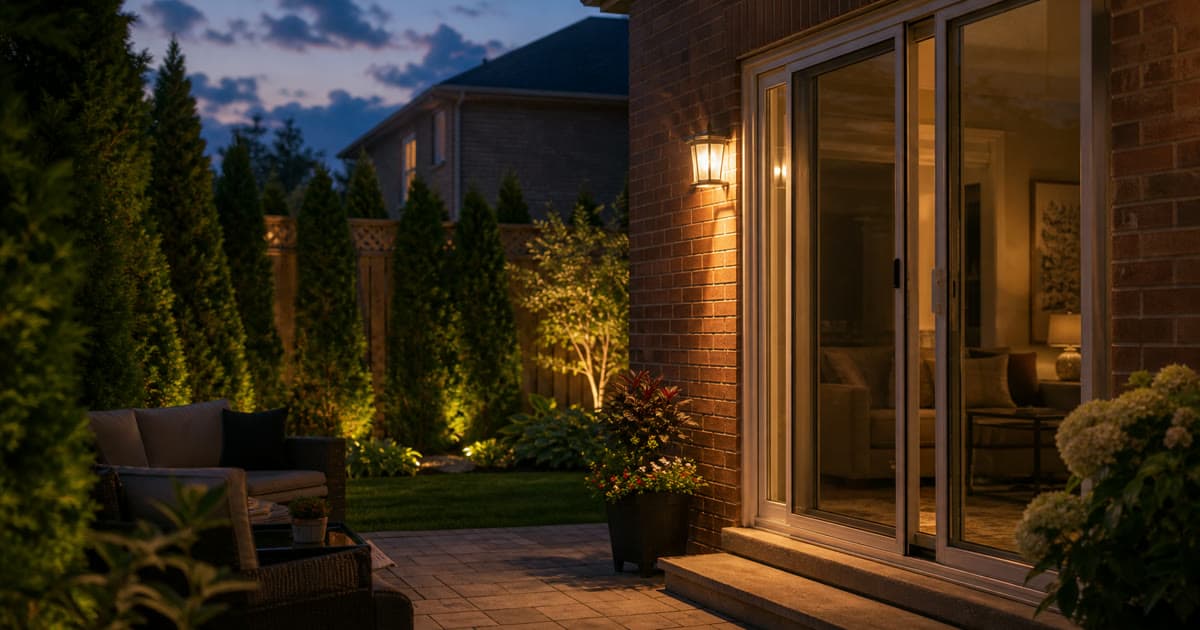
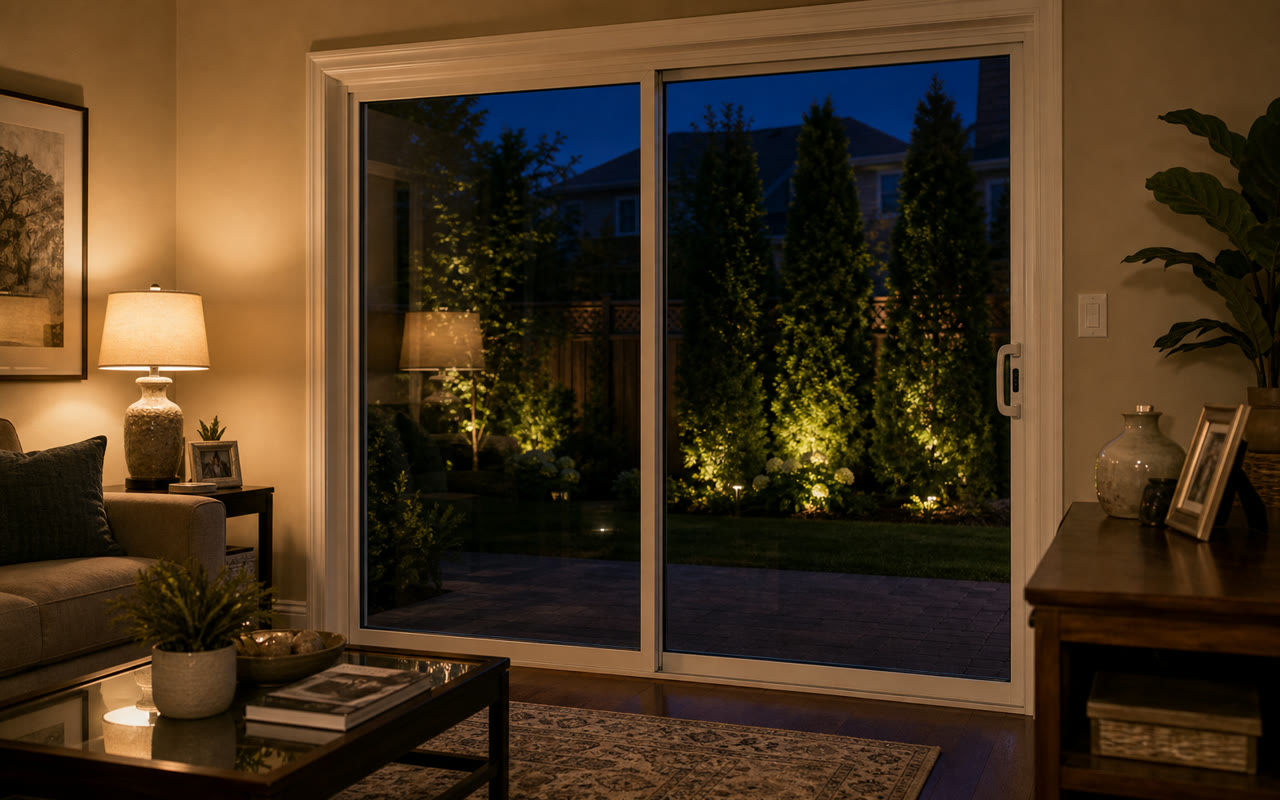
Patio sliders in the unlocked-but-closed position. A patio slider that is visually closed but not latched offers very little resistance to lateral pressure. The latch on a standard sliding door is designed to keep the panel in place, not to withstand deliberate force. Homeowners who leave the slider unlatched "just for the afternoon" and then forget to lock it before bed are extending that exposure into the night. If your patio slider doesn't have a secondary security measure — a bar in the track, film on the glass, or an upgraded lock cylinder — the latch alone is a thin line of defence.
Side and rear doors during outdoor entertaining. When the focus of a gathering is the backyard, the side and rear entries to the home often get left on the latch rather than the deadbolt. This is especially common in homes where the side door connects a detached garage to the yard, or where the rear walkout sits below grade and feels "less visible." Deadbolt habits that hold all winter tend to slip during summer entertaining.
Basement windows cracked for airflow. A basement window left open even a few inches is an invitation for investigation. Most utility windows in GTA homes — single-pane aluminum sliders, early-replacement double-pane units — have no safety glazing and minimal resistance to lateral pressure. The assumption that "nobody would notice a cracked basement window" is unfortunately not reliable.
What Security Film Does in Warm Months
One of the most useful things to understand about security film is that it does not require you to keep your windows completely closed. The film is on the glass, not on the latch or the frame. You can crack a window for airflow and still have the film doing its job across the rest of the pane.
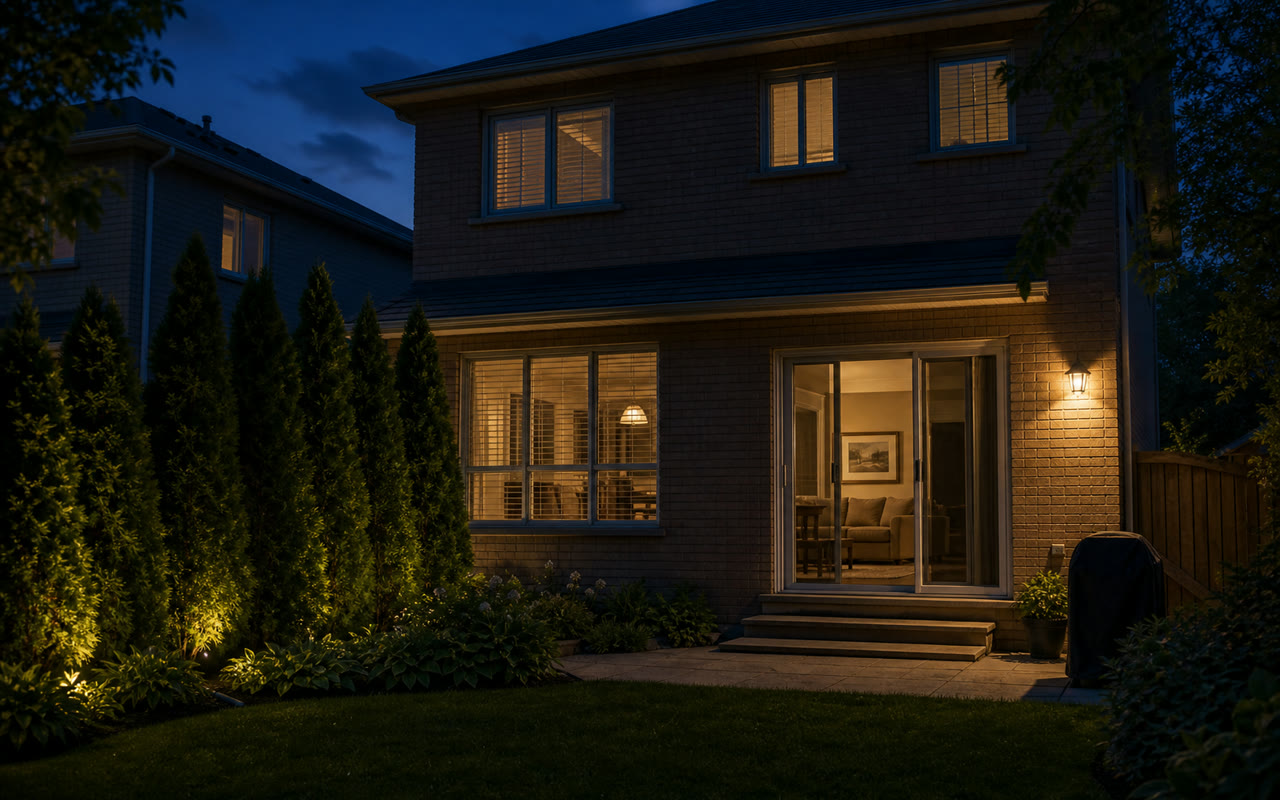
Where film matters most in summer is on the panes that get left closed-but-unlatched, or on the glass adjacent to entry hardware. If a patio slider is closed and filmed, and someone applies force to the glass panel rather than working the latch, the film significantly extends the time it takes to breach the pane. That extra time is the point — it creates noise, resistance, and the likelihood that the attempt will be abandoned.
On basement windows, film holds the glass together even when the pane is struck hard. Rather than shattering inward on the first blow, the glass stays intact as a panel. This is the practical difference between a quick breach and an abandoned attempt.
A Clear Guard technician can walk the property with you and identify exactly which windows and doors warrant film based on their location, glass type, and summer exposure. Assessments are free and take about 30 minutes.
Door Fortification in a Summer Context
Summer entertaining changes how side and rear doors get used, and ARX Guard door fortification is relevant here for a specific reason: it addresses the frame, not just the lock.
A deadbolt on a standard builder-grade door frame is only as strong as the softwood jamb it sits in. Under kick force, the strike zone — the area of the frame where the lock bolt seats — tends to fail before the lock cylinder does. This is true in winter and in summer, but it becomes more relevant in summer when the habits around which entries get used, and how carefully they're locked, tend to become less consistent.
Homes with ARX Guard installed on their primary entries have that frame failure addressed. The door can be used casually throughout the summer — propped during gatherings, left on the latch briefly — and the fortification is there whenever the deadbolt is thrown. It doesn't require changing your habits. It just closes the gap that exists in a standard pre-hung door assembly.
Five Things to Check Before Your First Summer Trip
If you're planning a week away — or even a long weekend — run through these five items before you leave:
Patio slider: Is the latch locked, and is there a secondary measure in the track or on the glass? Don't rely on the latch alone for a multi-day absence.
Window latches: Every ground-floor and basement window should be latched before you leave. A cracked window that seemed harmless for an afternoon becomes a different situation over seven days.
Side and rear door deadbolts: Check both doors, not just the front. The side entry and the rear walkout are often the ones that get forgotten in a departure rush.
Exterior lighting: Timer-controlled lights that vary the interior illumination pattern are more effective than a single light left on. A porch light that runs from dusk to dawn on a fixed schedule for a week is a recognizable pattern. Interior lights on varied timers look like an occupied house.
Parcel and mail pickup: Ask a neighbour to collect parcels or pause deliveries before you leave. A growing pile of parcels on the porch is one of the clearest visible absence signals.
None of these require significant effort. Most of them are habits that become automatic after the first summer trip.
Frequently Asked Questions
Does opening my windows for ventilation make my home less secure? Cracking a window for airflow doesn't automatically create a security risk, but it does change the exposure profile. For basement and ground-floor windows, security film on the glass helps — the film remains on the pane regardless of whether the latch is engaged. For patio sliders left in the unlocked position, the glass itself becomes the primary barrier, which is where film makes the biggest practical difference. Ventilation and security film are compatible.
Should I be more worried about summer vacations than short overnight trips? Duration matters primarily because of the absence signals that accumulate over time. A one-night absence looks different from a ten-day absence from the outside. The precautions are the same in both cases — locked entries, secured windows, lighting on timers — but the longer the absence, the more the observable signals build. Running through the five-point checklist above before any trip, regardless of length, covers the main bases.
What's the most common summer entry point in a typical GTA home? Patio sliders and rear doors are the entries that see the most change in summer use patterns. They go from being rarely used in winter to being heavily used and sometimes casually secured during the warm months. The combination of more frequent use and more relaxed locking habits makes rear entries the category worth thinking through most carefully before the season starts.
Related reading: