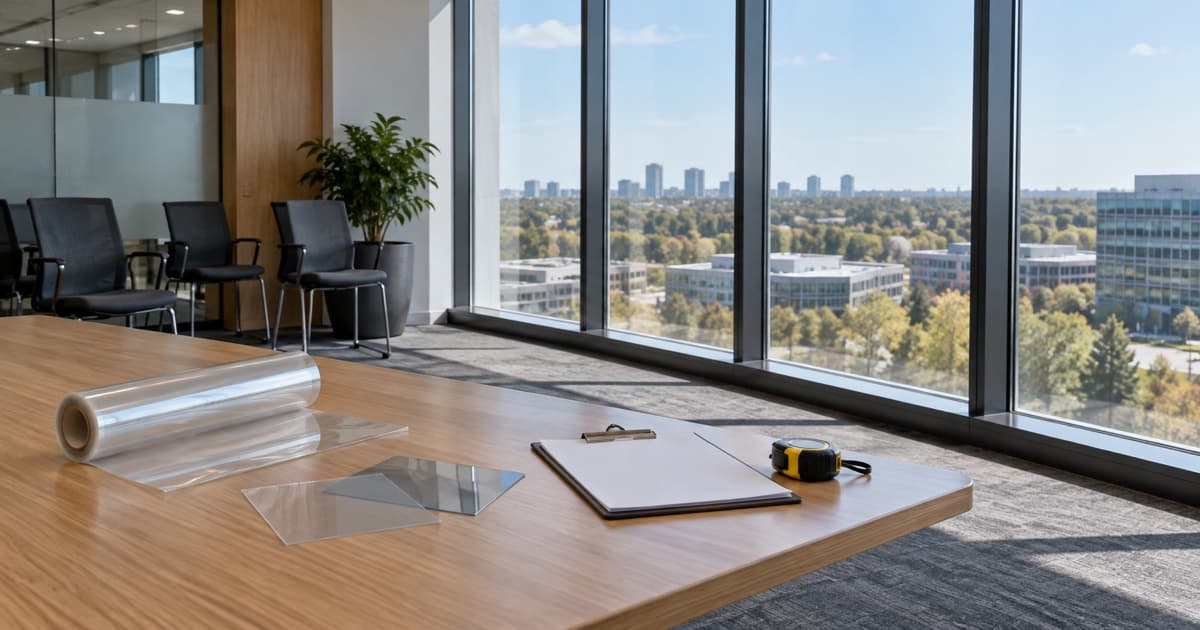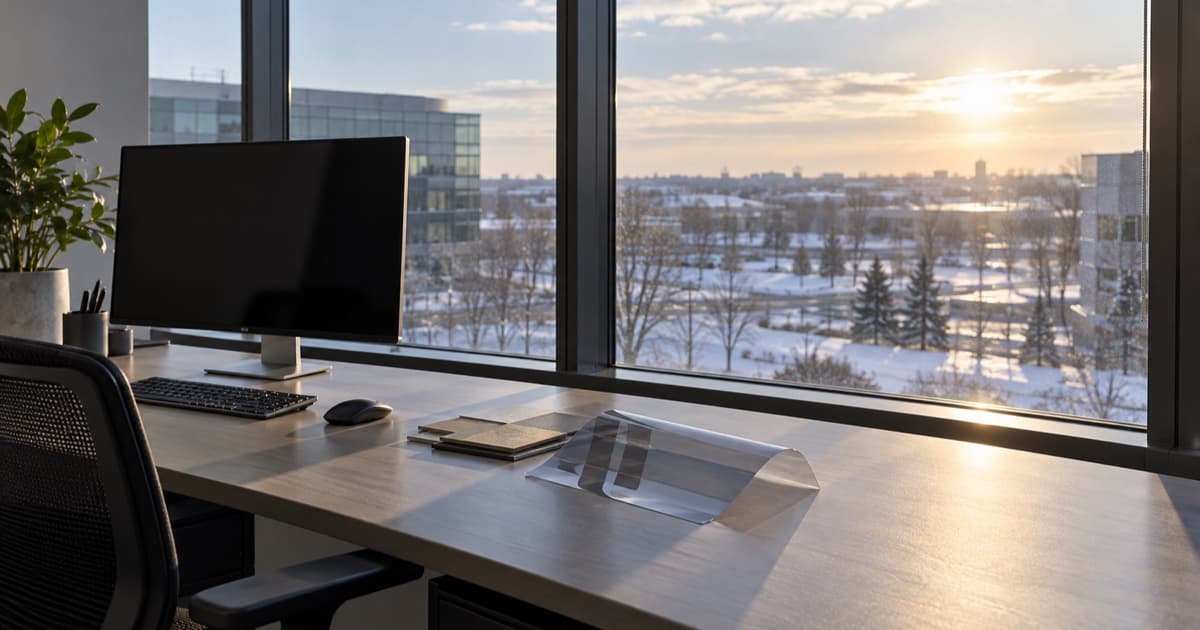
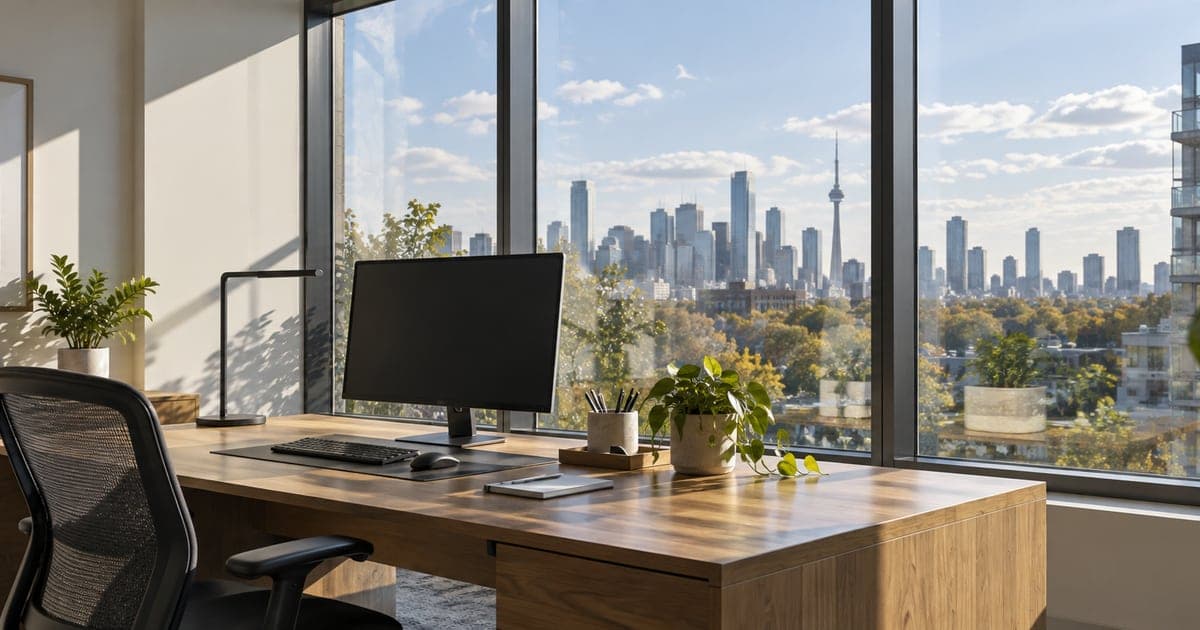
Office solar window film can reduce solar heat entering through glass and help manage glare at desks and meeting tables. Choosing it starts with identifying the problem at each window.
A room that becomes uncomfortable in afternoon sun needs a different assessment from a bright office with reflections across computer screens. Both may benefit from film, but the same finish will not suit every room.
For GTA offices and commercial buildings, the specification should balance heat rejection, glare reduction, daylight and the appearance of the glass. The existing glazing must also be suitable for the selected film.
Assess heat and glare at the affected desks
Record where the problem occurs, when it starts and how the space is used. Photographs from the desk or meeting table are more useful than an exterior photograph alone.
Describe the effect precisely. Is direct sunlight reaching staff? Does a screen reflect the window? Does the room remain uncomfortable after the sun moves away?
This helps separate solar exposure from other conditions that film may not resolve. Reflections from interior lighting, equipment heat and ventilation issues need their own assessment.
Include the current blinds or shades in that review. Note whether staff close them to control brightness and whether doing so removes a useful outward view.
Illustrative image.
For winter observations, use the Ontario solar-film assessment guide to separate glare and solar gain from drafts, condensation and insulation questions.
Compare office solar window film specifications
Solar films differ in ways that are easy to overlook when comparing samples by colour alone.
Visible light transmission describes how much visible light passes through the specified film-and-glass combination. A higher value generally means more light passes through.
Glare reduction is a separate comparison. A film that retains substantial daylight may provide less glare reduction than a darker option.
Total solar energy rejected, often shortened to TSER, describes solar performance under the stated test conditions. It is not a prediction of the reduction in a building's cooling bill.
Visible light reflectance helps describe the reflective appearance of the glass. Review both the exterior appearance and the view from inside.
XPEL publishes these measures in its architectural film specifications. Compare values from the same test basis, then check their relevance to the installed glazing.
The commercial solar window film page brings together the available Clear Guard options and their nominal performance data.
Choose a finish around the room's priorities
Offices where daylight is important
Start by comparing light-transmitting options when preserving daylight and an outward view are priorities. XPEL Clear View Plus includes several shades with different solar and glare performance.
A lighter sample can be a useful starting point for an office where heat is the main complaint. It still needs checking at the affected workstations. Do not assume that clear appearance means strong glare control.
Desks with persistent brightness or screen glare
Compare a darker sample when reducing visible brightness is the main priority. Assess how it changes both the window view and the light available elsewhere in the room.
A photograph cannot fully represent that tradeoff. Compare samples from the normal sitting position, with screens and room lighting in their usual settings.
Buildings with appearance requirements
Some projects require a consistent exterior finish across multiple windows or tenant spaces. Review reflective and tinted options with the building's appearance requirements in mind.
The landlord or property manager should see the proposed finish before approval. A choice that suits an individual office may still conflict with the building's exterior standard.
If your office has different problems across several rooms, request a commercial solar quote. Clear Guard reviews the project by phone before arranging a site assessment.
Review samples under useful conditions
Choose a sample location that represents the problem, rather than the most convenient pane near reception.
For an afternoon glare complaint, review the sample during the affected period when practical. Check the appearance from inside and outside, and compare it with adjacent untreated glass.
Ask the people who use the room to assess the view from their normal positions. A meeting table, a workstation facing the window and a desk beside it can have different requirements.
Keep a short decision record: selected film, location, reason for selection and approved appearance. This is useful when several people approve the work or when another room is treated later.
Confirm glazing and installation requirements
Film selection needs a review of the existing glass, its condition and any existing coating or film. Provide available glazing information rather than assuming every pane is the same.
The installer should confirm the selected product against the applicable film-to-glass requirements. XPEL's specifications also call for glass inspection and preparation before installation.
For an occupied office, identify desks, equipment and furniture that restrict access to the glass. Agree on room access, protection of nearby work areas and the installation sequence.
Confirm any landlord approval and access requirements before booking the work. Ask for care instructions specific to the installed film, including when cleaning can resume.
Separate solar control from visual privacy
An office may need solar control at its exterior windows and privacy at an internal meeting room. These are separate requirements.
Reflective solar film should not be specified as dependable privacy after dark. Its screening effect depends on the relative light levels inside and outside.
For meeting-room partitions or glass that needs obscured views, compare privacy and frosted film. Keep those requirements in the project brief even when both services are quoted together.
Information to include in a quote request
Provide the property location, affected rooms, approximate glass area and photographs. Include the time of day the problem occurs and any known glazing details.
State your priorities in order: heat, glare, daylight, outward view or exterior appearance. Include building approvals, access restrictions and the preferred installation period.
Request a commercial solar film quote
Clear Guard supplies and installs solar window film for commercial properties across Southern Ontario. Send your project details; we review the scope by phone before arranging a site assessment.
Frequently asked questions
Can solar film reduce heat without making an office very dark? Light-transmitting solar films are available, with performance that varies by product and shade. Compare heat rejection and visible light transmission separately, then review a sample on suitable glass.
Will the clearest film remove screen glare? Not necessarily. A film that retains more daylight may offer less glare reduction. Assess the affected workstation and compare samples with the screen and room lighting in normal use.
Does a heat-rejection percentage show expected energy savings? No. Product performance data is measured under stated conditions. Building energy use also depends on the glazing, exposure, operation and heating or cooling system.