Mississauga Home Security: Why Older Subdivisions Need a Film Plan
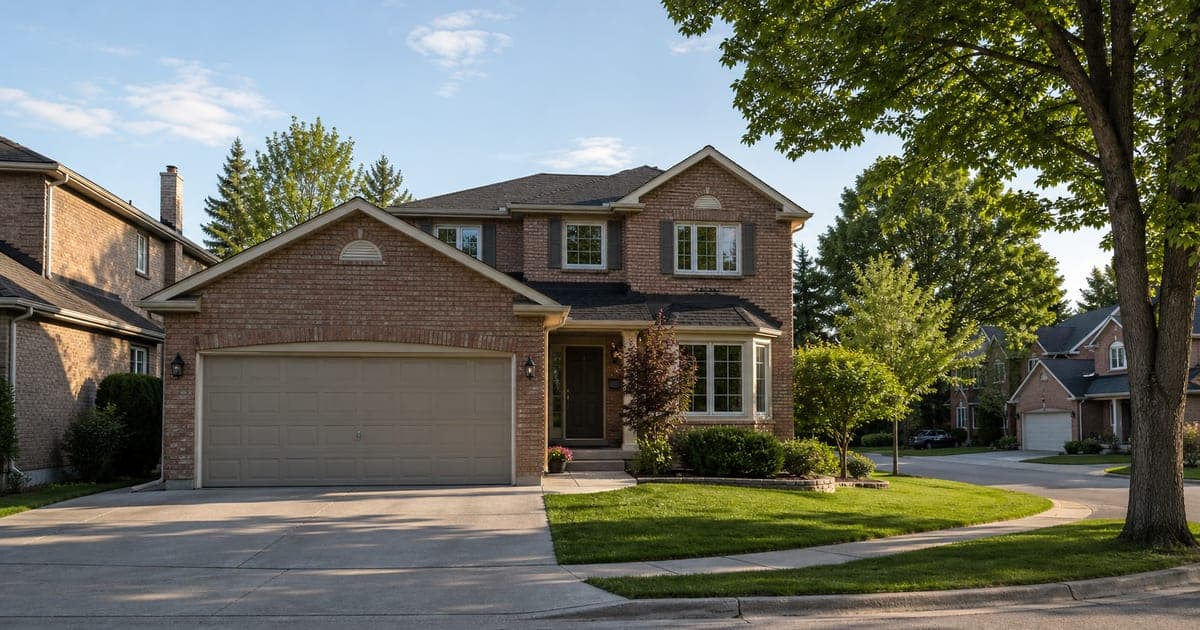
If your home was built between the late 1950s and the early 1980s in a Mississauga subdivision — Cooksville, Applewood, Malton, Streetsville — it almost certainly has a glass profile that was never designed with security in mind. The windows were sized for light and ventilation, the frames were built for cost efficiency, and the glazing spec was whatever the builder used that year. Decades later, that glass is still there, and so is the vulnerability it creates.
This post is specifically for Mississauga homeowners in mature, established neighbourhoods. If you've been thinking about home security but haven't found advice that actually reflects what your house looks like, this is where to start.
The Homes of Mature Mississauga Neighbourhoods
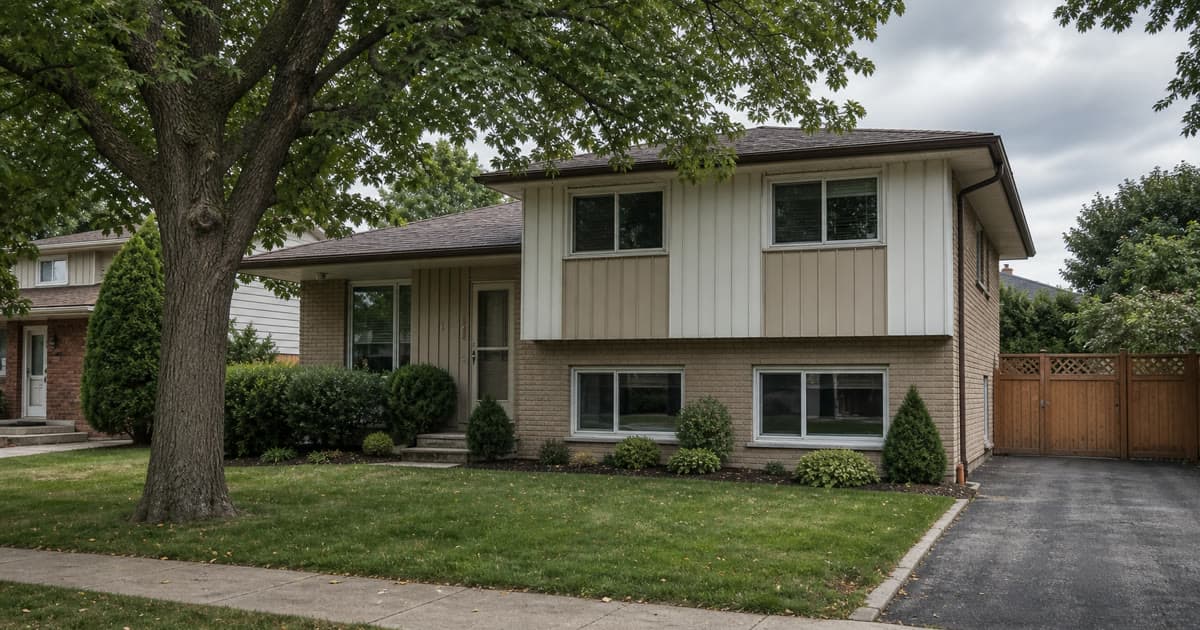
Mississauga's growth in the post-war decades followed a consistent pattern: back-split, raised bungalow, and sidesplit designs built quickly, affordably, and in volume. These layouts are practical, durable homes. They're also built in a way that creates a specific glass exposure pattern.
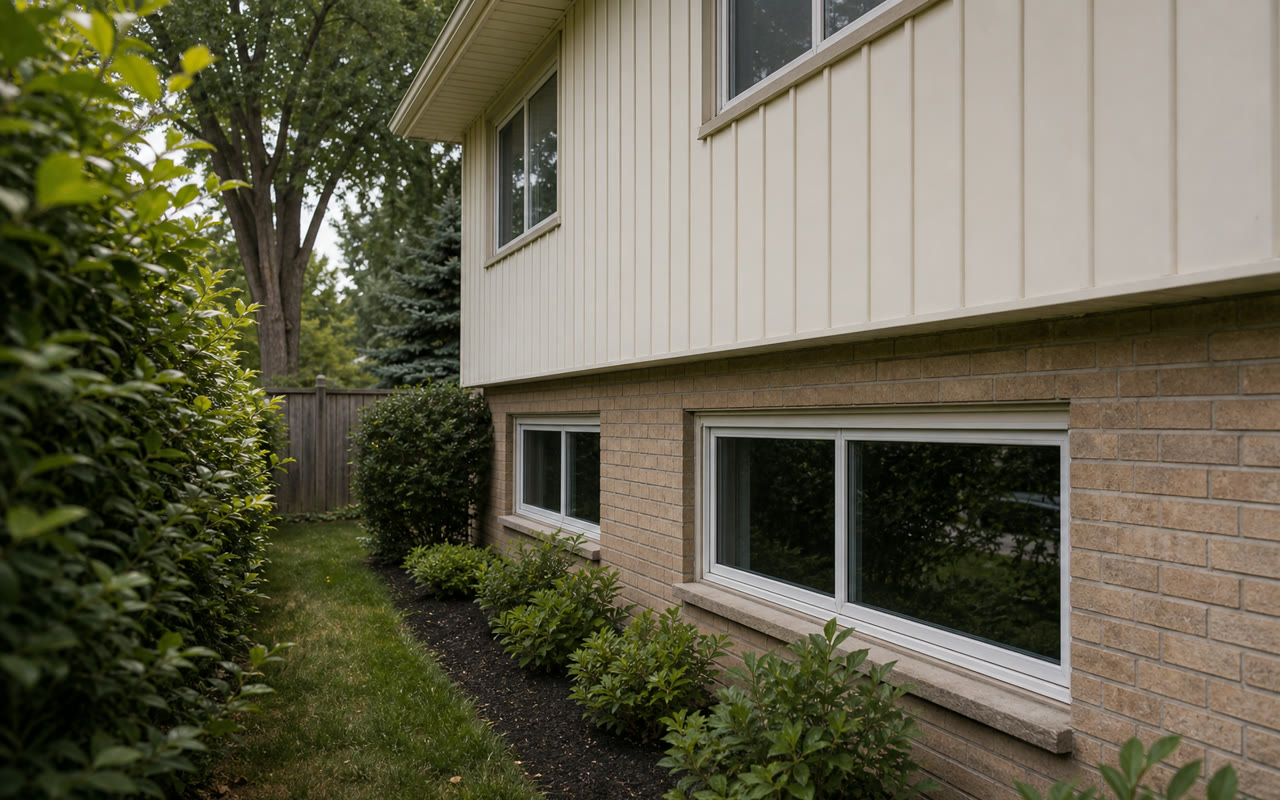
Back-splits and raised bungalows place living areas partially below grade on the rear and side elevations. The kitchen, family room, or utility area often sits at or below ground level with windows that face the rear yard or side lot — away from the street. A homeowner walking through the front entry sees a modest, well-maintained house. Someone approaching from the rear yard or laneway sees a row of ground-level windows with no natural surveillance from the street.
Sidesplits create a similar dynamic on the return elevation. The side of a sidesplit is often the least-visible part of the property — set between the neighbour's house and a fence — and it commonly has utility windows at grade or just above it.
None of this is a design flaw. But it means the window exposure in a mature Mississauga home is often more significant than it appears from the front.
Why Older Window Stock Matters
The glass in a 1960s or 1970s Mississauga home is typically one of two types: original single-pane in aluminum or wood frames, or early-generation replacement double-pane units installed during the energy-efficiency waves of the 1980s and 1990s. Neither type was manufactured with a safety interlayer.
Single-pane glass breaks cleanly under impact and falls away in shards. Early double-pane units are more thermally efficient but mechanically similar — two thin lites of glass separated by an air spacer, with no bonding layer between them. A sharp impact fractures both lites and leaves the frame empty.
Modern laminated safety glass — the kind specified in updated building codes for sliding doors and certain ground-floor windows — is different: it has a plastic interlayer bonded between the glass lites that holds the panel together after fracture. Original and early-replacement windows in mature Mississauga homes almost never have this. The glass breaks, and the barrier is gone.
Security film addresses this gap directly. Applied to the interior face of the existing glass, film bonds to the surface and acts as a retention layer. When the glass fractures under impact, the film holds the shards together — the pane deforms and cracks, but it stays in the frame rather than falling away. That retained panel is the delay that matters.
Film on Single-Pane vs. Early Double-Pane: What to Expect
How security film performs depends partly on what it's applied to. This is one reason a site assessment matters before any quote.
On single-pane glass, film provides the most straightforward benefit: the glass has no retention capacity on its own, and film gives it one. On older single-pane windows with original wood or aluminum frames, the film also needs to be evaluated relative to frame condition — if the frame is deteriorating, the glass-to-frame bond becomes the weakest link regardless of the film grade.
On early double-pane units, the situation is more nuanced. Film applied to the interior face of a double-pane window still improves the retention of the inner lite. But if the outer lite is breached, the inner lite becomes the relevant barrier — and that's where the film is doing its work. The effectiveness depends on the specific glass spec, the gap width, and the frame type. All of this is part of a proper assessment visit.
The goal of the assessment is to tell you specifically what film makes sense on your specific windows, not to sell you a uniform solution. Not every window in a Mississauga home needs the same approach, and some windows may not warrant film at all if other factors dominate.
Which Locations to Prioritize in a Back-Split or Raised Bungalow
If you own a mature Mississauga home and trying to understand where to start, these are the categories worth looking at first:
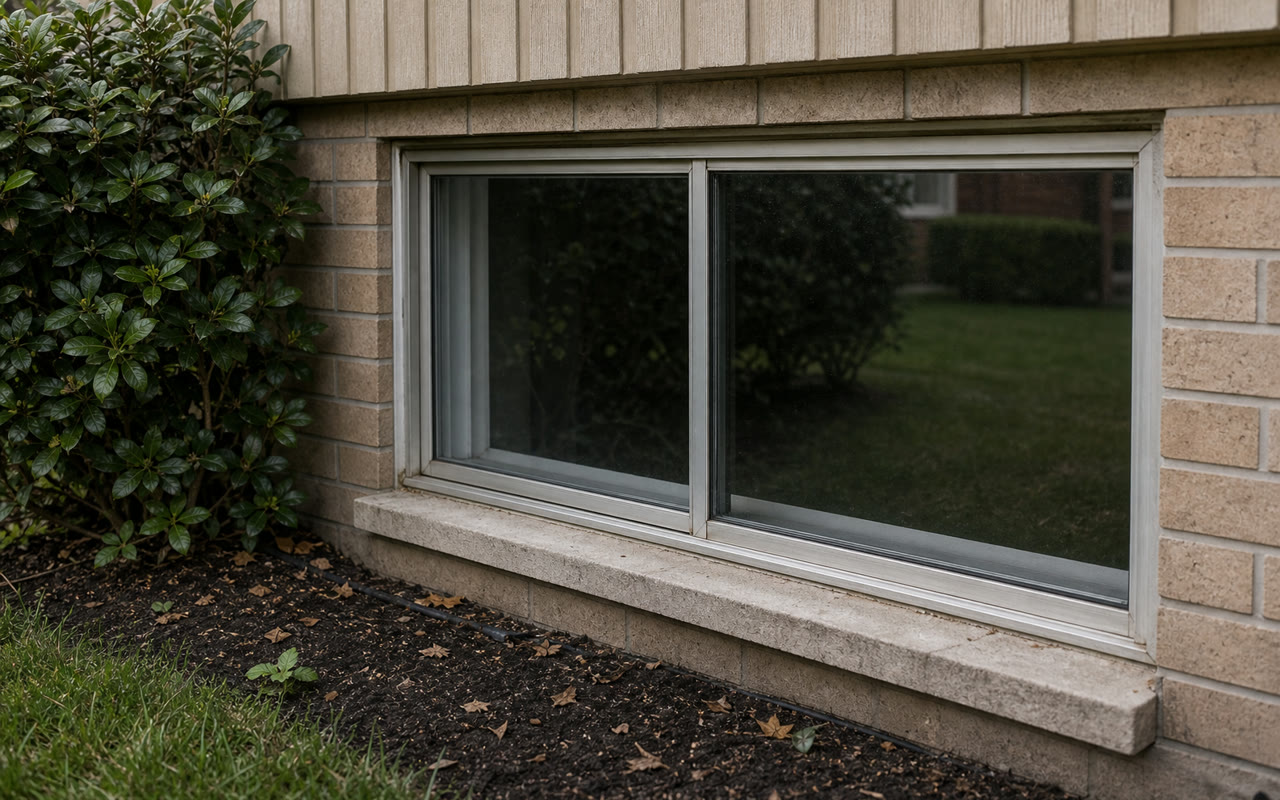
The below-grade or grade-level utility and basement windows. These windows sit at or near the ground level on the rear or side elevation, often screened by fencing or mature plantings. They're the least visible from the street, frequently the smallest, and often the least-maintained. They also tend to have the original aluminum frame and single-pane glass — no safety treatment of any kind.
The rear kitchen or family room sliding window. Many back-splits have a large sliding window over the kitchen sink or in the family room that faces the rear yard. These windows are typically larger than the utility windows, which makes a breach more straightforward. They're also often left in a cracked position for ventilation during warmer months.
Ground-floor bedroom windows on the return elevation. A sidesplit or raised bungalow often places a bedroom at grade level on the side elevation — the elevation that faces the neighbour's lot and a fence. These windows are rarely visible from the street and benefit most from film because of their relative isolation.
A Clear Guard technician will walk the property with you, assess each of these window types, and give you a written quote. There's no charge for the assessment.
Securing Rear Patio Slider Doors
Many back-splits and raised bungalows in Mississauga were built with a ground-level patio slider at the rear of the home, accessible directly from the backyard. In older homes, this slider typically has a standard single-point latch — not a multi-point lock — and original or early-replacement glass with no safety interlayer.
The patio slider deserves attention for two reasons: the glass panel is large, and the latch is often the only barrier between the backyard and the interior. In homes with a rear laneway or a yard that backs onto a common green space, the slider sits in a position with low natural surveillance.
Security film on the slider panel changes the dynamic significantly. A breached latch creates a gap in the lock, but if the glass panel is filmed, it becomes the barrier — and a filmed glass panel is considerably harder to breach quickly than an unfilmed one.
For Mississauga homes with slider access, combining film on the glass with a secondary track bar or lock cylinder upgrade is a natural pairing. Our assessment will identify what the slider's current spec is and what makes sense to add.
Frequently Asked Questions
Will film on my older aluminum-frame windows actually hold given the frame condition? Frame condition matters and is part of what we assess. Film is bonded to the glass surface, and its effectiveness depends in part on the glass-to-frame seal. If a frame is in poor condition, we'll flag that during the assessment and discuss whether the frame should be addressed first or in parallel with film installation.
I've heard film can make older double-pane windows fog up. Is that true? Some film types can affect the thermal dynamics of a sealed double-pane unit in ways that increase the risk of seal failure over time. This depends on the specific film, the glass spec, and the orientation. It's something we evaluate during the assessment. Where it's a concern, there are film options designed for double-pane compatibility, and we'll recommend accordingly.
My neighbours in Cooksville have the same house — should we just do the same thing? Same model home, similar exposure — but not identical. Glass type, frame condition, orientation, and the specific landscaping around your property all affect the assessment. The right starting point for your neighbour may not be the right starting point for you. We'll tell you exactly what applies to your home after we've seen it.
Related reading: