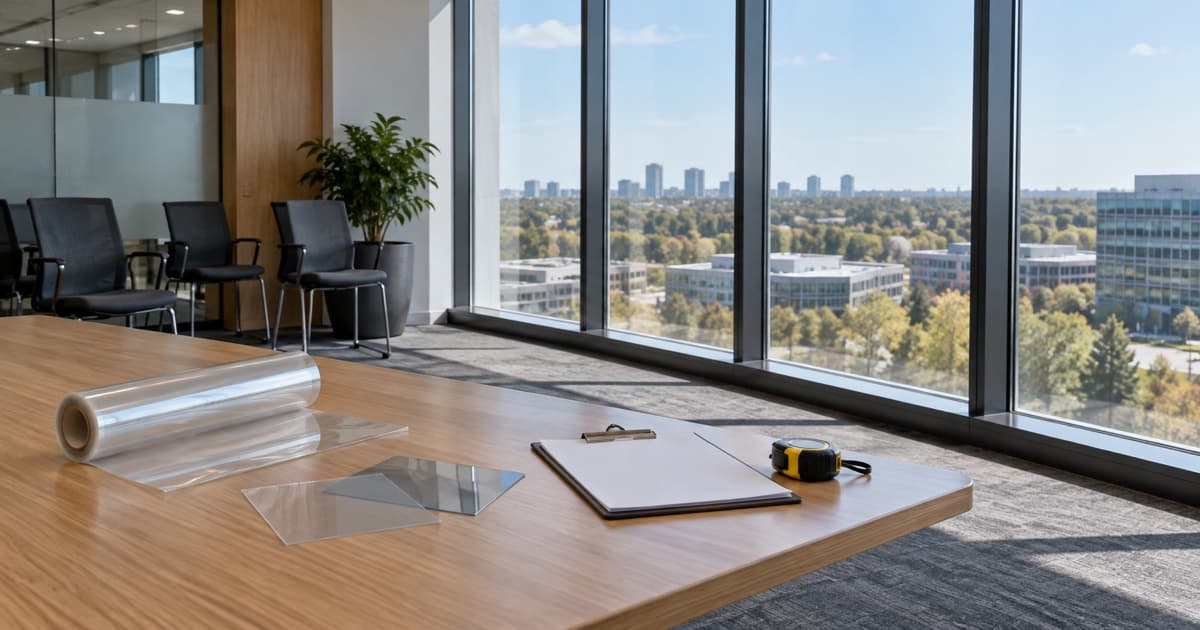
Meeting room privacy film can obscure views through existing glass partitions while allowing light through a translucent finish. The result depends on both the film and where it is applied.
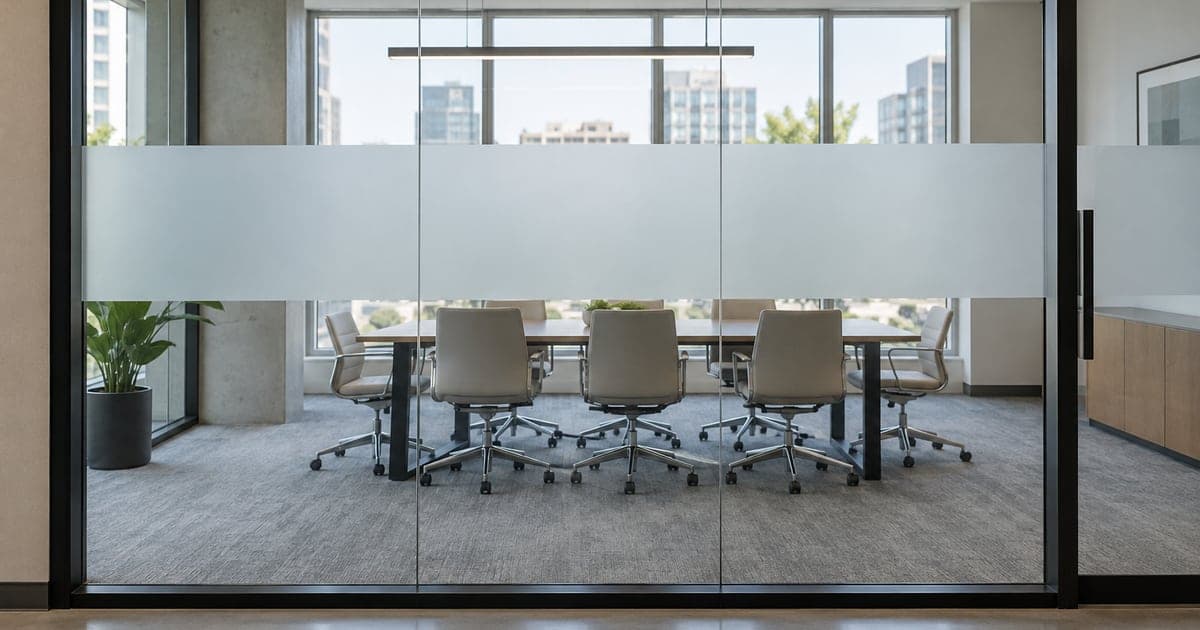
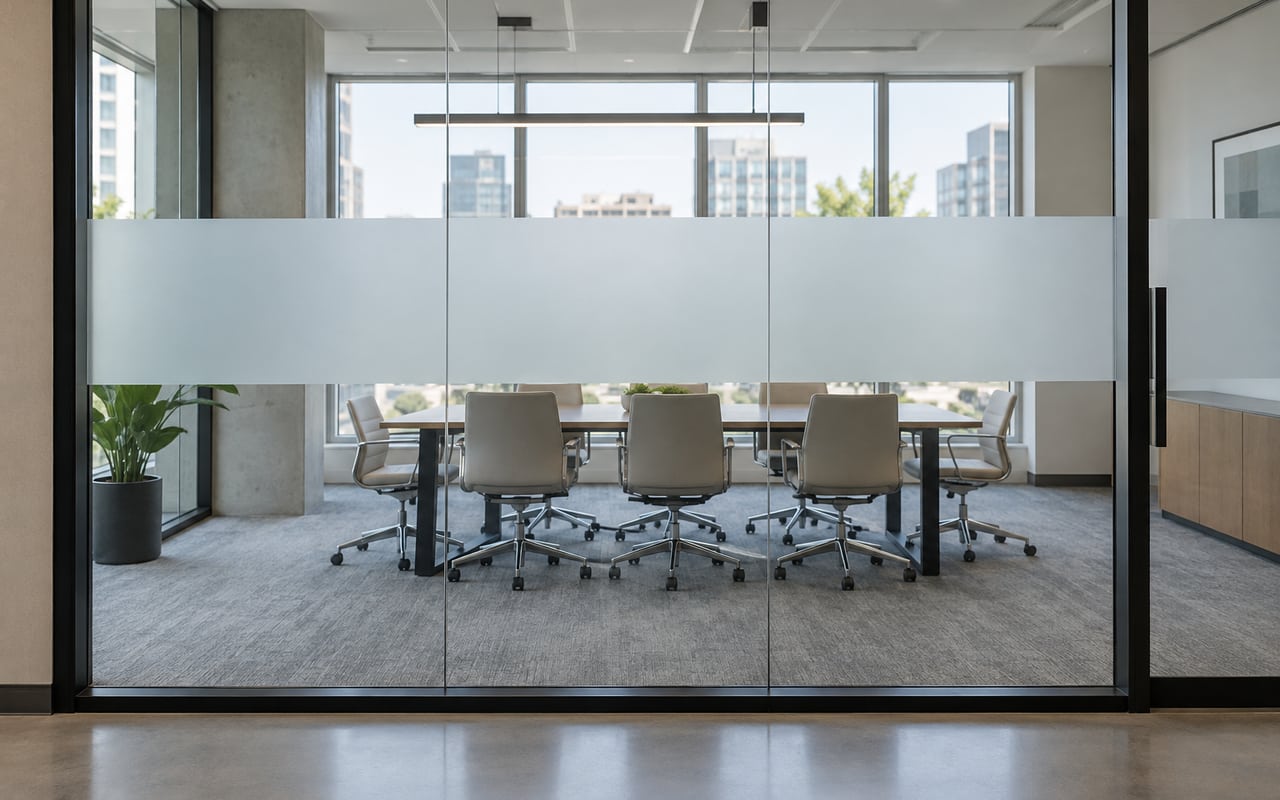
A narrow band may interrupt a view toward a seated meeting table. It can still leave people, screens or a whiteboard visible through the clear glass above or beside it.
Start with the sightlines you need to obscure. Then compare the finish, coverage and room lighting before approving an installation.
Define what needs to be obscured
Walk the corridor outside the meeting room and look toward the table, displays and working surfaces. Check from the positions people actually use, including nearby desks and reception seating.
Repeat the check from inside. Note whether staff sit close to the glass, stand during presentations or move chairs around the room.
Write down the requirement in practical terms: reduce direct views of seated occupants, obscure a particular work area or treat the full glass partition.
Visual screening does not provide acoustic privacy. If conversations must remain private, the room's walls, doors, seals and ventilation need separate consideration.
Select meeting room privacy film by finish
Clear Guard offers XPEL White Frost and Dusted Crystal for commercial privacy installations. Both are decorative finishes; their appearance and performance should be reviewed using physical samples.
White Frost
XPEL describes White Frost as a decorative film that gives glass a frosted finish.
Compare it when a visibly frosted appearance is part of the brief. View the sample against the room beyond, rather than against a blank sample-board background.
Dusted Crystal
XPEL describes Dusted Crystal as a decorative film with a light frost finish.
Compare its appearance with White Frost in the same location. If you prefer the lighter finish, confirm that it still gives the required screening in your room.
The privacy window film product page includes the available finishes and their individual specifications. Do not assume the same light transmission or UV performance across different decorative films.
Illustrative image.
Choose full-pane or partial coverage
Full-pane frosting
Full-pane frosting treats the pane across its height and width, within the installation tolerances for the selected product.
It may suit rooms where seated and standing activity both need screening. It also avoids leaving a large clear section directly above a privacy band.
Review doors, adjacent sidelights and neighbouring panes as part of the same layout. An untreated pane beside a frosted partition can leave the intended view exposed.
Privacy bands and partial frosting
Partial coverage leaves selected glass clear. This can preserve views through part of the partition while obscuring a specific sightline.
Specify the band's top and bottom positions against the actual furniture and viewing locations. An attractive line on a drawing may miss the relevant view after chairs or tables move.
Check the ends of the band as well as its height. People approaching from an angle may see through adjacent clear glass.
Consistent coverage across multiple rooms
A repeated finish can help keep an office's partitions visually consistent. The coverage layout should still reflect how each room is used.
A meeting room, reception office and private consultation room may have different sightlines. Approve a common finish while documenting any room-specific coverage changes.
For help specifying several rooms, request a commercial privacy quote. Clear Guard reviews the layout and project scope by phone before arranging a site assessment.
Test the sample in the actual room
Frosted film obscures detail, but silhouettes can remain visible. Lighting, distance from the glass and the chosen finish affect the result.
Review the sample with room lights on. Position a person at a realistic distance behind the glass, then check the view from the corridor.
Test seated and standing positions, especially where people use a whiteboard or display near the partition. Include the room's evening lighting if it is regularly used after dark.
A film's visible light transmission figure does not describe whether a particular silhouette or object will be visible. Treat the sample review as part of the specification.
Record the chosen finish and coverage on a photograph or drawing. Obtain approval from the people responsible for both the room's use and the building's appearance.
Keep privacy, solar and security requirements separate
Decorative frosting is not a substitute for a security-film specification. If forced-entry resistance is also required, describe that separately in the project brief.
Likewise, frosting an internal partition is a different task from controlling solar heat at an exterior window. For offices with heat or glare concerns, review commercial solar film.
Reflective solar film can provide lighting-dependent screening, but it should not be relied on for privacy when the inside is brighter after dark.
The commercial services page covers these options together. A combined quote should still identify which service is being supplied at each location.
Prepare the installation scope
Provide photographs of every pane to be treated, including glass doors and adjacent partitions. Include approximate dimensions and any existing film, graphics or visible damage.
Confirm who approves the finish and who controls access to the rooms. In leased premises, establish the landlord's requirements before scheduling the work.
Identify furniture or equipment that needs moving and any restrictions on room availability. Ask the installer to confirm the glass preparation and product-specific care instructions.
For future consistency, retain the product name, approved layout and installation locations. This gives the next project a useful reference without assuming every new room needs identical coverage.
Request a meeting room privacy film quote
Clear Guard supplies and installs privacy film on existing commercial glass across Southern Ontario. Send your room details and photographs; we review the scope by phone before arranging a site assessment.
For exact light-transmission and UV figures, compare White Frost and Dusted Crystal, then assess a physical sample under the room’s lighting.
Frequently asked questions
Is full-pane frosting always needed for a meeting room? No. Partial coverage can suit a defined sightline, but the layout needs checking from seated, standing and angled viewing positions. Full-pane coverage may suit a wider screening requirement.
Will frosted film hide every silhouette? Not necessarily. Lighting and proximity to the glass affect what remains visible. Review a physical sample in the intended room before approving the finish.
Can privacy film be installed without buying security film? Yes. Clear Guard offers decorative privacy film as a standalone commercial installation. Any security requirement is assessed separately.