Sliding Glass Doors and Patio Sliders: Why the Glass Fails First
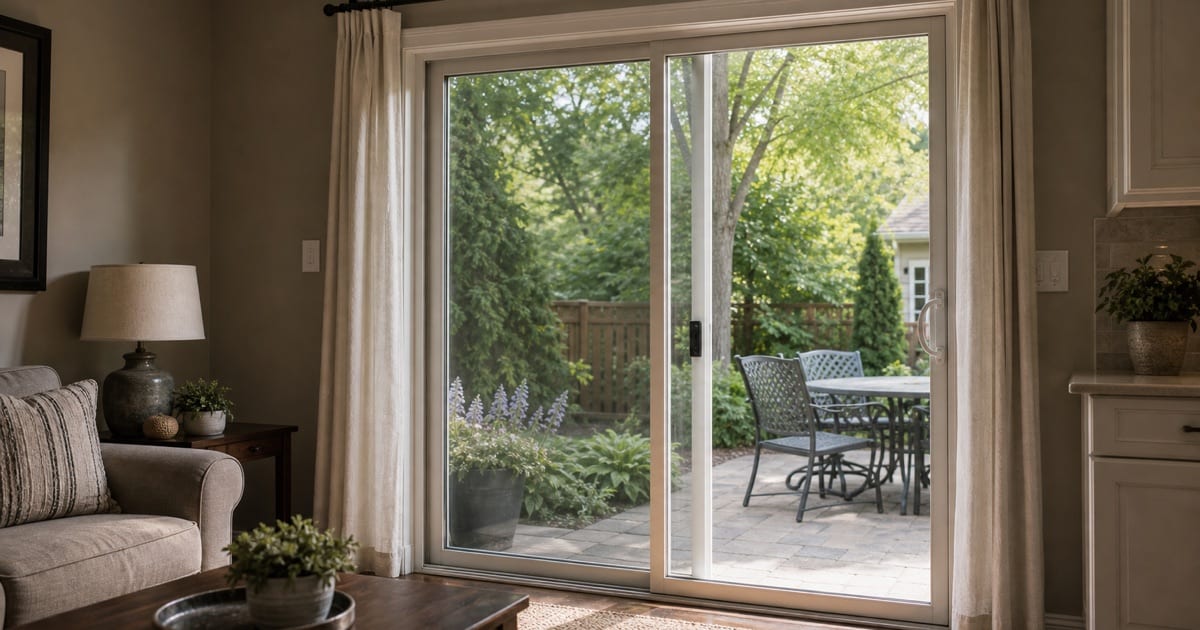
Most homeowners think the security weakness of a patio slider is the latch.
It's not. The weakness is the glass.
A patio slider is breached by striking the glass with a tool or blunt object, shattering the pane, and reaching through the opening to access the interior. The latch becomes irrelevant once the glass is gone. Adding a secondary bar or upgrading the lock doesn't solve the actual vulnerability.
This post explains why the glass is the problem, and why security film is the answer.
The Wrong Assumption
Most homeowners think: "If I upgrade the latch, the patio slider is secure."
They add a secondary bar. They install a stronger lock. They reinforce the track so the slider can't be forced open.
None of these address the actual threat: someone striking the glass with a tool.
When a patio slider is breached, the glass fails first. The latch, the frame, the track — all become irrelevant the moment the glass is broken and the opening is clear.
What Happens When the Glass Is Struck
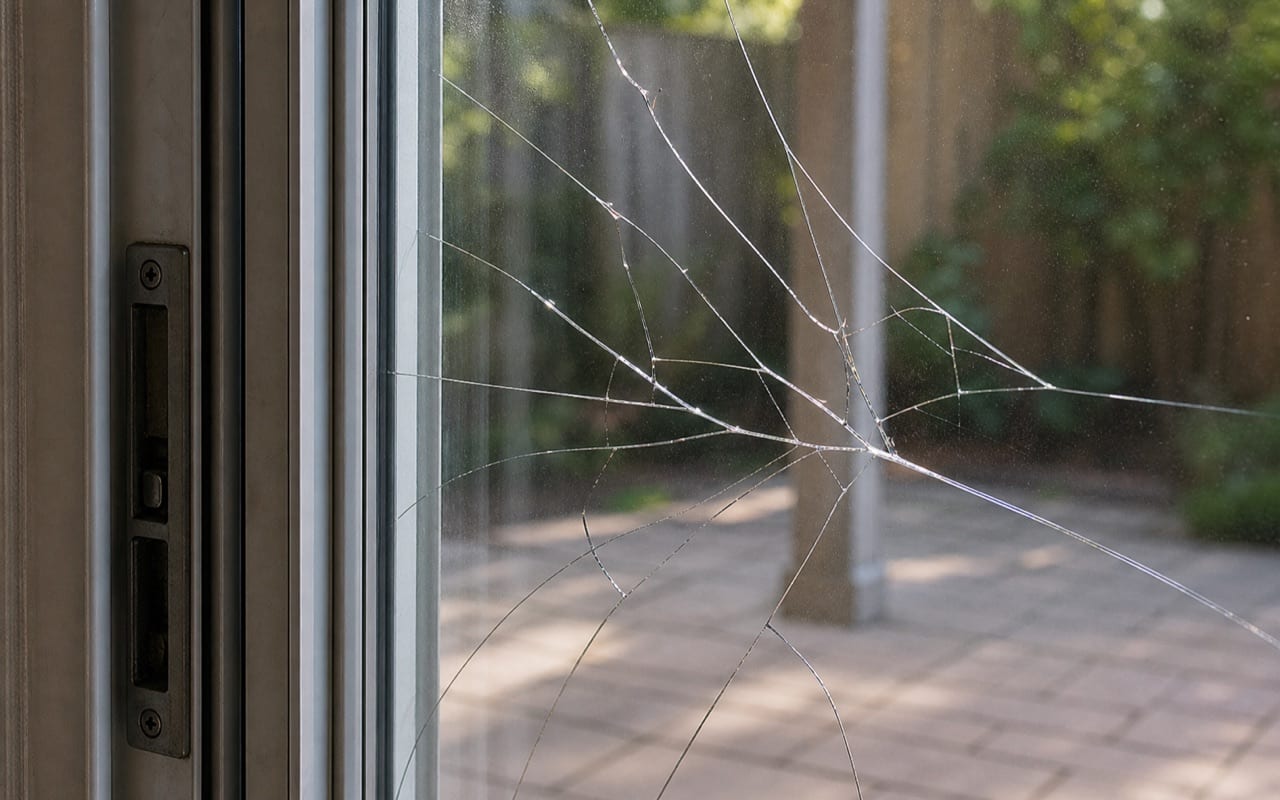
Standard annealed glass (the most common type in patio sliders) breaks into large, sharp fragments on impact.
A single strike with a hammer, rock, or tool near the latch shatters the pane. The fragments fall or clear away. The opening is immediately accessible. An arm reaches through. The interior latch is turned. The door slides open.
Time from first strike to open door: seconds.
Tempered glass (if present) shatters into small cubes but does not hold together. The opening is still clear, still accessible, still passable.
The latch strength is irrelevant. The track strength is irrelevant. The secondary bar is irrelevant. The glass is the only thing between an intruder and the interior.
Why Bars and Locks Don't Solve This
A secondary bar in the track makes the door harder to slide. That's useful if someone tries to force it open mechanically. It's useless if the glass is already broken.
A stronger lock on a latch is useful if someone tries the latch first. But no one tries the latch first. They strike the glass.
For a patio slider, mechanical upgrades (bars, locks, frame reinforcement) don't address the glass vulnerability. They address a secondary vector that rarely happens once the glass is breached.
How Security Film Changes the Equation
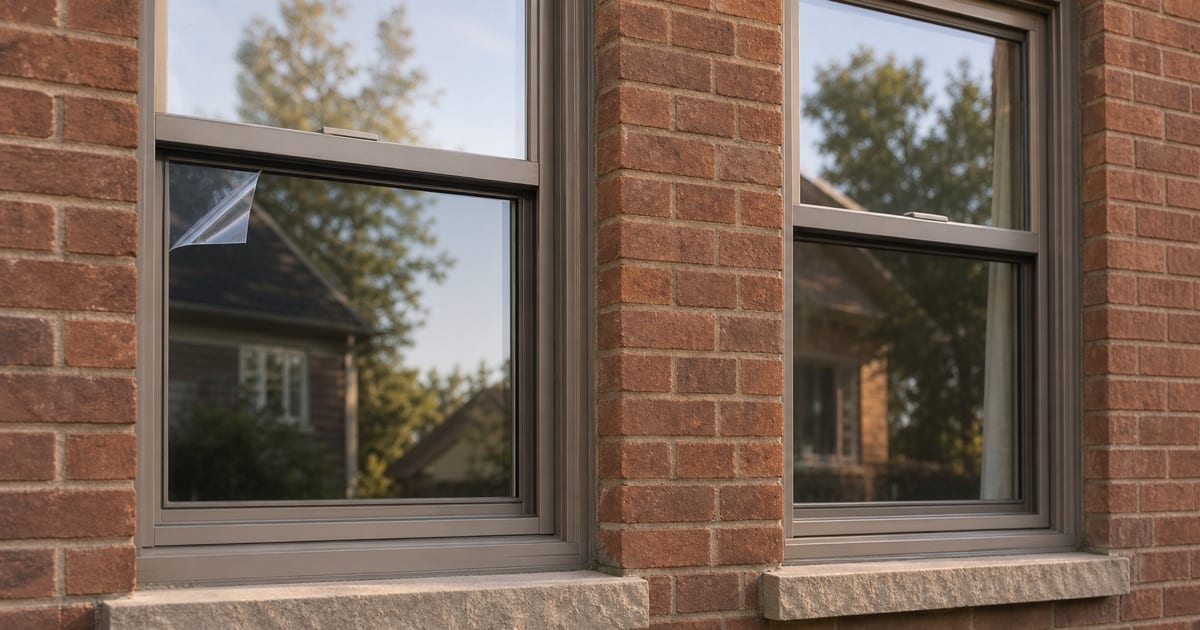
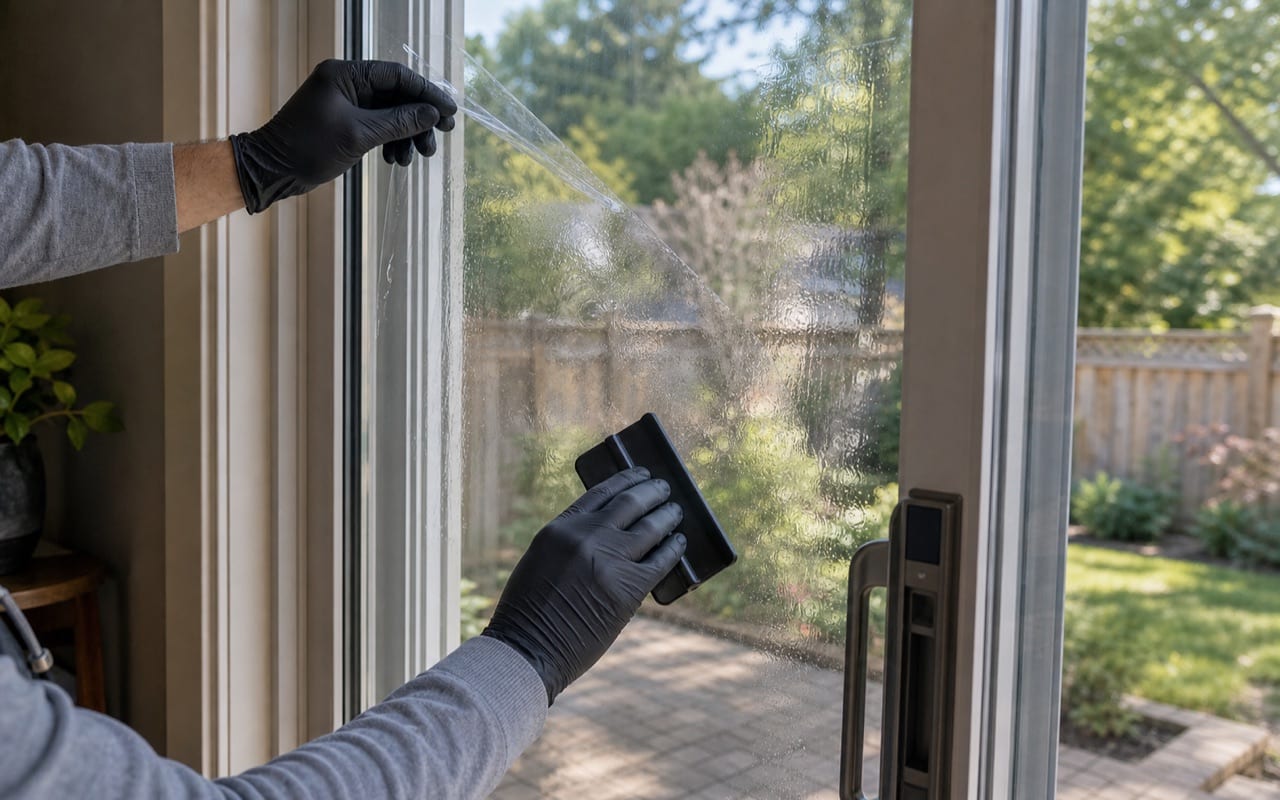
Security window film is a polyester laminate applied to the interior surface of the glass.
When the glass is struck, it shatters. But the film holds the fragments together. The pane crazes and stays bonded to the frame. The opening does not clear.
A hand cannot reach through held glass. The film itself must be defeated — a process that takes additional time and force, far more than striking the unfilmed pane.
Double filming — interior 8 mil + exterior 7 mil — provides maximum protection. The exterior film adds structural support and further increases the defeat time.
This changes the threat from seconds to a meaningfully longer process. Long enough for an alarm to trigger. Long enough for movement to safety. Long enough for an intruder to decide the patio slider is more trouble than it's worth and look elsewhere.
Film does not prevent a breach. It adds delay. That delay is what matters.
Why Patio Sliders Are a Film-Only Play
Door fortification systems (like ARX Guard) reinforce door frames and lock areas on hinged doors. They address the point where people kick — the lock area on a hinged frame.
Patio sliders don't have that failure point. They fail at the glass, not the frame or lock.
A reinforced frame on a sliding door doesn't prevent the glass breach. It doesn't add delay to a glass-strike attack. It's not the solution for this specific vulnerability.
For patio sliders, the answer is film. That's it.
This is distinct from entry doors (front doors, side doors, mandoors), where both film and frame reinforcement can apply. But patio sliders are glass-heavy entries. The glass is the vulnerability.
Assessment: Know Your Patio Slider Type
Before deciding on film:
- Check your glass type. Is it clear, rippled (original single-pane), or fogged (double-pane with failed seal)?
- Check your frame. Aluminum, vinyl, or wood? Is it corroded, rotted, or solid?
- Consider the location. How visible is the slider from a neighbor's yard, a path, or the street?
- Assess the latch. Is it a simple slide or a proper lock? (This matters less than the glass, but it's part of the picture.)
If your frame is sound and your primary concern is the glass vulnerability, film is the direct answer. If the frame is failing or the glass is already damaged, address that first.
FAQ
Is a patio slider a security risk?
Yes, if the glass is single-pane or original double-pane annealed glass. The vulnerability is the glass, not the latch. A strike shatters the pane and creates an accessible opening.
Can a secondary bar prevent a patio-slider break-in?
Not if the breach happens via glass strike. A bar makes sliding harder mechanically, but it doesn't stop a glass breach. Once the glass is gone, the bar becomes irrelevant.
Why is security film the answer for patio sliders?
Because it holds shattered glass together and prevents the hand-reach-through. This adds meaningful delay to a glass-breach attempt. It's the most direct and cost-effective solution for this specific vulnerability.
Book a free patio-slider assessment. A technician will examine your glass type, frame condition, and the visibility of the slider — and recommend the film approach that makes sense for your home. Written quote within 48 hours, no obligation.